The screenshots of the alleged text messages provided by Katherine Lense were later shown to be unreliable and materially altered.
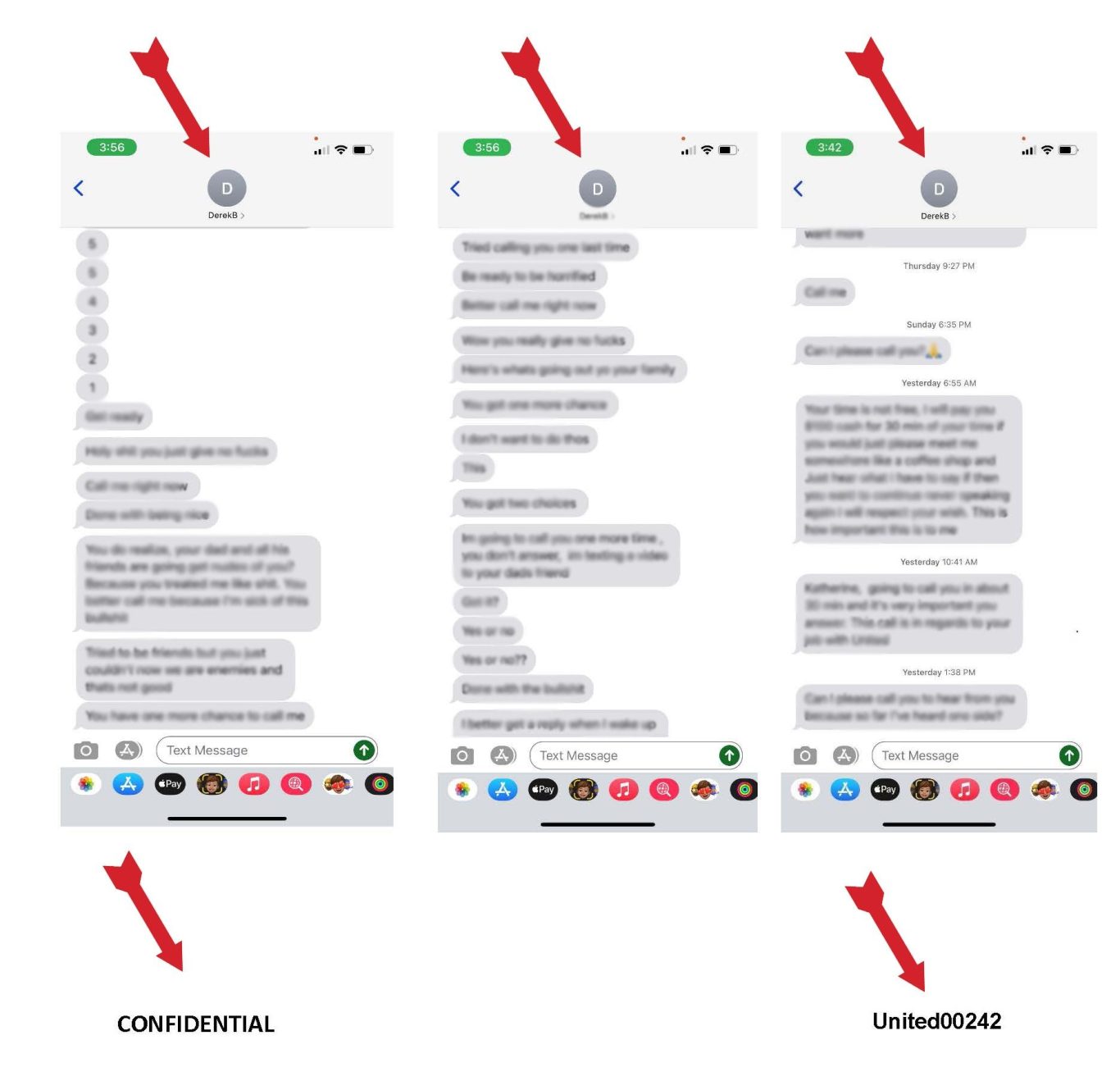
Yet another inconsistency discovered during a review of the evidence concerns the screenshots of the alleged harassing text messages. The screenshots do not display the year in which the messages were allegedly sent, nor do they display the originating phone number. In addition, unlike other text message conversations attributed to FA Blockhus during the same general time period, the screenshots of the alleged harassing messages do not display his contact profile photo.
At the time, Mr. Blockhus consistently used the same profile photograph across all text messaging account, email accounts, and social media platforms. Other text message conversations involving FA Blockhus display that profile photo, yet the screenshots relied upon to support the harassment allegations show only a generic contact icon rather than his profile image.
It is recognized that the absence of a profile photo alone does not establish that the screenshots were altered or inaccurate. There may be innocent explanations, such as changes to contact settings or differences in how the screenshots were captured. However, when viewed together with the absence of the originating phone number, the omission of the year from the screenshots, and the lack of independent forensic authentication, these inconsistencies should have prompted a much more thorough investigation before the messages were relied upon as evidence to terminate my nearly twenty-four-year career.
Given the seriousness of the allegations and the consequences of the disciplinary decision, It is believed the Company should have authenticated the electronic evidence through objective means, including examination of the original devices, carrier records, or forensic analysis, rather than relying solely on screenshots whose authenticity and completeness were never independently verified.
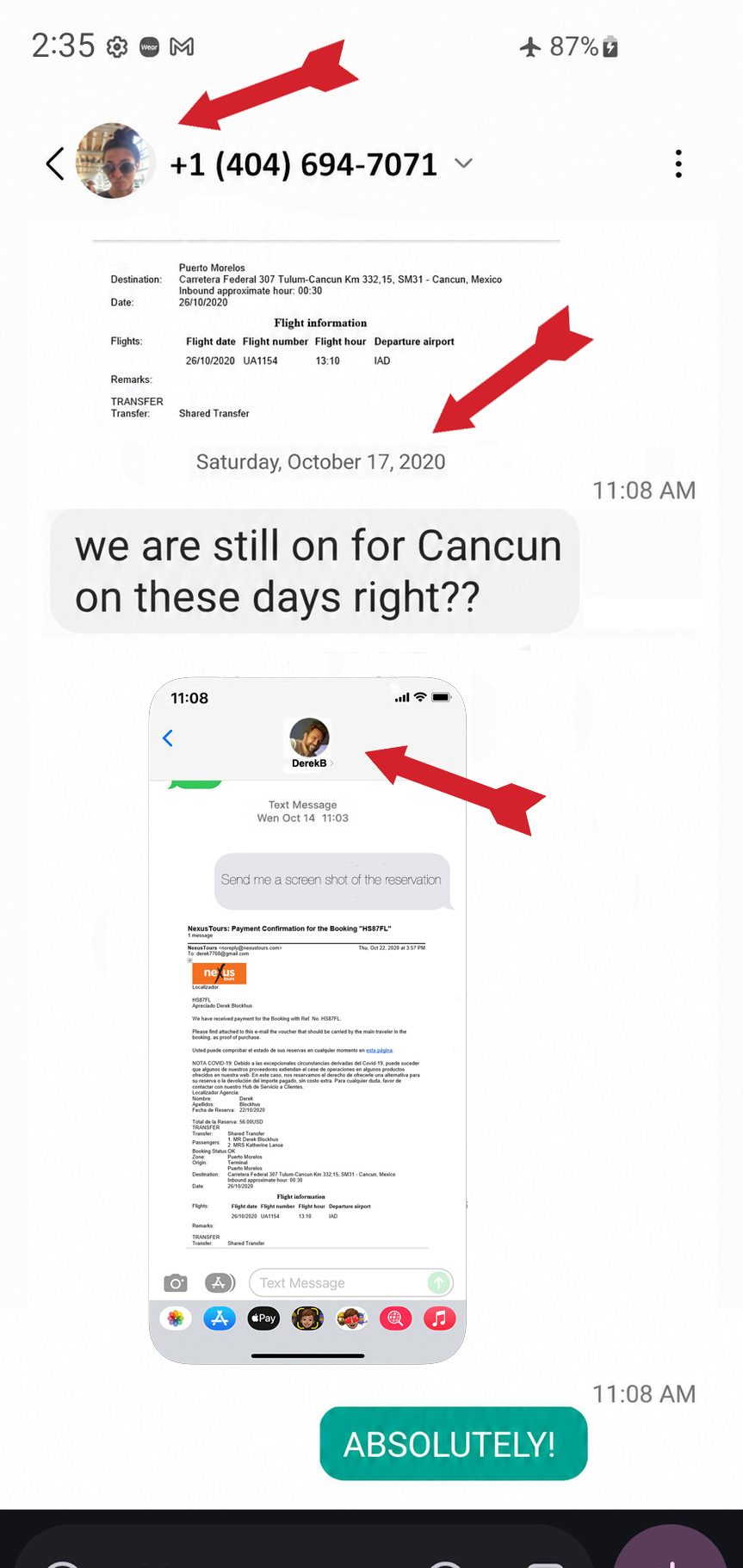
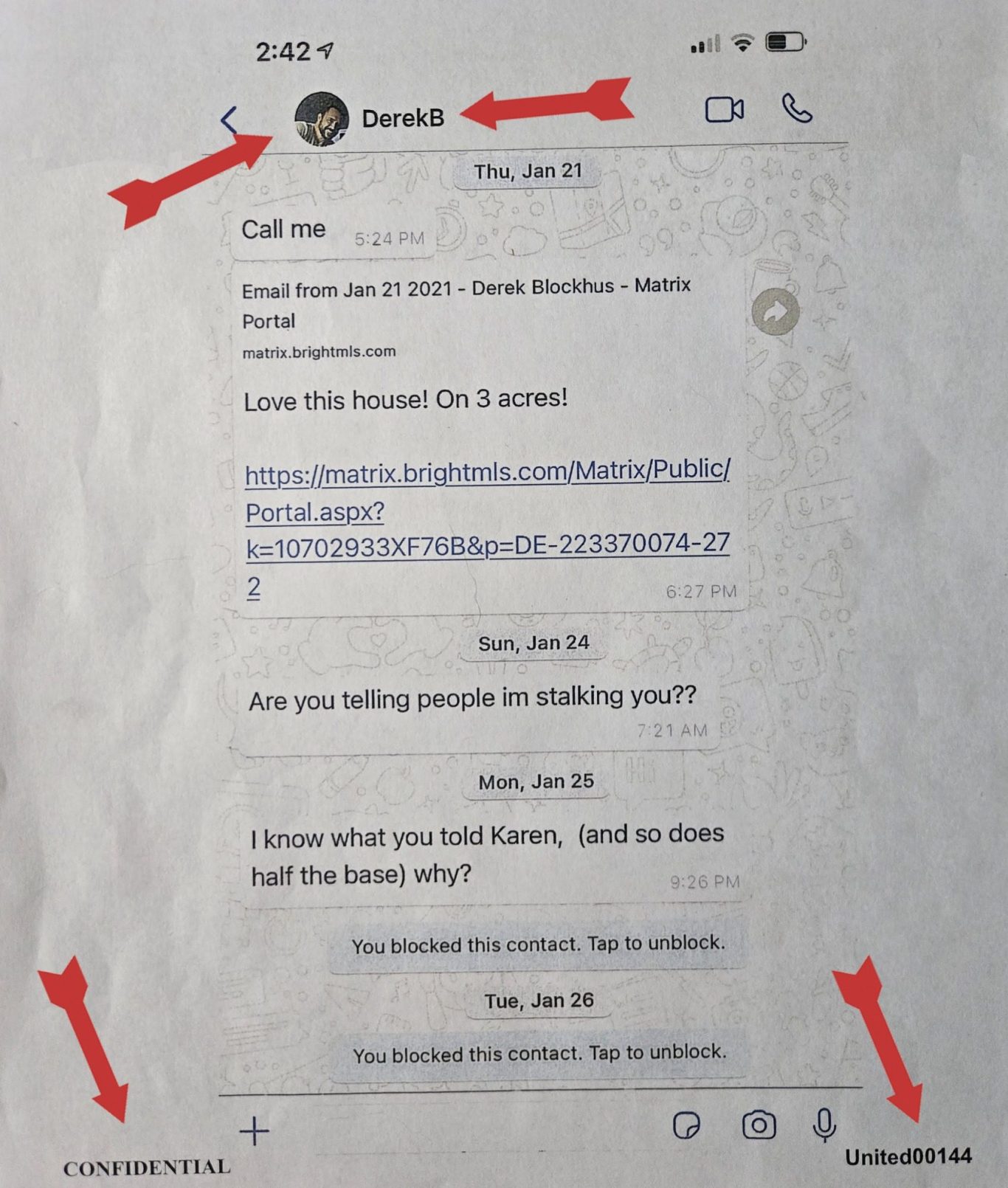
Below are the screenshots of the alleged harassing text messages that United Airlines' Corporate Security relied upon during its investigation and ultimately used to support FA Blockhus termination. These screenshots contain several inconsistencies that warranted independent forensic authentication before they should ever have been accepted as evidence. Among those inconsistencies are the absence of the originating phone number, the omission of the year in the displayed dates, and the lack of FA Blockhus contact profile photo, even though other text message conversations attributed to FA Blockhus during the same time period displayed his profile photo. Despite these apparent inconsistencies, the screenshots were relied upon without, to independent verification through the original devices, carrier records, or forensic analysis.
Evidence Concerning the “DerekB” Profile Avatar
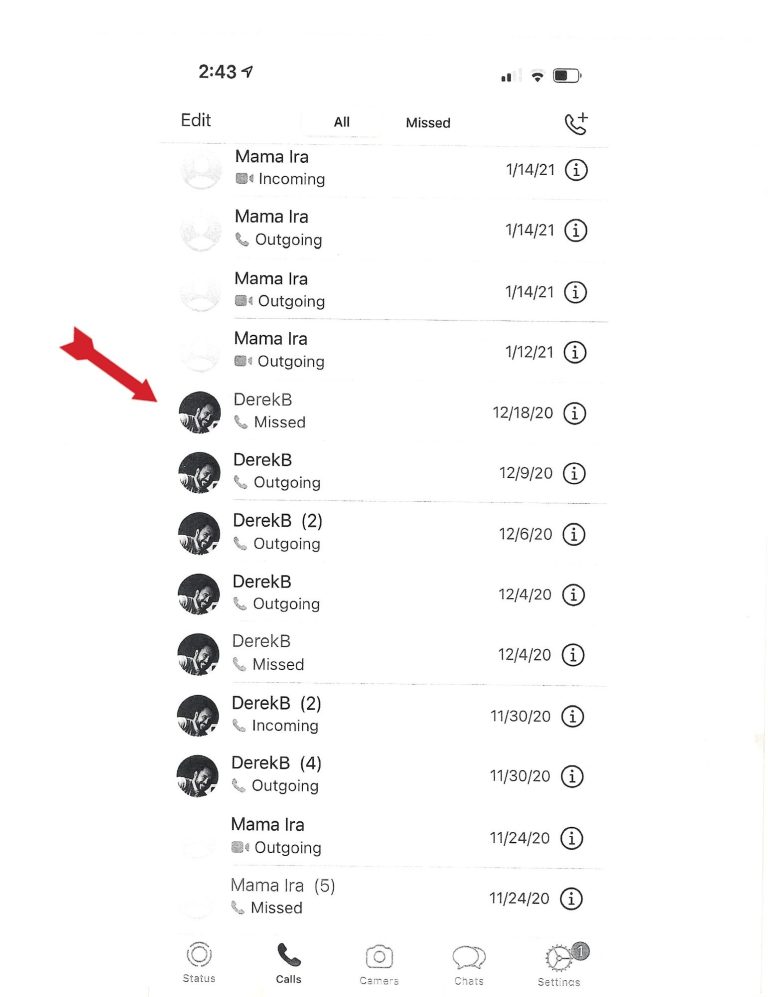
The attached screenshot appears to be a contemporaneous screenshot of the phone associated with FA Katherine Lense. The call history displays multiple entries for “DerekB” dated during the relevant period, including December 2020. Significantly, the “DerekB” entries consistently display the same profile avatar associated with my contact.
This is important because the alleged harassing text-message screenshots attributed to “DerekB” that were relied upon by United do not display that same profile avatar.
The discrepancy raises a significant authentication issue that should have been investigated before United accepted the screenshots as reliable evidence establishing that I was the sender.
The phone screenshot demonstrates that, at least in the call-history interface shown, the contact identified as “DerekB” was associated with a specific profile image. The same image appears repeatedly next to the “DerekB” entries, including incoming, outgoing, and missed communications.
By contrast, the screenshots presented as evidence of the alleged harassment contain the name “DerekB” but do not display the profile avatar that appears repeatedly on the phone associated with that contact.
This distinction is particularly important because the identity of the sender was the central factual issue in the investigation.
If the alleged messages were genuinely communications from the same “DerekB” contact stored on Ms. Lense's phone, then the absence of the profile avatar raises an obvious question:
Why does the contact identified as “DerekB” appear with a profile avatar in the phone's call history, while the screenshots of the alleged harassing communications attributed to that same contact do not?
That question was never adequately resolved.
The significance of this evidence is not that the absence of an avatar, standing alone, conclusively establishes that the screenshots were fabricated or altered. Rather, it demonstrates a material inconsistency that should have prompted further authentication.
A proper investigation should have examined the underlying device, the actual message thread, the telephone number associated with the “DerekB” contact, the message metadata, and the original communications rather than relying exclusively upon screenshots supplied by the complainant.
This concern is particularly significant in light of the sworn testimony of United investigator John McCormick. Mr. McCormick acknowledged that he did not independently authenticate the alleged text messages, did not obtain the telephone number associated with the “DerekB” contact, and did not examine Ms. Lense's phone to independently verify the communications.
Therefore, the issue is not simply that I disagree with United's interpretation of the screenshots.
The issue is that United relied upon screenshots as critical evidence while failing to perform the basic authentication necessary to determine whether those screenshots accurately represented communications actually sent by me.
The newly identified avatar discrepancy provides an additional reason why the original investigation should not be treated as conclusive.
At minimum, this evidence establishes a legitimate and objectively identifiable inconsistency between the way my contact appears in the available phone records and the way the alleged harassing messages are presented.
That inconsistency should have been investigated before United relied upon those screenshots as factual proof supporting the termination.
When considered together with the other unresolved evidentiary issues—including the absence of independent phone records, the failure to establish the telephone number from which the messages allegedly originated, the failure to interview me, and the investigator's admission that he did not authenticate the screenshots—the avatar discrepancy provides further grounds for AFA to conduct a renewed review of the underlying evidence and the termination decision.
The central question is simple: if these screenshots were being relied upon to establish that I sent the messages, why was the most basic question of authentication never independently resolved?