FMLA Violation and Pretextual Terminatione
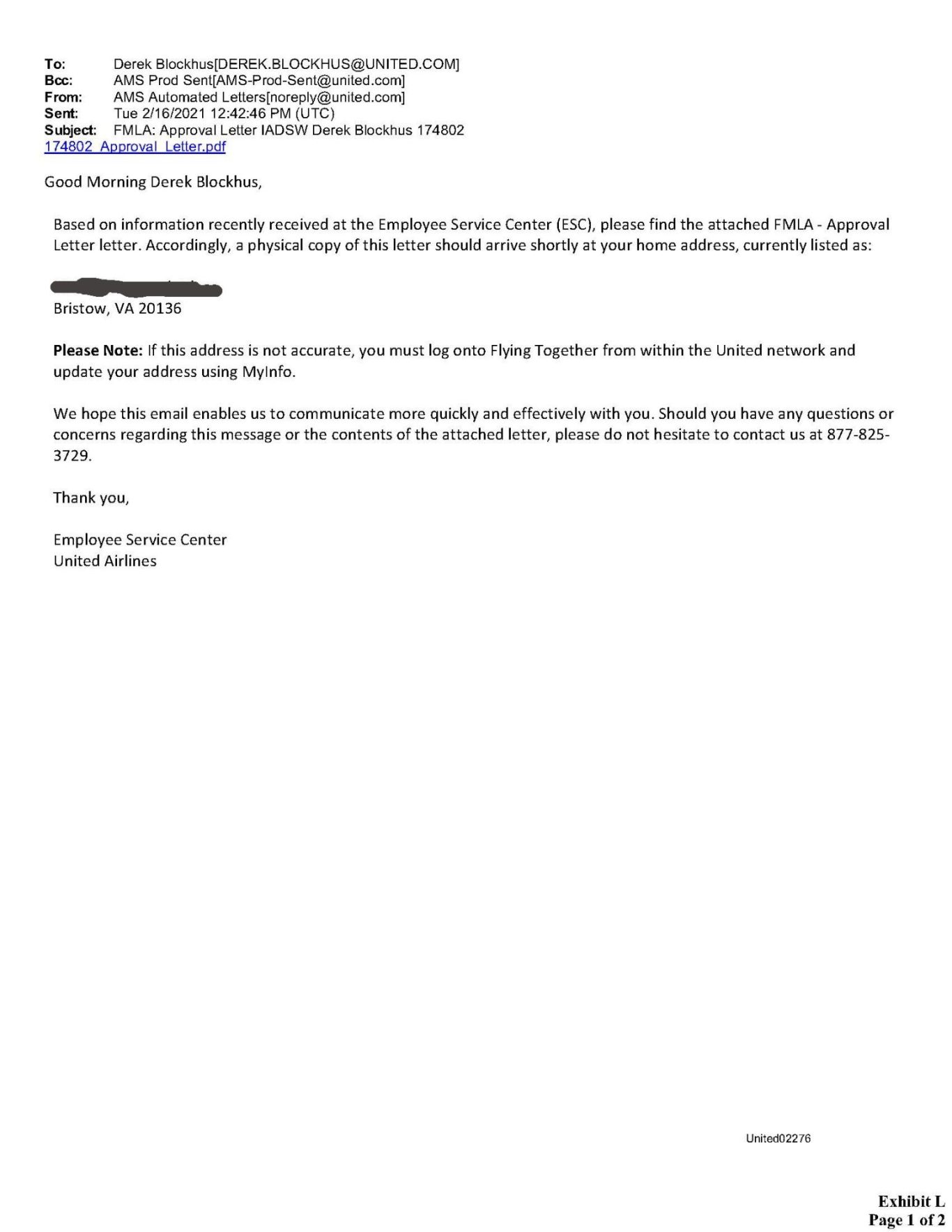
The record establishes that United Airlines (Jr. employee Frank Hester) did not terminate FA Blockhus based on just cause, credible evidence, or a fair and neutral investigation. Instead, United (Jr. employee Frank Hester) abandoned its contractual obligations, disregarded its own directives, and terminated a 24-year, unblemished union employee sight unseen, while he was on approved FMLA leave and medically unable to participate.
FA Blockhus was purportedly “investigated” and terminated in absentia, sight unseen. United (Jr. employee Frank Hester) proceeded with disciplinary action despite knowing that FA Blockhus was medically unavailable, hospitalized, and unable to participate and an active postponement was in place. FA Blockhus was never interviewed, never provided the full allegations, and never given an opportunity to respond before the termination decision was made.
Despite relying heavily on unauthenticated screenshot images displaying no date or phone number as
the central basis for termination, United Airlines (Jr. employee Frank Hester) knew that FA Blockhus was hospitalized on approved FMLA leave that there was an agreement to postpone, nonetheless made no effort to question him, interview him, or allow him to respond to the full allegations. United
(Jr. employee Frank Hester) proceeded to terminate his employment in absentia, without notice of the complete charges, without access to the evidence, and without affording him any opportunity to be heard. This conduct constitutes a clear denial of due process, interference with protected FMLA rights, and a material breach of the Collective Bargaining Agreement’s just-cause and investigation requirements. It further demonstrates that United’s (Jr. employee Frank Hester) decision was not reasonably informed, but instead based on unchecked, unauthenticated evidence, rendering the termination procedurally unlawful and pretextual.
The evidence clearly demonstrates that United’s (Jr. employee Frank Hester) decision to disregard its own agreement to postpone the investigation until after his medical treatment was complete—while he was on approved FMLA leave—was pretextual and not grounded in policy or fact. Rather than adhering to established procedures or federal protections, United (Jr. employee Frank Hester) proceeded in a manner that suggests the outcome was driven by expediency rather than a fair and lawful process.
Regardless of how it is characterized, United’s (Jr. employee Frank Hester) actions reflect a disregard for the protections afforded under the Family and Medical Leave Act. While it is true that an employer may terminate an employee who is on FMLA leave, such action is only lawful if it is entirely unrelated to the employee’s absence. That standard was not met here.
United (Jr. employee Frank Hester) chose to continue its investigation and move forward with termination precisely because I was unavailable to participate due to my approved FMLA leave. FA Blockhus inability to attend the scheduled February 15th investigatory meeting was directly tied to my medical leave and treatment. Instead of honoring their agreement to postpone the process until I could meaningfully participate, United (Jr. employee Frank Hester) proceeded in my absence and terminated my employment.
This sequence of events establishes a direct connection between FA Blockhus FMLA leave and the adverse action taken against Him. Without a proper investigation—one in which both sides are heard and all evidence is fairly considered—the termination cannot be justified as independent of my protected leave.
Accordingly, the decision to terminate his employment under these circumstances was not only procedurally flawed but also inconsistent with federal law, as it was directly tied to my protected unavailability under FMLA.
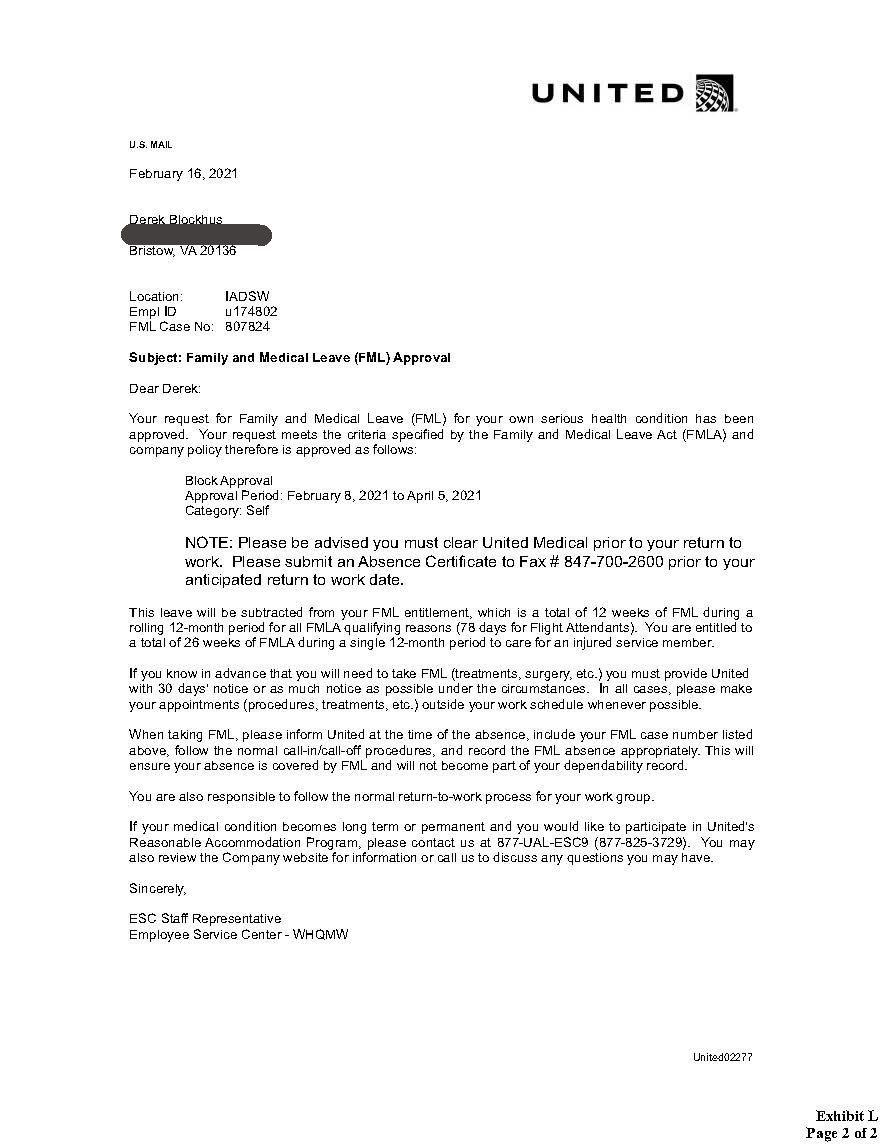
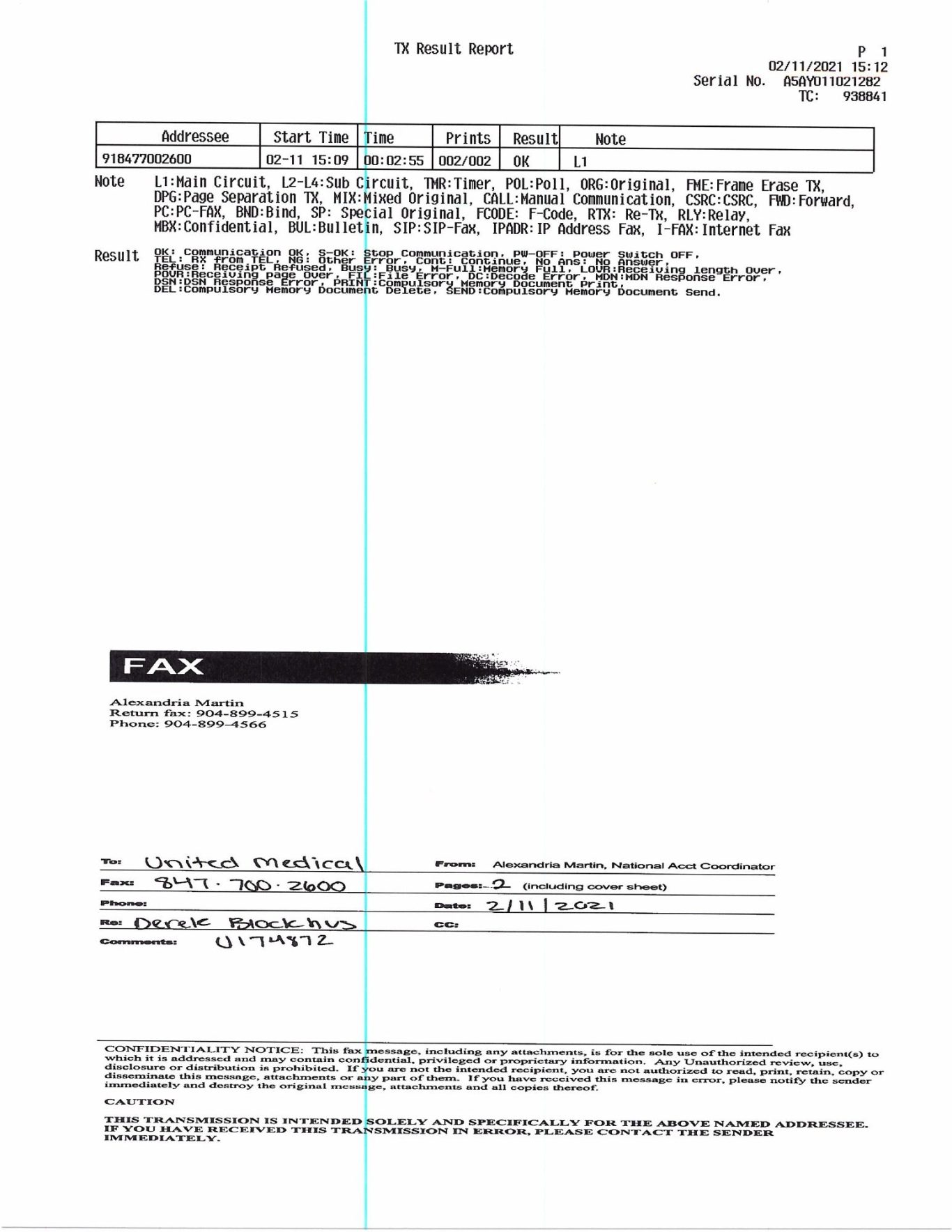
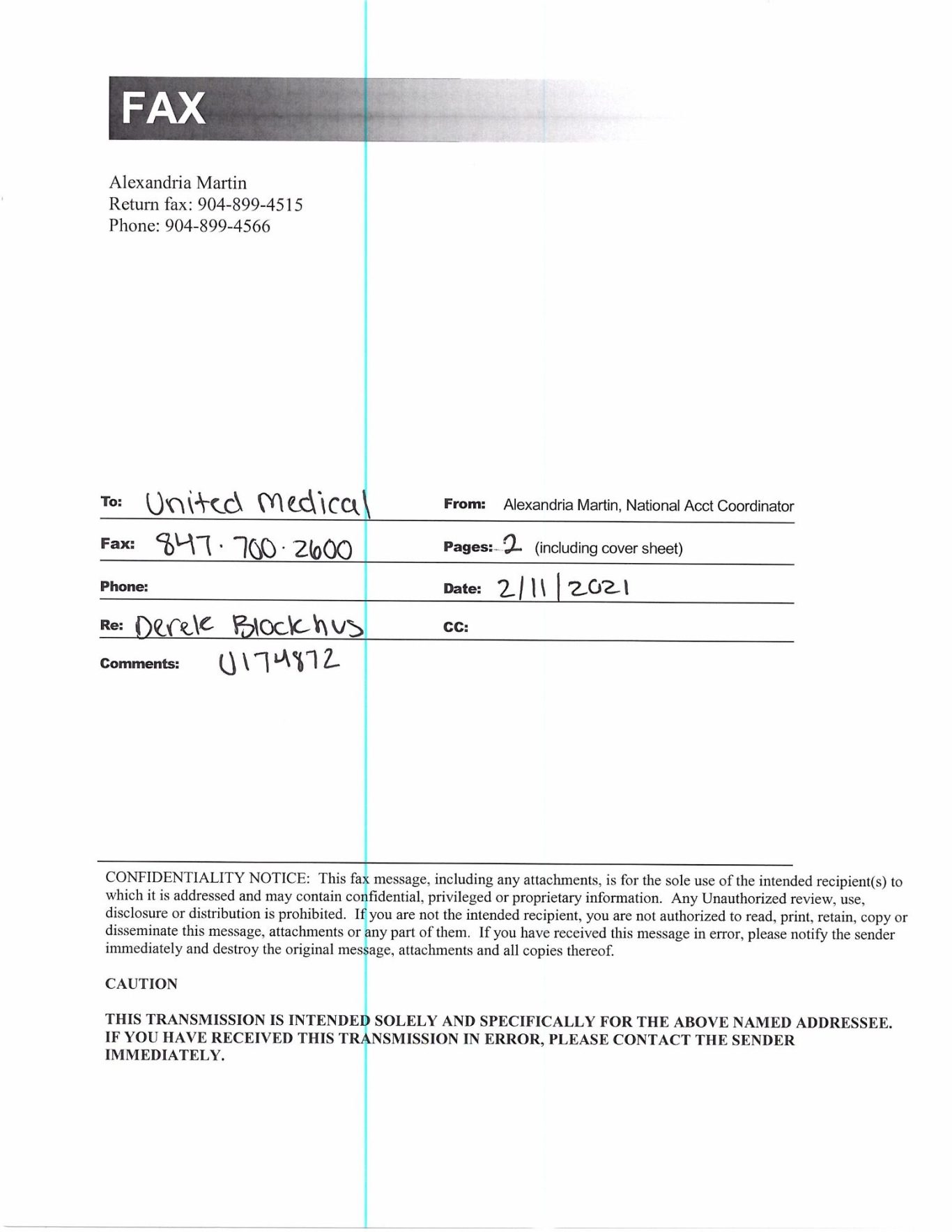
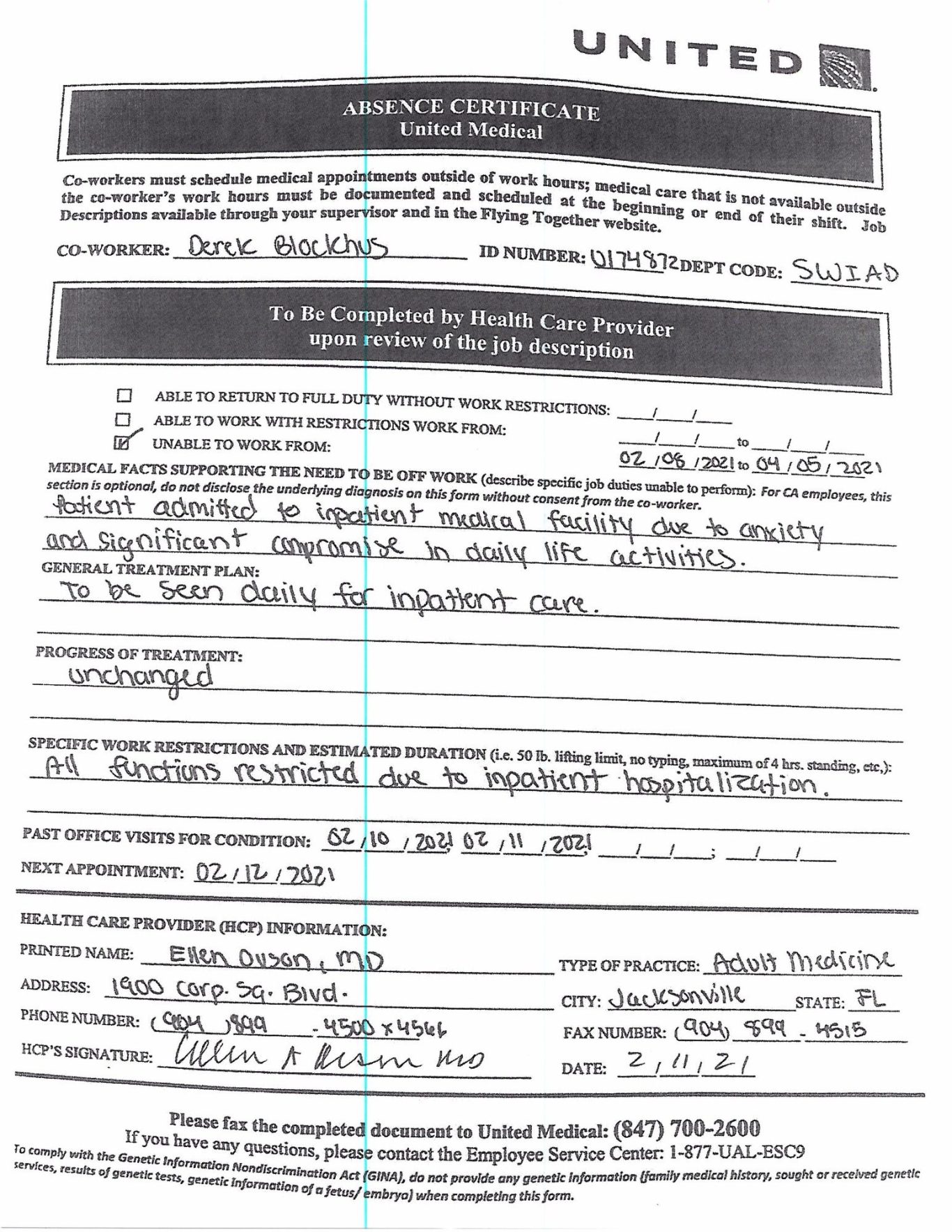
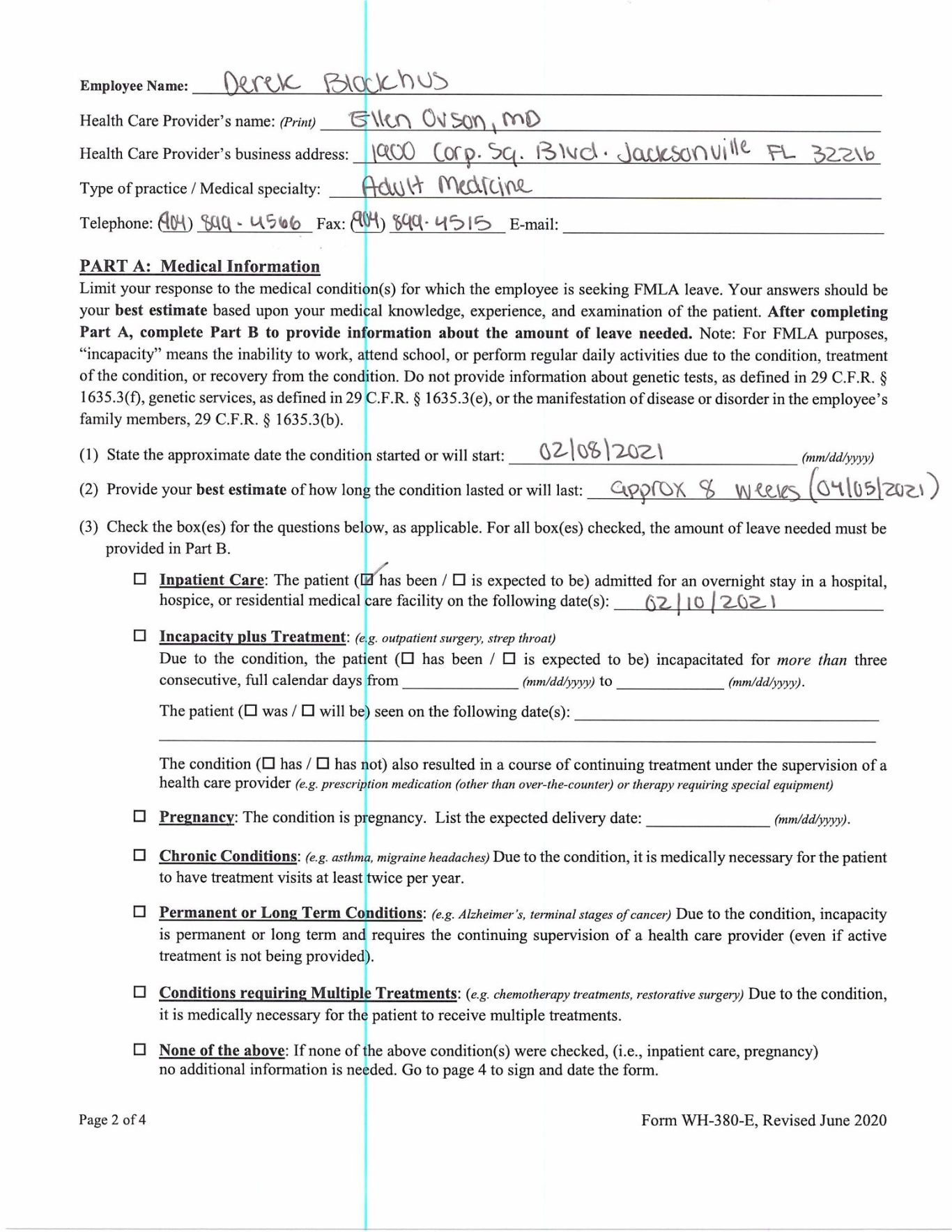
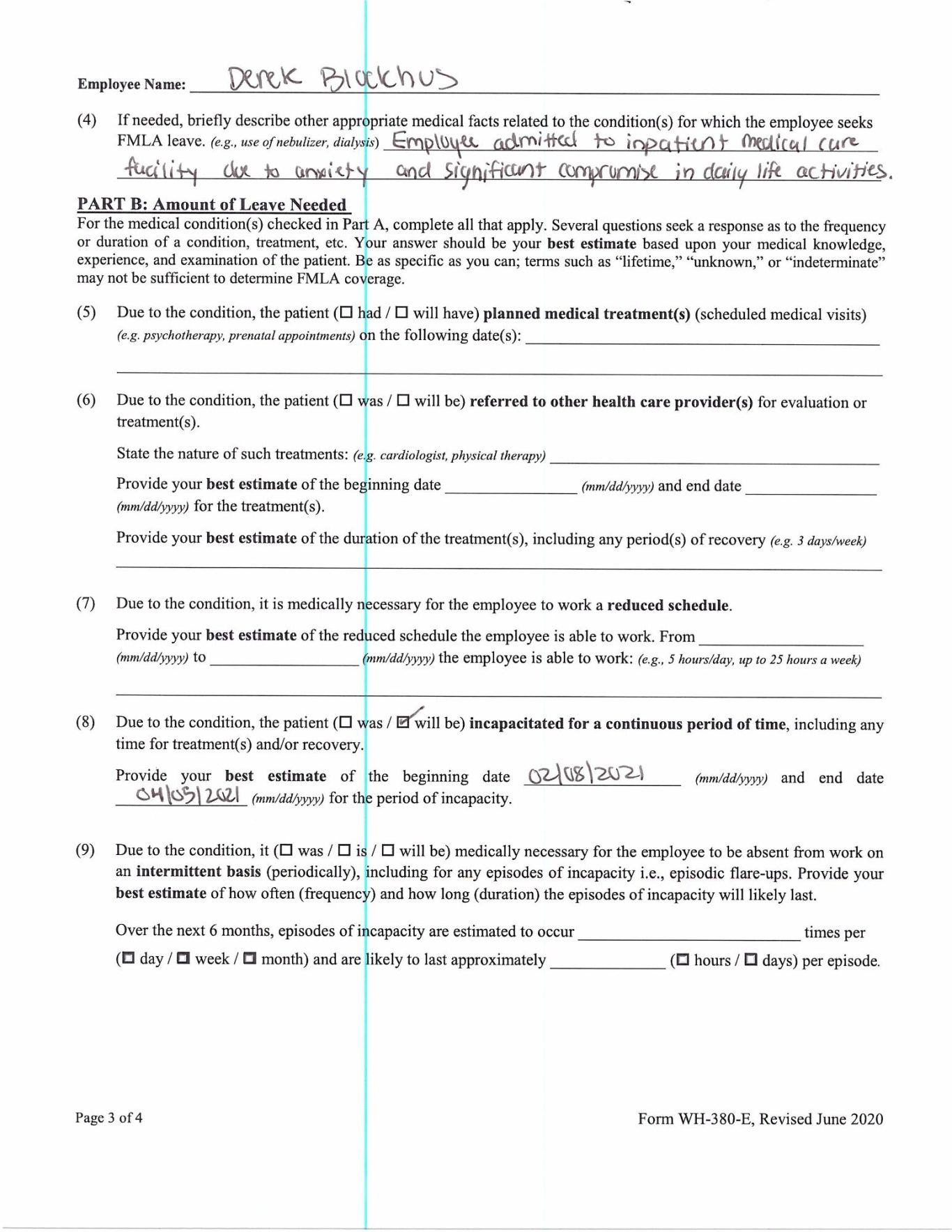
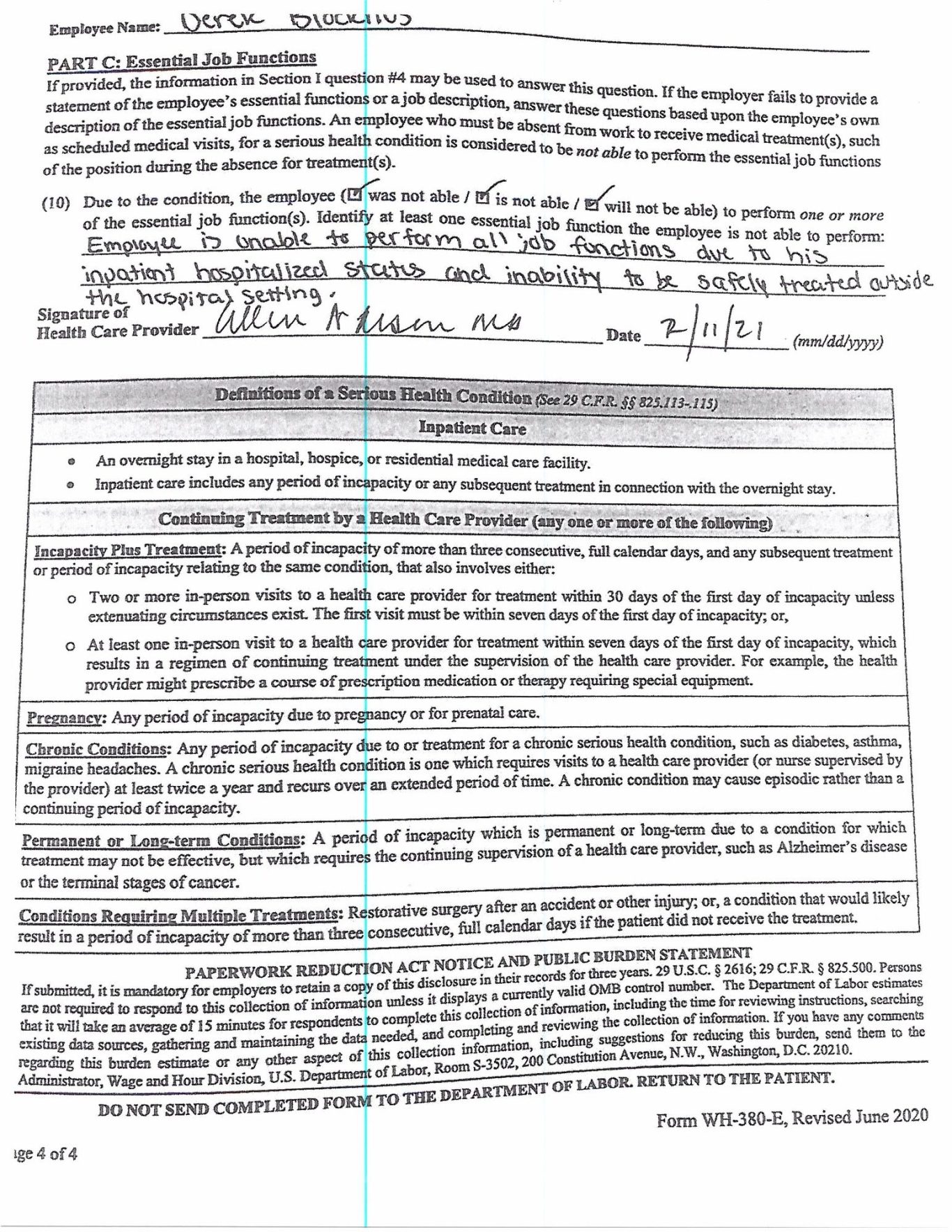
Termination in absentia while on FMLA, was not included in any “investigation”, violated CBA protections. United expressly agreed—through management and the Union—to postpone the investigation until the conclusion of Mr. Blockhus’s FMLA leave, as stipulated in FA Blockhus written employment contract, issued a directive confirming his unavailability, and then knowingly violated that agreement by proceeding anyway. This conduct constitutes a clear breach of the Collective Bargaining Agreement, unlawful interference with protected medical leave, and a denial of fundamental due-process protections.
Contract breach:
Base manager, Ms. Williams issued a directive to all involved United personnel expressly stating that Mr. Blockhus was “unavailable” and that the investigation was to be postponed until the conclusion of his FMLA leave. This directive was circulated to those responsible for the investigation and disciplinary process and reflected United’s acknowledgment of Mr. Blockhus’s contractual and statutory right to be free from disciplinary action while medically unable to participate.
This agreement and directive are critical. They confirm that United:
1. Recognized Mr. Blockhus’s protected FMLA status,
2. Acknowledged the necessity of his participation for a fair investigation, and
3. Affirmatively agreed to suspend the disciplinary process in accordance with the Collective
Bargaining Agreement and federal law.
United’s later decision to disregard this agreement and proceed with the investigation and
termination in absentia, while Mr. Blockhus remained on approved FMLA leave, directly
contradicts its own directive and constitutes a knowing breach of the Collective Bargaining
Agreement, interference with FMLA rights, and a denial of fundamental due process. This
sequence further evidences pretext and bad faith, rendering the termination procedurally and
legally invalid.
The individuals involved in the investigation were made aware of this directive as early as
February 10, 2021. This directive confirms that United expressly acknowledged Mr. Blockhus’s
contractual and due-process rights, including the requirement that he be available to
participate in any disciplinary investigation, as mandated by the Collective Bargaining
Agreement.
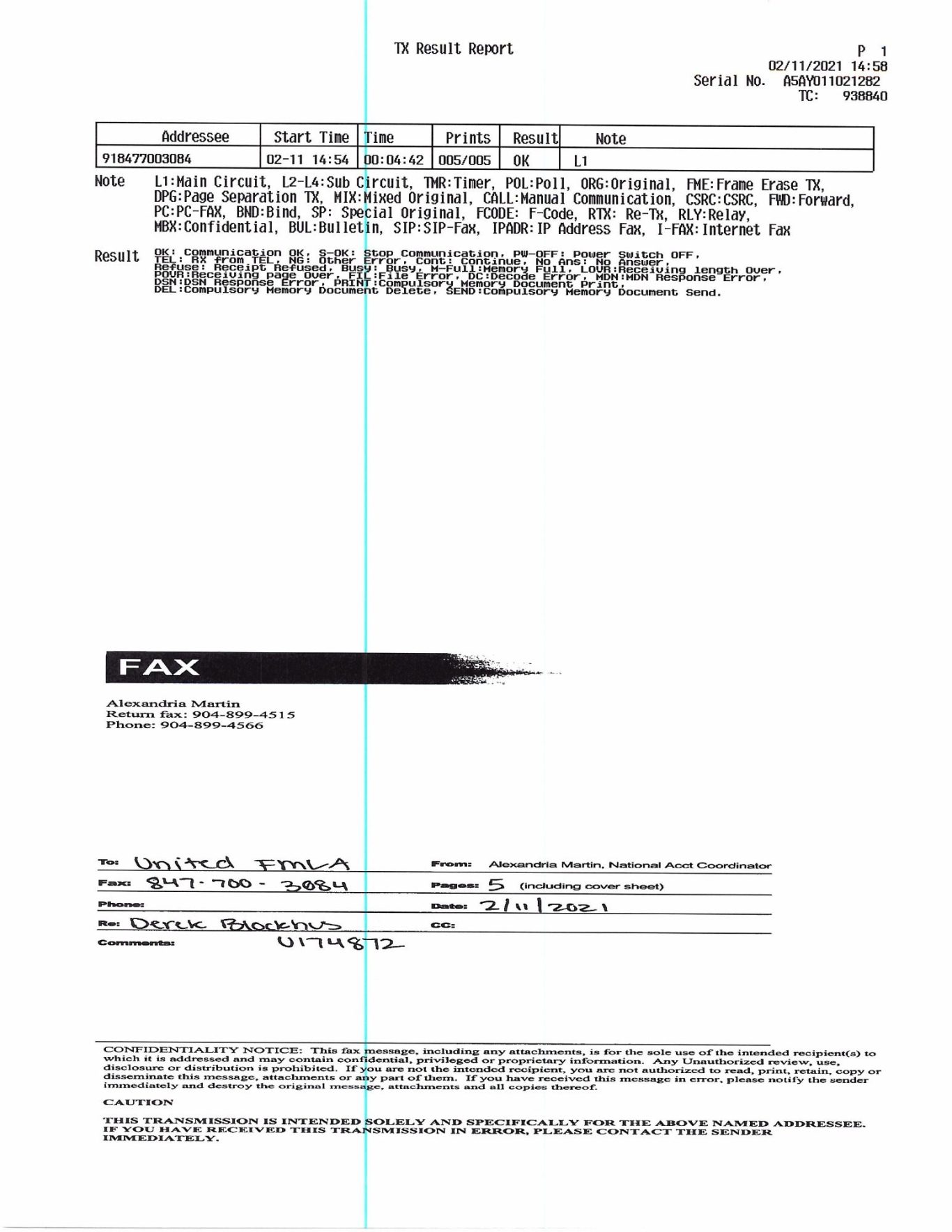
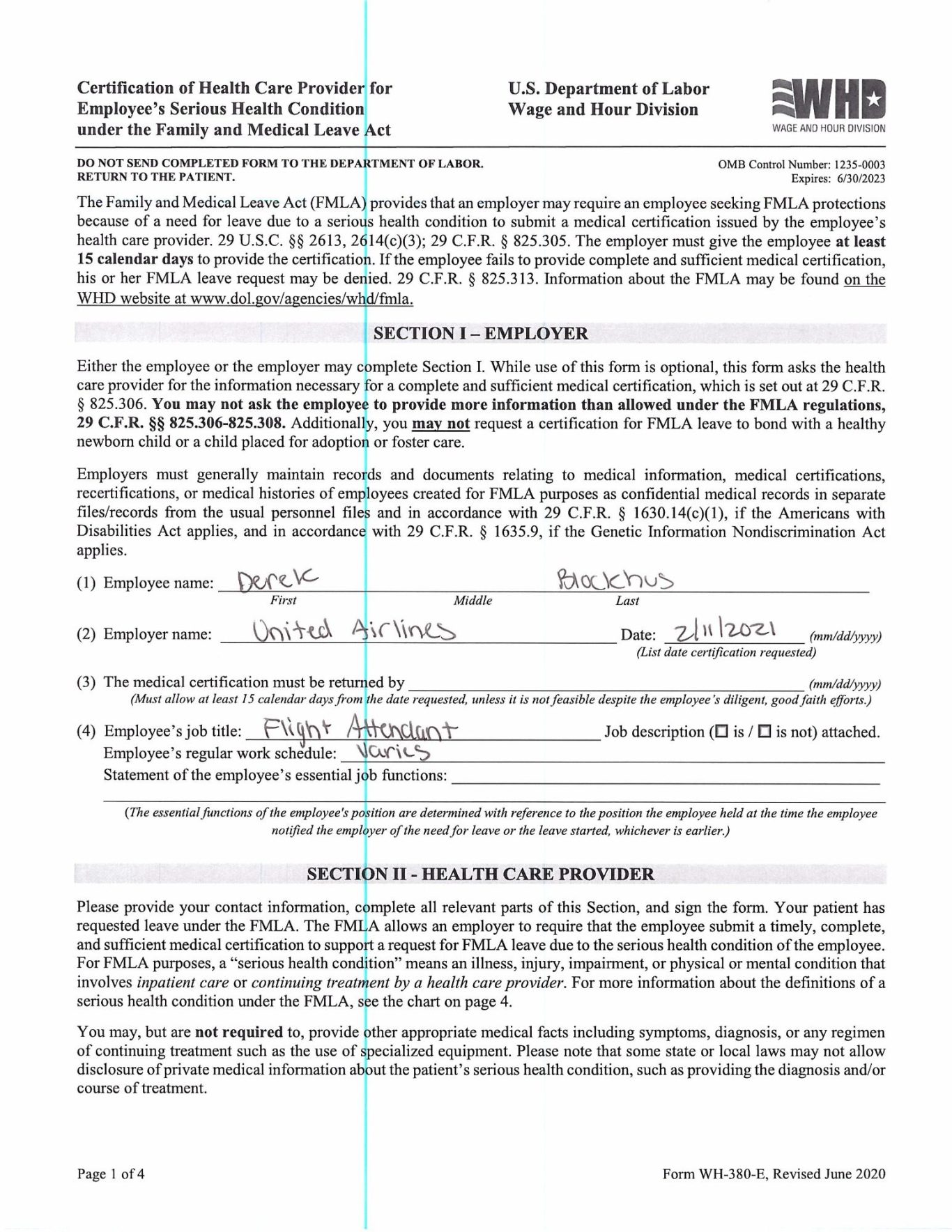
Mr. Blockhus’s approved FMLA leave ran from February 8 through April 5, 2021. Despite
this, and the fact base manager Monique Williams directive, United proceeded to terminate him
within just days, in absentia on or about February 26, 2021, while he remained hospitalized
and medically unavailable. The termination decision was made by Frank Hester, a low level
junior flight attendant that was temporarily assigned to a supervisory role that had no connection
with any investigation. Hester later testified for his reason to terminate Blockhus;
“So I relied on the text messages, the voice message, the letter of investigation, the
initial, the revised, the statement that Mr. Blockhus submitted.”
This action was taken notwithstanding lead investigator John McCormick’s own admission
that “I need to interview Blockhus.”
United (Hester) nevertheless concluded the “investigation” and terminated Mr. Blockhus
without ever interviewing him, affording union representation, or providing him an
opportunity to respond to the full scope of the allegations against him. These failures raise
serious concerns regarding the procedural fairness, contractual compliance, and legitimacy
of the termination decision under the Collective Bargaining Agreement. Significantly, after the
termination, United’s legal team later offered Mr. Blockhus the option to resign from his
position as a flight attendant in lieu of termination. This post-hoc offer further undermines
United’s stated justification for discharge and supports an inference that the termination decision
was procedurally defective, legally vulnerable, and not supported by just cause.
Although claiming “I need to interview Blockhus” lead investigator John McCormick
testified that he never interviewed or spoke with Mr. Blockhus at any point during
the investigation. Despite this, United relied on his findings to justify termination. This
admission demonstrates that United’s investigation was incomplete, one-sided, and
conducted in violation of fundamental due-process and just-cause requirements
under the Collective Bargaining Agreement. An employer cannot claim to have
conducted a fair or reasonable investigation when the accused employee was never given
an opportunity to be heard, particularly when on approved FMLA leave. This failure
alone is enough to show that United’s termination decision was procedurally defective,
retaliatory, and made without a reasonably informed factual basis, rendering their
“honest belief” defense legally untenable.
Due Process Failure: United knowingly abandoned a fair and impartial investigation,
substituting expediency for its contractual and legal obligations. Rather than conducting a
full, balanced, and evidence-based review as required under the Collective Bargaining
Agreement and basic principles of due process, United rushed to a conclusion without
interviewing Mr. Blockhus, without verifying evidence, and despite knowing he was medically
unavailable on approved FMLA leave. The company prioritized meeting an internal timeline over
fulfilling its duty to conduct a fair, thorough, and unbiased investigation.
McCormick Statements Regarding United’s own agreement
to postpone any investigation until Blockhus returned from
FMLA leave
Testimony from United’s lead investigator establishes that management and investigators were fully aware that Mr. Blockhus was medically unavailable due to participation in an Employee Assistance Program and approved FMLA
leave, yet proceeded to terminate him in absentia:
- “My understanding is that the AFA, the union, has their own employee assistance program that is outside of the company, that Mr. Blockhus had gone to them for those resources, and Monique was letting me know that he would be unable to meet at this time.” •
- “I believe at some point I had seen communication that Mr. Blockhus would be unavailable to speak with me until -- or speak with anyone in the company until April 5, somewhere in the beginning of April of that year.”
- “Yes, that is correct, she was informing me that there was a holdup in the immediate rescheduling of the interview and I passed that along to Kim Phillips”
- “Correct. He was unable to participate on at least that current date based on the information she had
provided to me”. - “That is correct. Based on her message, he is medically unable to participate, yes”
- “On the 10th I was aware he would not be able to participate; however, the message did not have any date ranges saying he was going to be unavailable for a future interview”
- “To the best of my recollection, that Mr. Blockhus was still unable to meet with me at the time of the
interview. I didn't think much more of it because I have other things to worry about and other cases to deal with, so I didn't think much of it and I probably would have asked just let me know when we are ready to go again.” - “No. I was never told that he was available for an interview at any point because I would have
interviewed him.”(*McCormick will later state he did not need to interview Blockhus) - “I was able to complete my findings without needing to speak with Mr. Blockhus”.
- "I didn't need to wait. I had the information already here. I didn't need to speak with him. You don't have to speak with a respondent”.
- “I had a timeline to meet and I met it.”
- “We always will give an employee an opportunity to speak with us”
- “I never contacted him in any form. We had never spoken, met or anything of the like”.
United ignored its own directive to postpone the investigation until Blockhus FMLA leave ended.
TheCollective Bargaining Agreement (CBA §§ 23 A.7) sets a 30-day deadline for management to issue discipline after becoming aware of an incident. However, the agreement also provides flexibility when the Flight Attendant is unavailable:
1. If the Flight Attendant requests to postpone an investigatory meeting,
2. Or is on leave of absence, furlough, or vacation lasting more than 14 days,
➡ Then the 30-day disciplinary clock is automatically extended by the length of the absence or postponement.
Automatic Extension of the Disciplinary Timeframe
- Under the applicable disciplinary provisions, the 30-day disciplinary clock is automatically
extended by the full length of the employee’s absence or any approved postponement. When
an employee is on a leave of absence—including medical leave, FMLA, furlough, or a requested
postponement—the employer is not permitted to proceed as if the time continues to run. Instead,
the disciplinary deadline is tolled and resumes only after the employee becomes available. - This provision directly defeats any claim that United was under time pressure to complete the
investigation while Mr. Blockhus was on approved FMLA leave. Because the clock was
automatically extended by the duration of his medical unavailability, United had no contractual
justification for proceeding in absentia. Any termination issued during that period violated the
CBA’s timing provisions and further demonstrates that United chose expediency over compliance
with contractual due-process requirements. - Lead investigator John McCormick admitted he was aware of the agreed postponement and that
Mr. Blockhus was medically unavailable and could not participate in the investigation. Despite
this knowledge—and despite the automatic extension provision—United (McCormick) chose to
proceed in absentia, never interviewed Mr. Blockhus, and completed the investigation based solely
on unverified, complainant-supplied materials. United’s invocation of timing concerns was
therefore false and pretextual, serving only to justify a rushed termination in violation of the
CBA’s due-process, participation, and just-cause requirements. This deliberate disregard of the
tolling provision further demonstrates that United substituted expediency for contractual
compliance, rendering the investigation and termination procedurally invalid.
⚖Why This Matters:
Direct Admission: McCormick knew United had formally acknowledged that Blockhus was
unavailable during his FMLA leave and the mutually agreed upon postponement.
1. CBA Violation: The agreement required that Blockhus participation in any
investigation — yet United proceeded without him.
2. Evidence of Bad Faith: United disregarded its own written directive, proving the
investigation and termination were rushed and pretextual.
⚖ Key Argument:
This clause explicitly protects employees like Blockhus who are unavailable due to leave (including FMLA).
Since United knew he was on approved FMLA leave and medically unavailable, they were contractually
obligated to pause and extend the investigation timeline until his return. By instead proceeding in absentia
and terminating him, United not only denied him due process but also violated the CBA’s express
postponement rule. United knowingly proceeded with termination while Blockhus was unavailable on protected FMLA leave — despite its own directive to wait until April 5. This was a clear breach of contract,
denial of due process, and interference with federal FMLA rights.