United Offering Blockhus Resignation in Lieu of Termination
and a Promise for him not to Sue
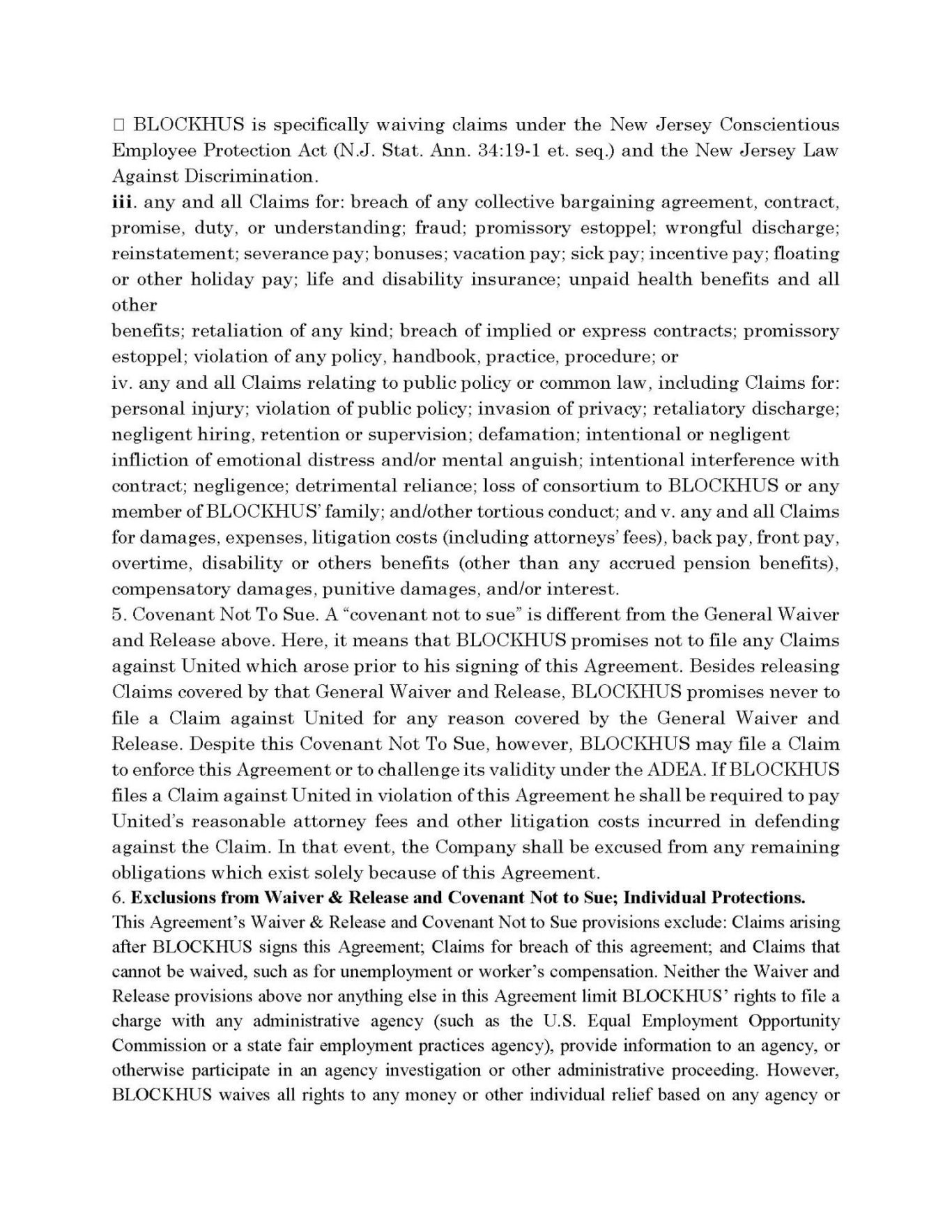
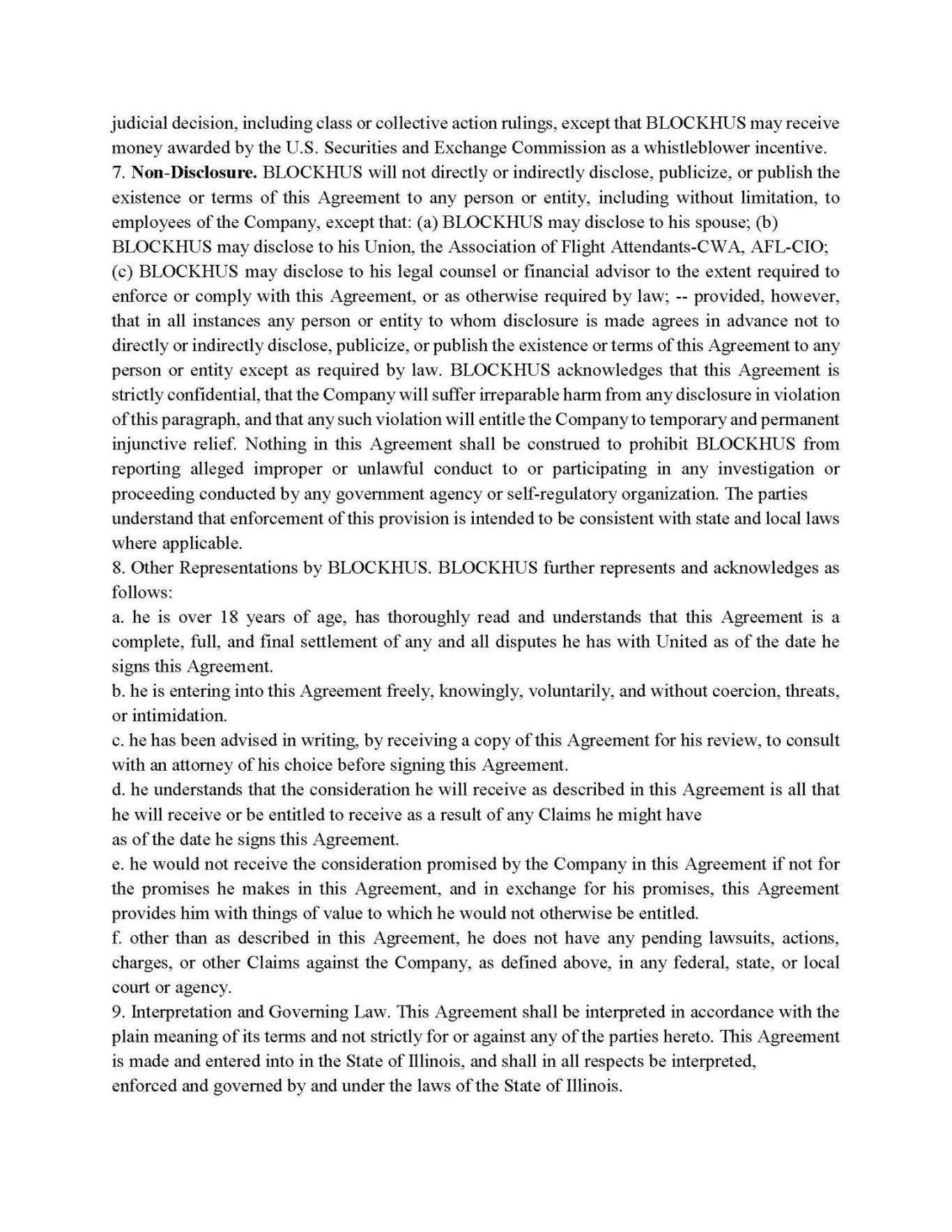
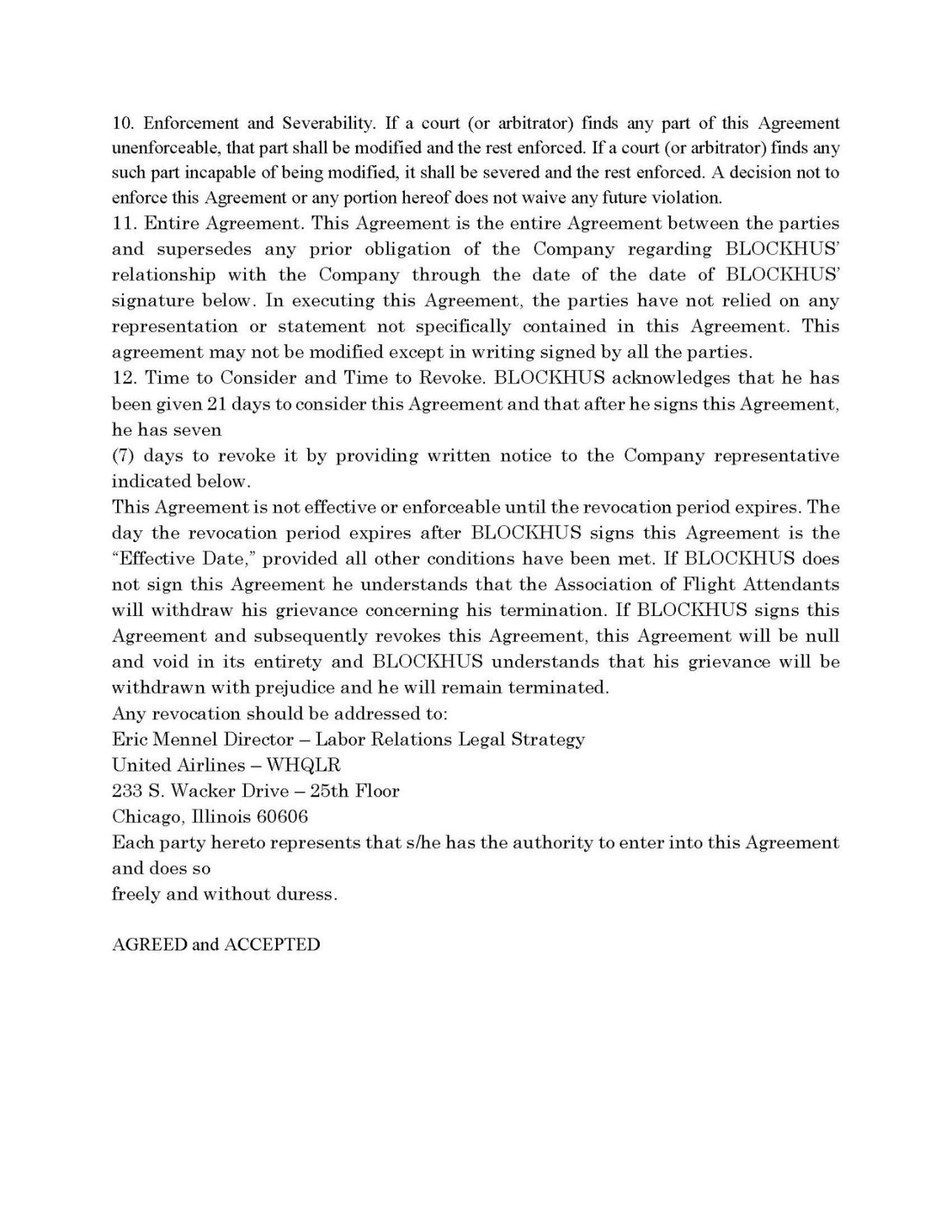
United offered FA Blockhus the option to resign instead of being fired, this
signals that the company:
1. Indicates United’s Uncertainty or Pretext
2. Lacked confidence in its justification for termination;
3. Wanted to avoid creating a paper trail of wrongful discharge; and
4. Attempted to limit its own liability under the Collective Bargaining Agreement (CBA) or federal
statutes (FMLA, Title VII, etc.)
Courts interpret such “resignation offers” as evidence that the employer was trying to protect itself from a potential grievance, arbitration, or lawsuit — meaning they knew the case against you was weak.
⚖ Supporting Case:
In EEOC v. University of Chicago Hospitals, 276 F.3d 326 (7th Cir. 2002), the court noted that offering an employee the option to resign “to avoid the stigma of discharge” could be viewed as an implicit acknowledgment that termination lacked just cause, especially when the offer occurs during an ongoing dispute. see: Bennett v. Roberts, 295 F.3d 687 (7th Cir. 2002):
“A resignation in the face of impending termination does not insulate the employer from liability if the termination itself was unlawful.”
In a CBA Context — It Undermines “Just Cause”
In the union or contract setting, offering resignation instead of discharge circumvents the procedural requirements of the CBA.
1. It avoids the employee’s right to a hearing, union representation, and due process.
2. It may constitute bad faith bargaining or a violation of contractual discipline procedures.
⚖ Supporting Case;
Enterprise Wire Co. v. Wiremen’s Union Local 107, 46 Lab. Arb. 359 (1966) — Arbitrators consistently hold that employers who offer resignation to sidestep investigation violate just cause standards.
Practical Impact in this Case Given that:
- United terminated FA Blockhus while on FMLA leave.
- Never interviewed FA Blockhus or verified evidence.
- Relied on unauthenticated text message screen shot.
- Then offered a chance to resign instead of termination.
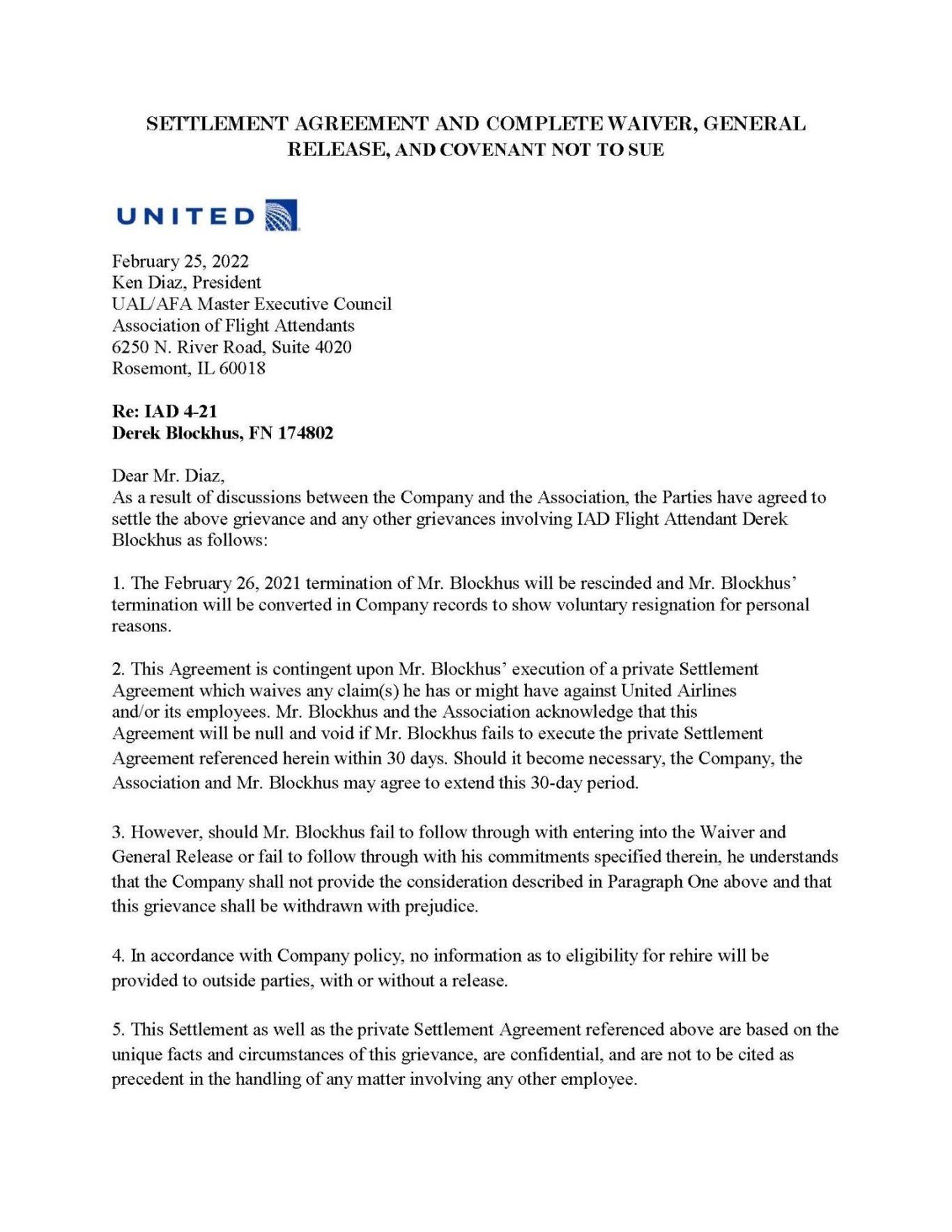
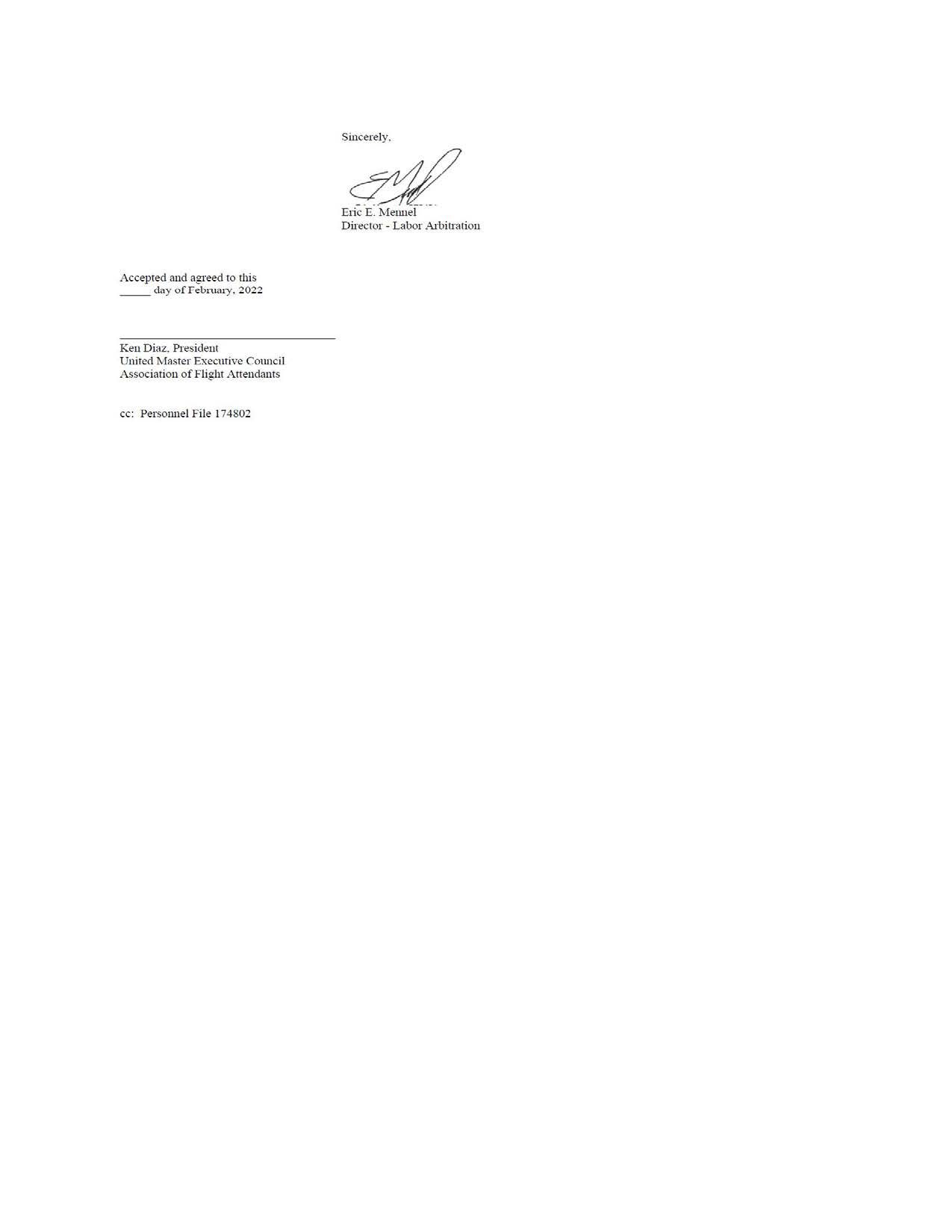
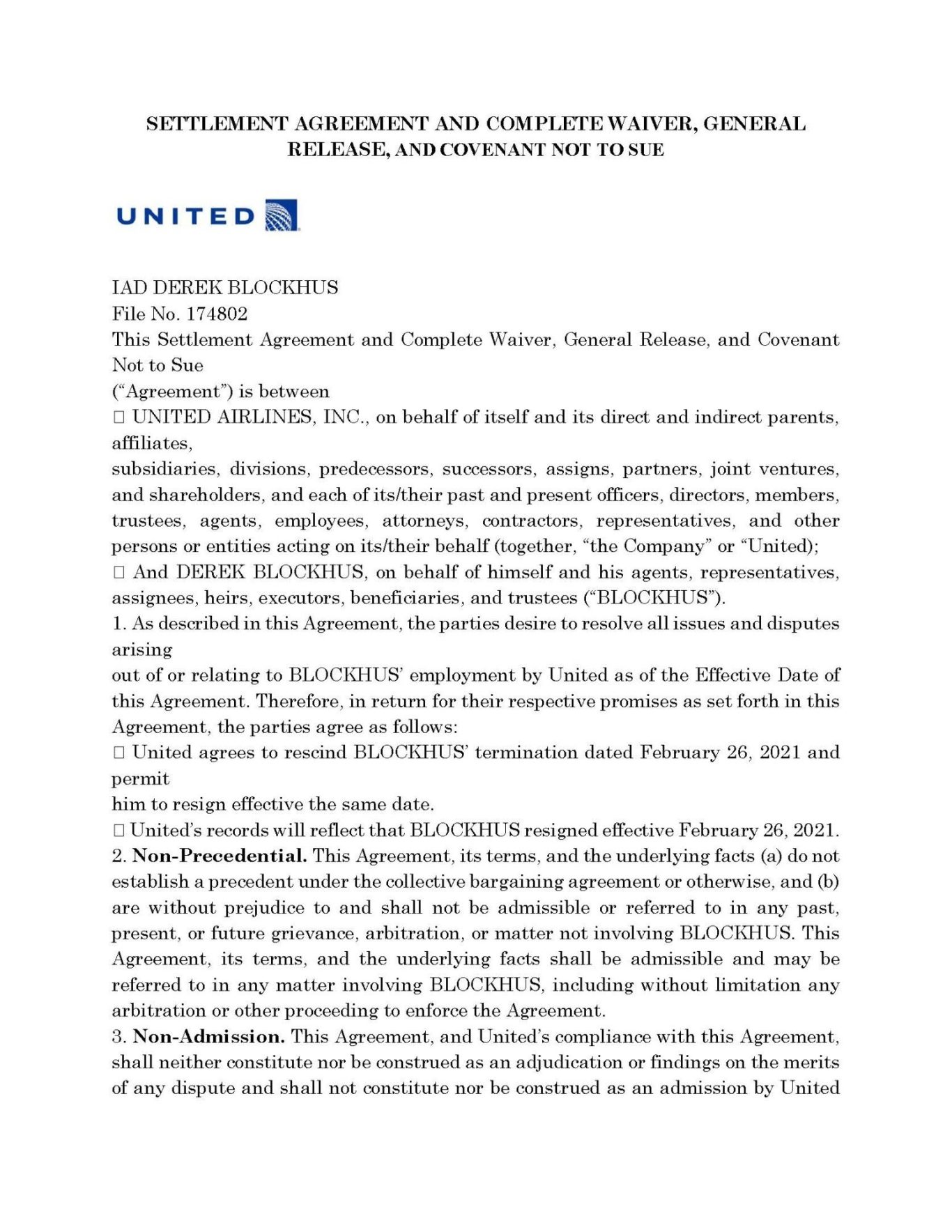
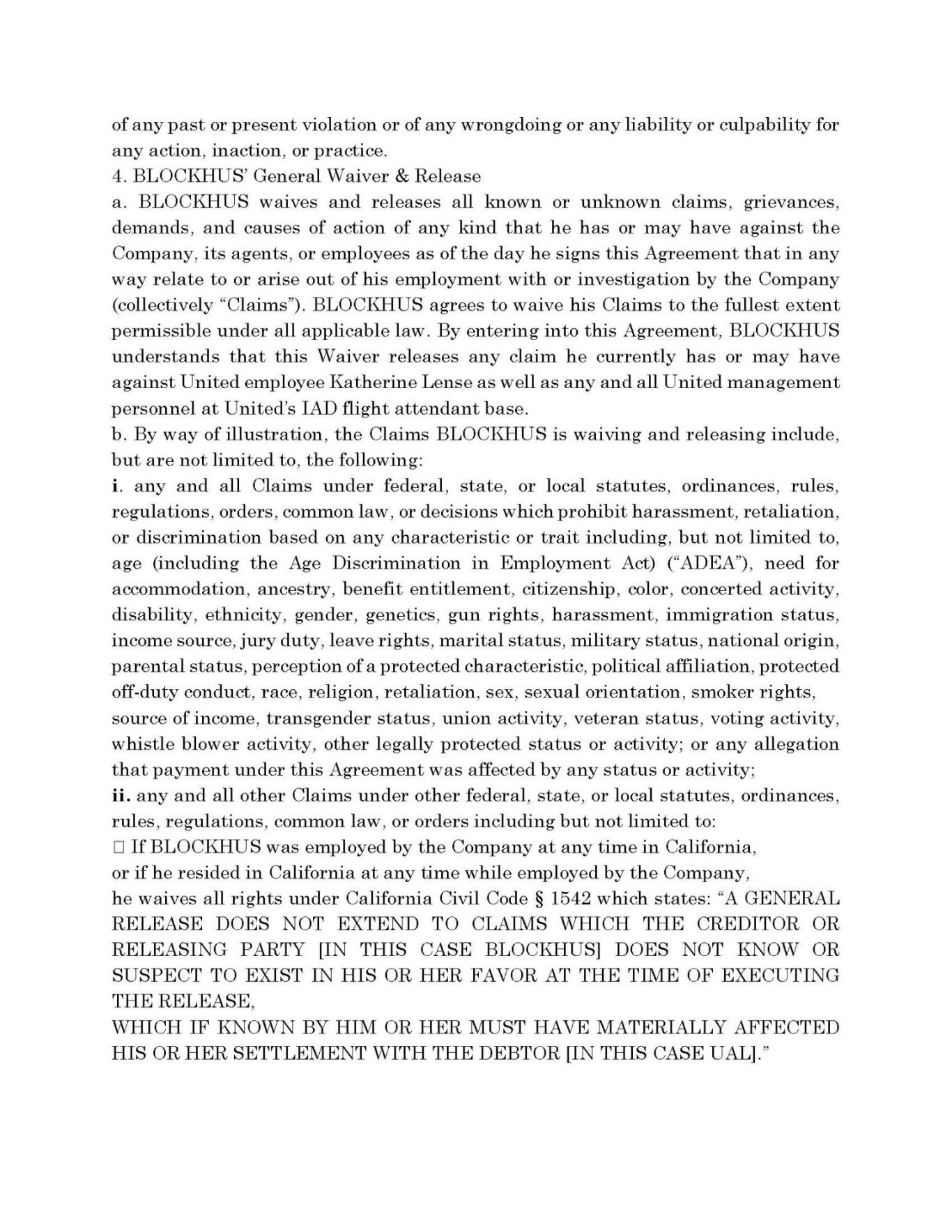

These facts collectively show a pretextual, procedurally defective, and retaliatory motive — they realized their case was weak, so they tried to elicit a resignation to shield themselves from liability.
- The “resignation option” proves United (Jr. employee Frank Hester) knew termination could not withstand scrutiny under the CBA’s just cause standard or federal law;
- The offer reflects bad faith and retaliatory motive, consistent with their other procedural violations;
- The act constitutes constructive discharge, not voluntary resignation; and
- It is powerful circumstantial evidence of wrongful termination and retaliation.
II. Key Facts
1. Blockhus Employment Record:
FA Blockhus had an unblemished 24-year career with United Airlines, governed at all times by a
binding Collective Bargaining Agreement (CBA).
- FA Blockhus consistently met or exceeded performance expectations.
- FA Blockhus had no prior record of misconduct or discipline.
- FA Blockhus was fully compliant with his duties and obligations under the CBA.
⚖ Key Argument:
1. An employee with an unblemished 24-year record, protected by a CBA, cannot lawfully be terminated
without just cause, due process, and union representation. United’s decision to terminate FA Blockhus in absentia, violated both contractual and statutory protections. After 24 years of dedicated service under this binding written contract, FA Blockhus was denied the very protections the CBA guaranteed. His termination was not only unjust — it was a clear breach of contract and of fundamental due process.
2. Protected Activity – Reporting Harassment
On January 24, 2021, and again on January 25, 2021, at 10:58 a.m., FA Blockhus left a voicemail for a
fellow employee and former girlfriend, FA Lense. In that message, he informed her that if she did not
cease her harassment of him and another co-worker, they would report her behavior to the company. The purpose of these communications was protective and corrective, not punitive. FA Blockhus did not threaten FA Lense, her safety, or her employment; rather, he advised her of a lawful and policy-compliant course of action—reporting workplace harassment—if the conduct continued. United later acknowledged that this communication did not violate company policy and that an employee may inform another employee of an intent to report misconduct to Human Resources.
Why This Matters:
- Not Misconduct: FA Blockhus’s voicemail was not threatening; it was a warning to stop
harassment and a notice that her conduct would be reported. - Policy-Compliant: United later admitted that such a message was acceptable under company
policy then turned around and used it for further justification to terminate FA Blockhus. - Protected Activity: Reporting or warning about workplace harassment is protected activity
under both the CBA and federal law. - Retaliatory Motive: Immediately after FA Blockhus call warning FA Lense to stop her
harassment, she filed a retaliatory complaint against him in order to, as she has testified, “protect
her job”.
o Her initial claim was limited to saying FA Blockhus had “threatened her employment.”
o Only later did she submit false, altered text message screen shots — which contained
no phone number, no dates, and no authentication.
o Despite the lack of verification, United (Jr. employee Frank Hester) accepted her submissions without scrutiny and used them as the basis to justify termination.
⚖ Key Argument:
The sequence of events — FA Blockhus reporting harassment, followed immediately by FA Lense retaliatory complaint, and her later reliance on unauthenticated texts — demonstrates a clear retaliatory motive. United’s reliance on this shifting, unverified evidence shows bad faith, pretext, and a violation of contractual and statutory protections. The voicemail was a legitimate workplace report of harassment, not a policy violation. United’s use of this protected activity as a basis for termination even after stating it was acceptable under United policy, highlights retaliation and pretext.