Base Manager Monique Williams issued a directive
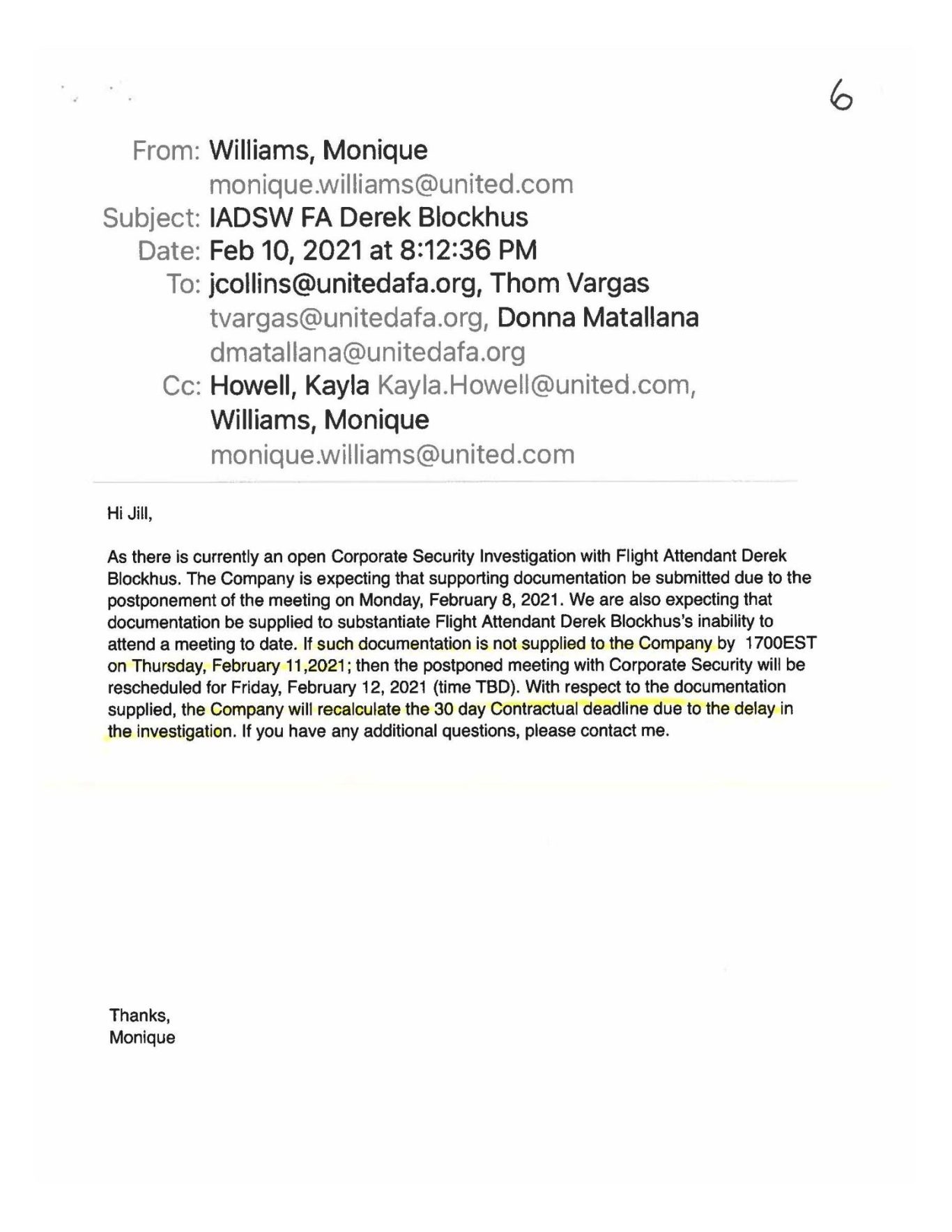
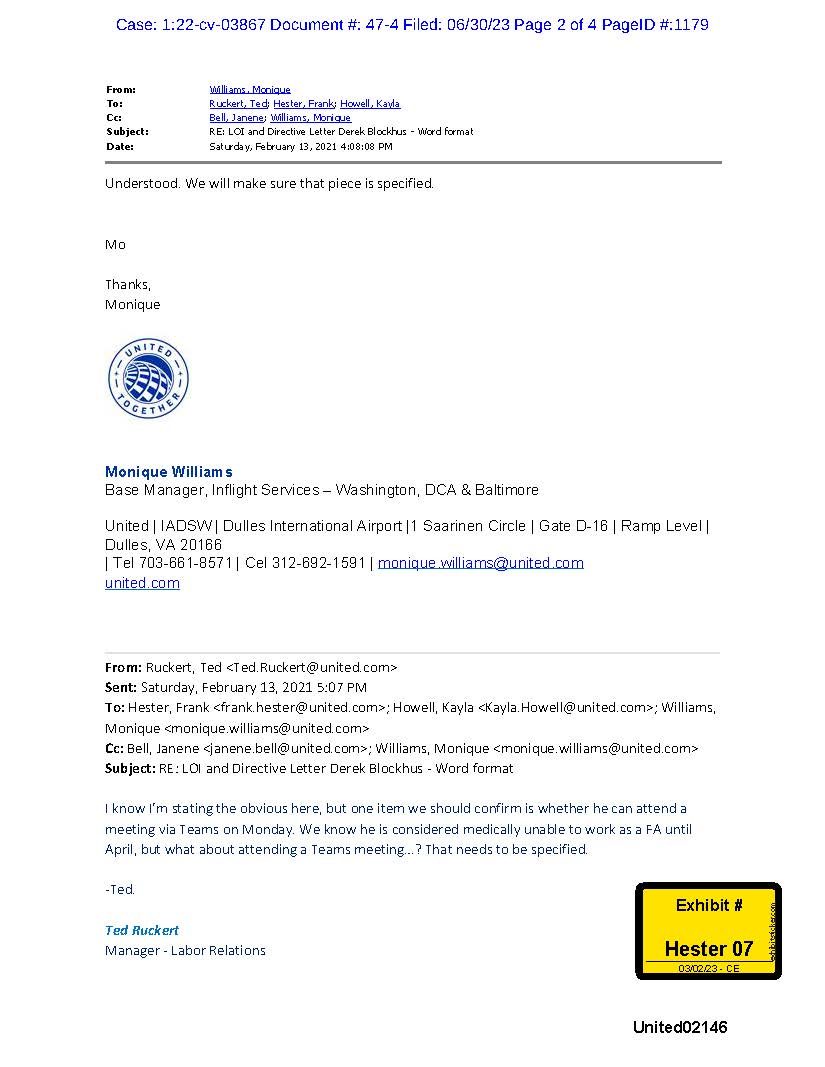
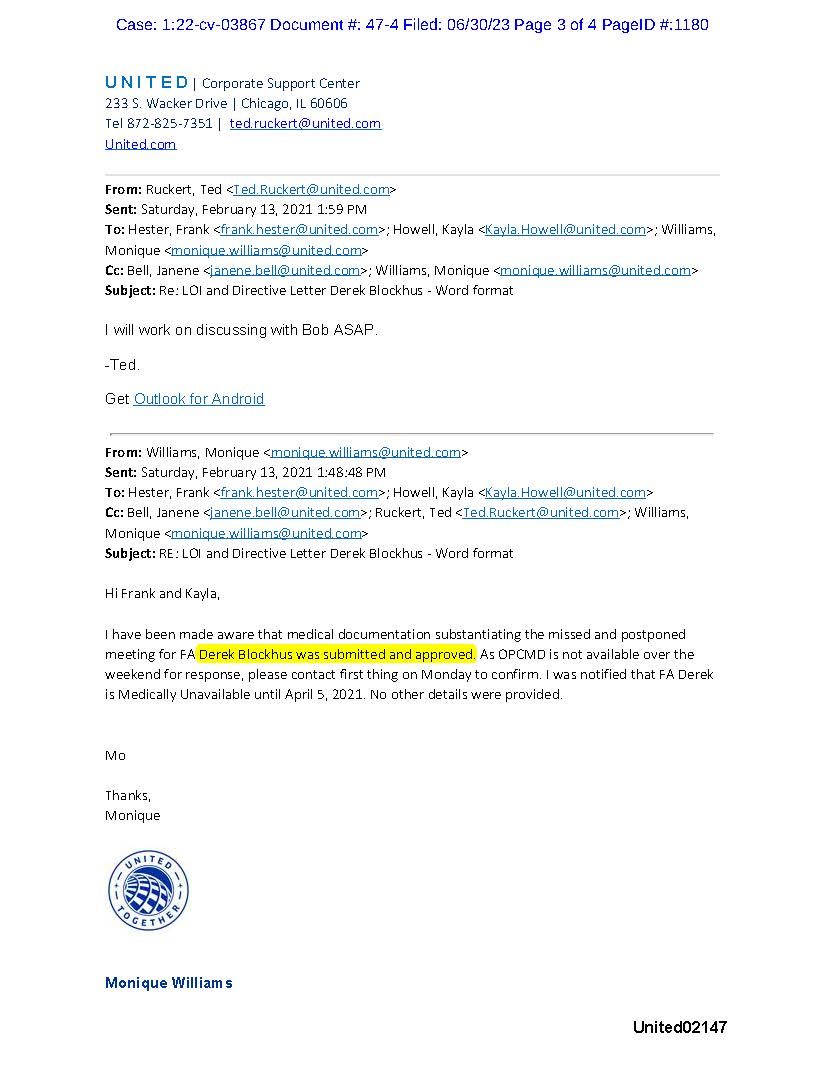
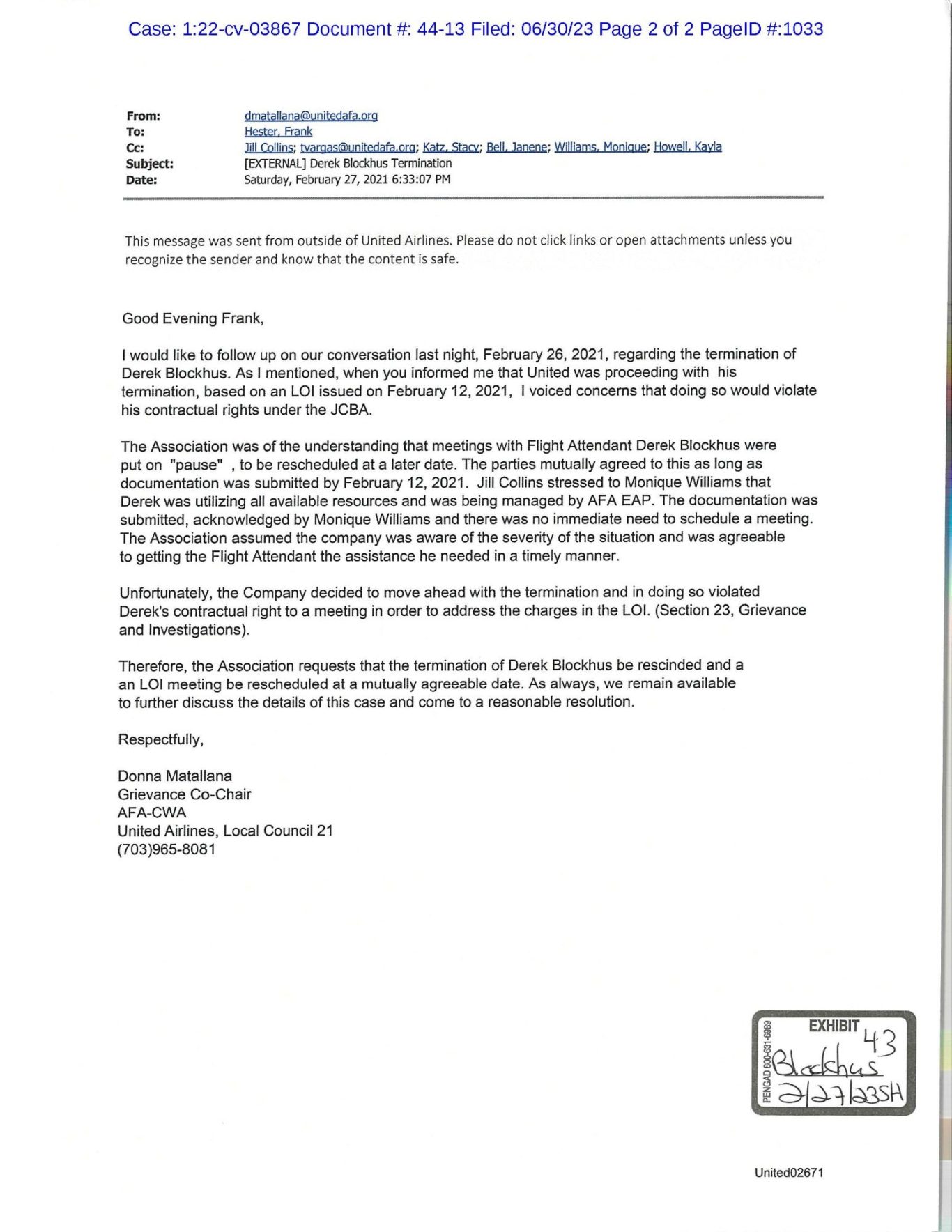
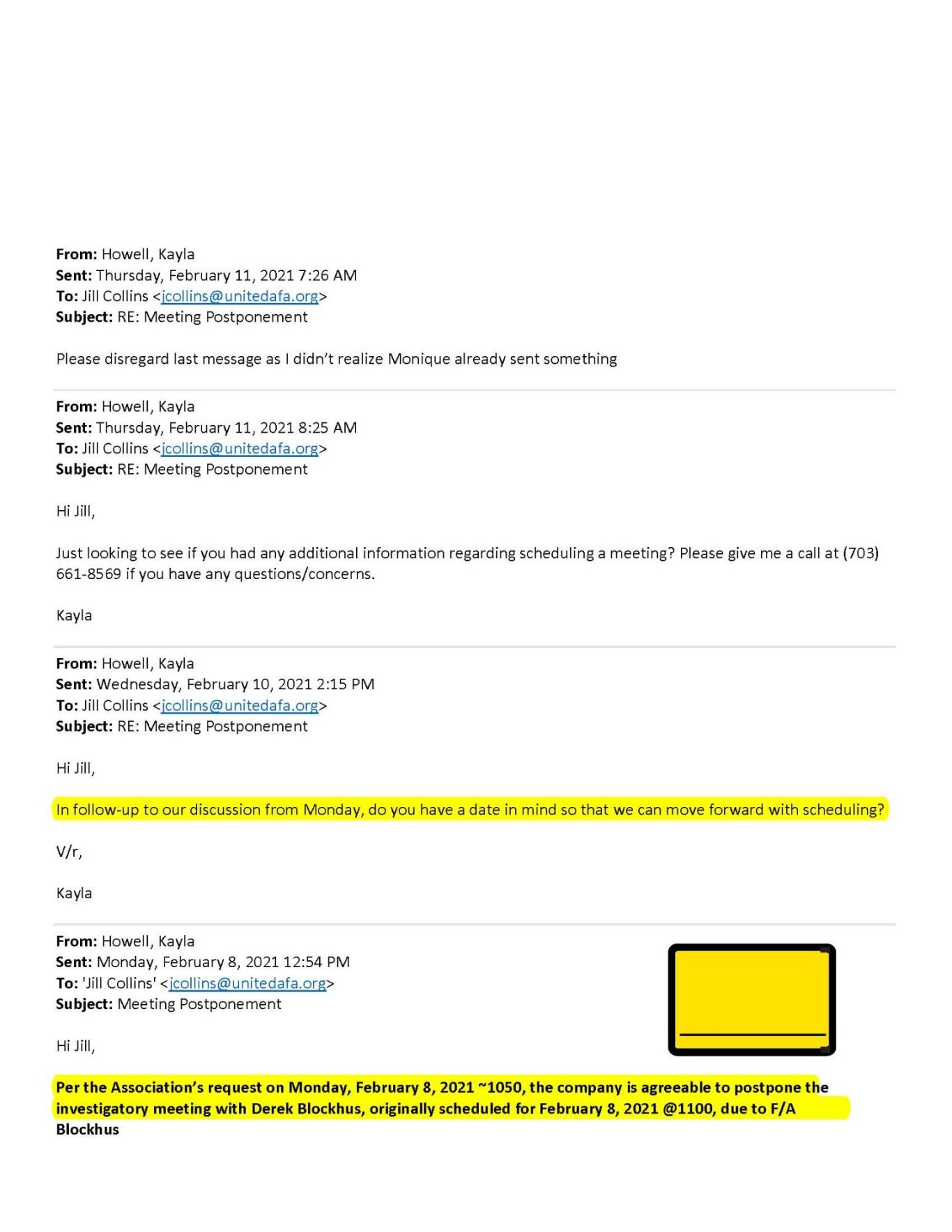
Following Mr. Blockhus’s disclosure of his medical condition and entry into treatment, Monique Williams, United Airlines’ Base Manager at Washington Dulles International Airport (IAD)—the location where Mr. Blockhus was based—formally communicated and coordinated with representatives of the Association of Flight Attendants (AFA) regarding the status of any pending disciplinary proceedings. As a result of those discussions, an agreement was reached to postpone further investigative or disciplinary action until Mr. Blockhus completed his approved medical leave and was available to participate.
This agreement was significant because it reflected recognition by both United management and union representatives that Mr. Blockhus’s medical condition and approved FMLA leave rendered him unavailable to meaningfully participate in any investigatory process. It also acknowledged that fundamental fairness, contractual protections, and due process required postponement of the matter until he could fully respond to allegations and participate in his own defense.
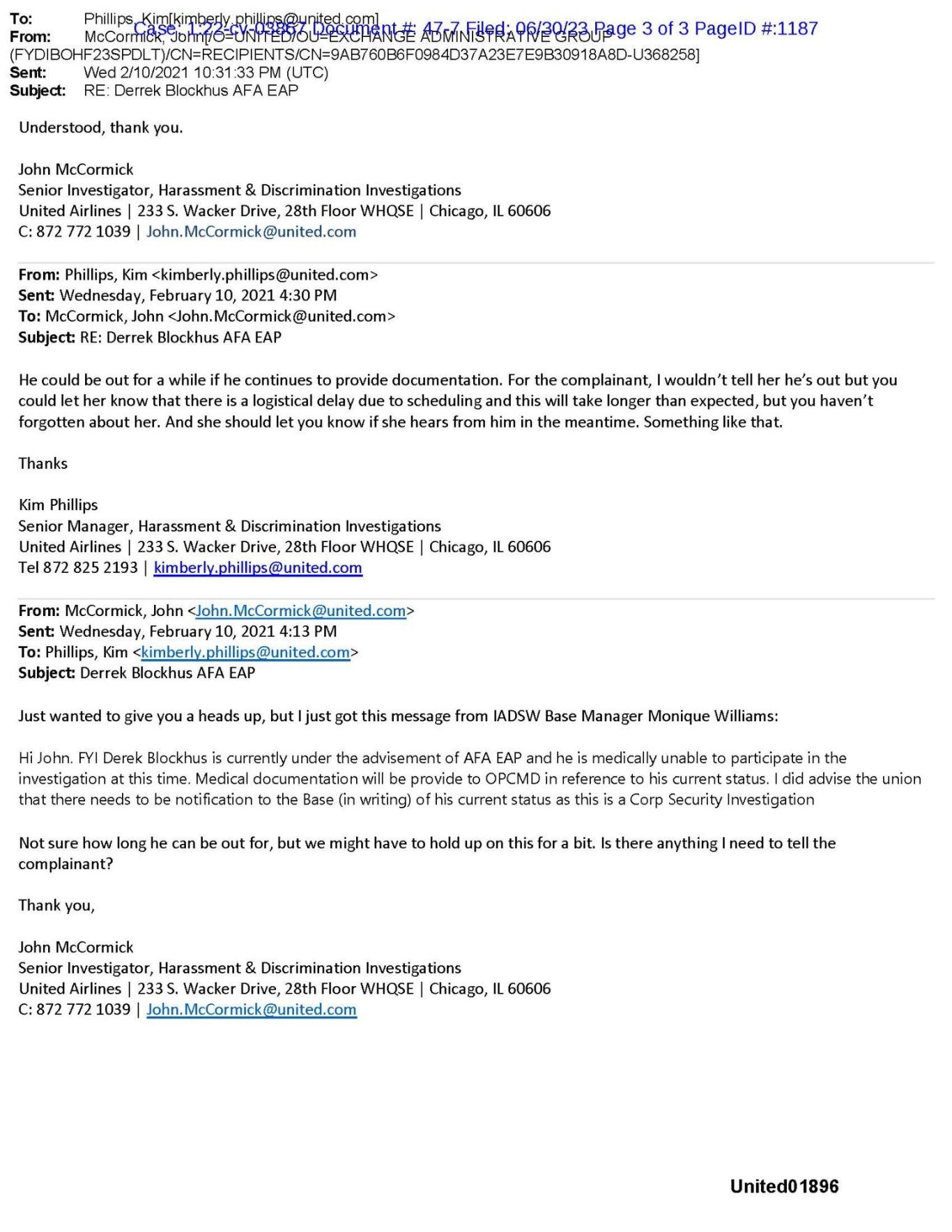
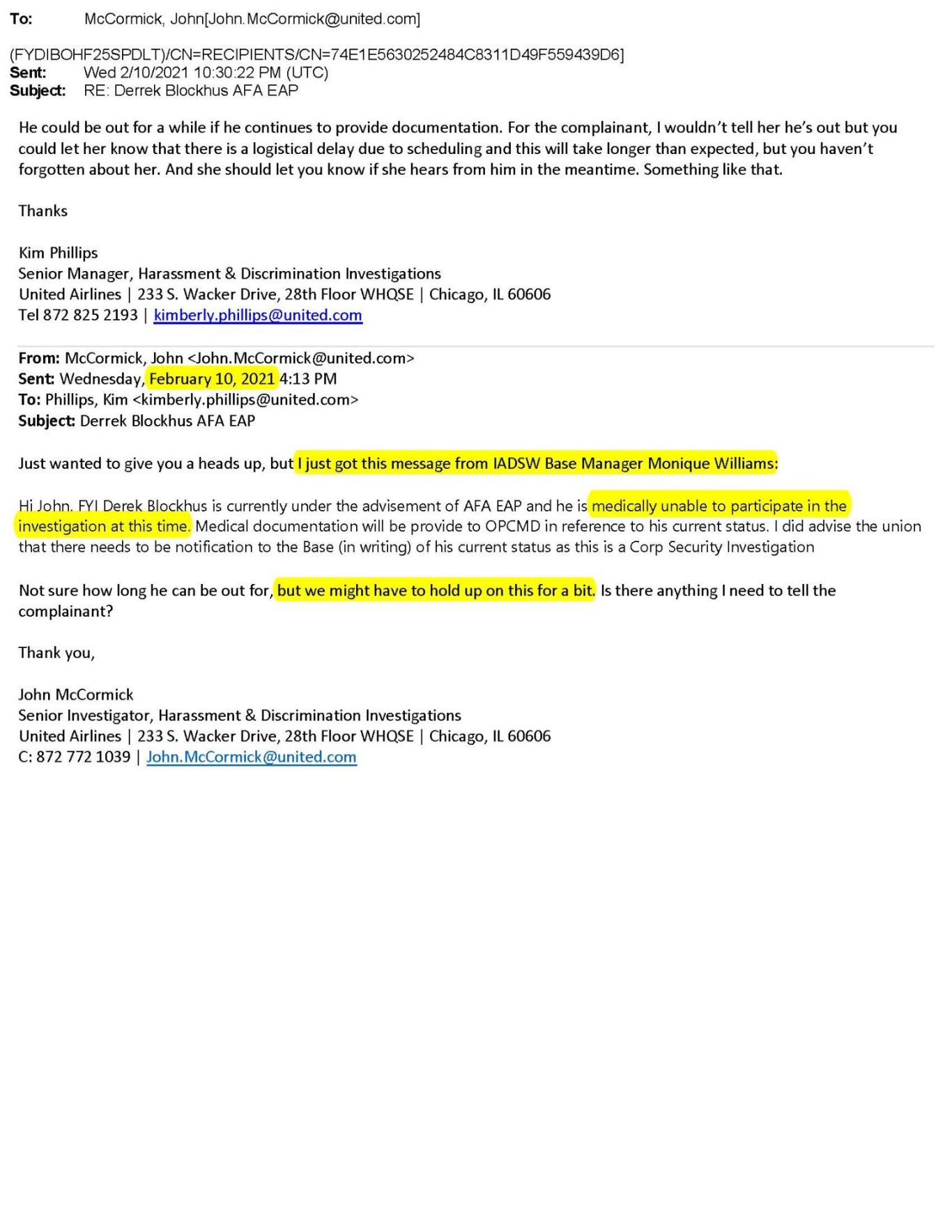
Consistent with this understanding, Ms. Williams issued a directive to all relevant United personnel stating that Mr. Blockhus was “unavailable” and that the investigation was to remain on hold until the conclusion of his FMLA leave. This communication was circulated to individuals involved in the investigative and disciplinary process, including management personnel responsible for evaluating the allegations and determining next steps.
The directive was not informal or ambiguous; it represented a clear acknowledgment by United that proceeding while Mr. Blockhus was medically unavailable would be inconsistent with both company procedure and his protected leave status. By identifying him as unavailable and instructing that the investigation be postponed, United effectively recognized that any meaningful investigative process required his participation and that proceeding in his absence would compromise fairness.
This agreement and corresponding directive are particularly important because they demonstrate that United was fully aware of Mr. Blockhus’s protected status under the Family and Medical Leave Act and the necessity of delaying proceedings until he could participate. It also reflects recognition of the contractual obligations imposed under the governing Collective Bargaining Agreement, which contemplates a fair investigatory process in which an employee has the opportunity to be heard and respond to allegations.
Despite this acknowledgment, United later chose to proceed with the investigation and disciplinary process during Mr. Blockhus’s absence. This departure from the agreed-upon course of action raises significant concerns regarding the consistency of United’s actions and whether the company disregarded both its own directive and the protections afforded to Mr. Blockhus under federal law and contractual agreement.
The existence of this directive is therefore highly material. It demonstrates that United initially recognized the necessity of postponement, understood that Mr. Blockhus could not meaningfully participate while undergoing treatment, and nevertheless later abandoned that position. This inconsistency calls into question the fairness and legitimacy of the disciplinary process that ultimately followed.
This agreement and directive are critical. They confirm that United:
1. Recognized Mr. Blockhus’s protected FMLA status,
2. Acknowledged the necessity of his participation for a fair investigation, and
3. Affirmatively agreed to suspend the disciplinary process in accordance with the
Collective Bargaining Agreement and federal law.
Failure to Postpone Investigation in Violation of Contract and FMLA Protections
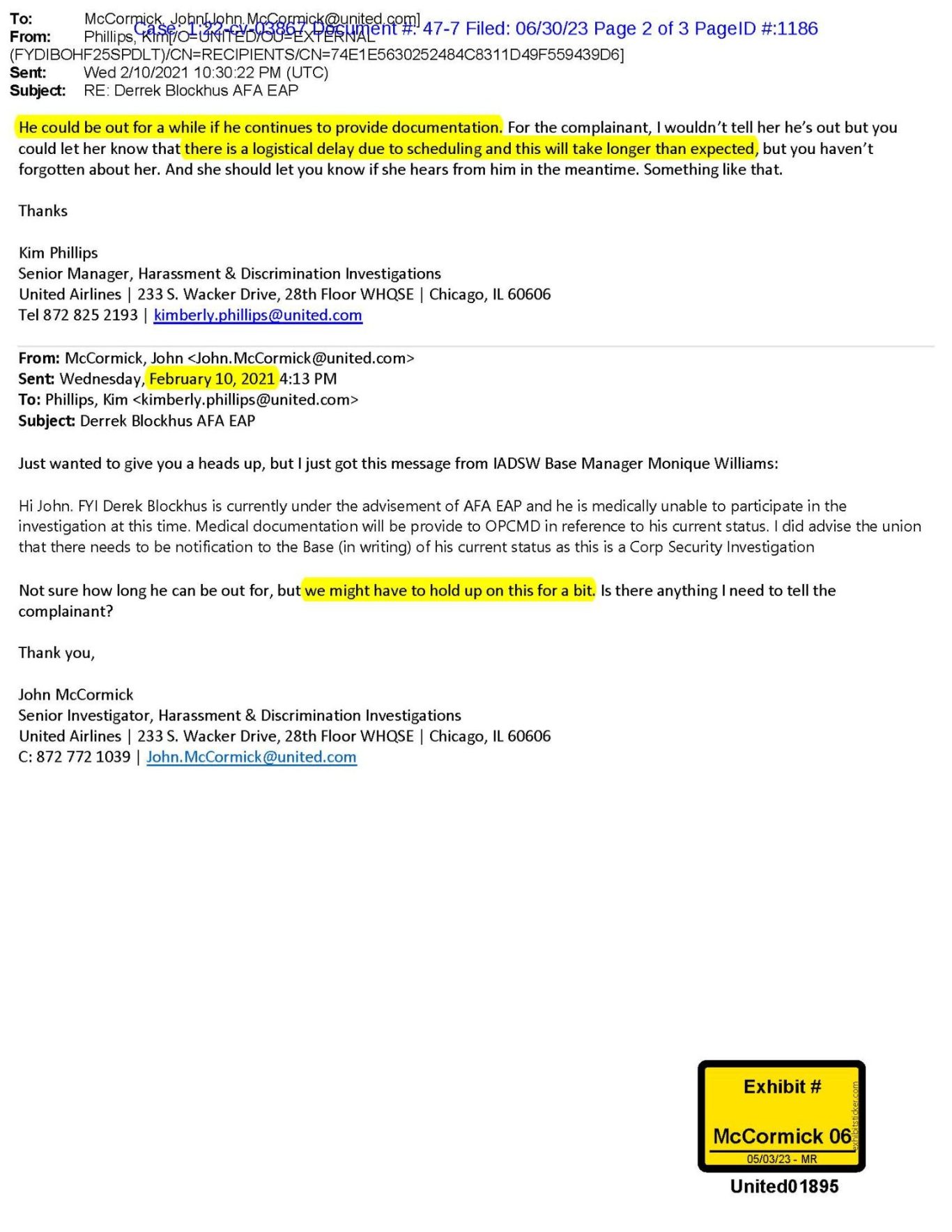
The internal email correspondence among United management establishes that an agreement was reached to postpone the investigation until Mr. Blockhus was available to participate. This agreement is not only clearly documented, but is also consistent with the requirements set forth in Mr. Blockhus’s employment contract, which guarantees the right to a fair investigation, including the opportunity to review evidence and respond to allegations.
At the time this agreement was made, United was fully aware that Mr. Blockhus was medically unavailable and on approved FMLA leave. Under these circumstances, both the Collective Bargaining Agreement and applicable federal law required that the investigation be conducted in a manner that preserved his ability to meaningfully participate.
Despite this, United proceeded with the investigation in his absence, expanded the scope of the allegations, and ultimately terminated his employment without ever affording him the opportunity to be heard. This conduct was directly inconsistent with the internal agreement to delay the investigation, in violation of the procedural protections guaranteed under his employment contract, and in disregard of his protected status under the Family and Medical Leave Act.
Proceeding under these conditions deprived Mr. Blockhus of fundamental due process. A fair and impartial investigation requires that the accused employee be given a meaningful opportunity to review the evidence, respond to the allegations, and participate in the process. By moving forward while Mr. Blockhus was medically unavailable and unable to engage, United effectively denied him those rights.
This failure is not a minor procedural oversight—it strikes at the core of the investigative process. Where an employer knowingly disregards both an internal agreement and contractual obligations, and proceeds to impose discipline without the employee’s participation, the resulting decision cannot be considered fair, reliable, or supported by just cause.
Accordingly, United’s decision to proceed with the investigation and terminate Mr. Blockhus while he was on approved FMLA leave, and in direct contradiction of its own agreement and contractual obligations, renders the entire process procedurally defective and legally unsustainable.