Fabricated Admission
– No Supporting Evidence
1. False Claim of Admission
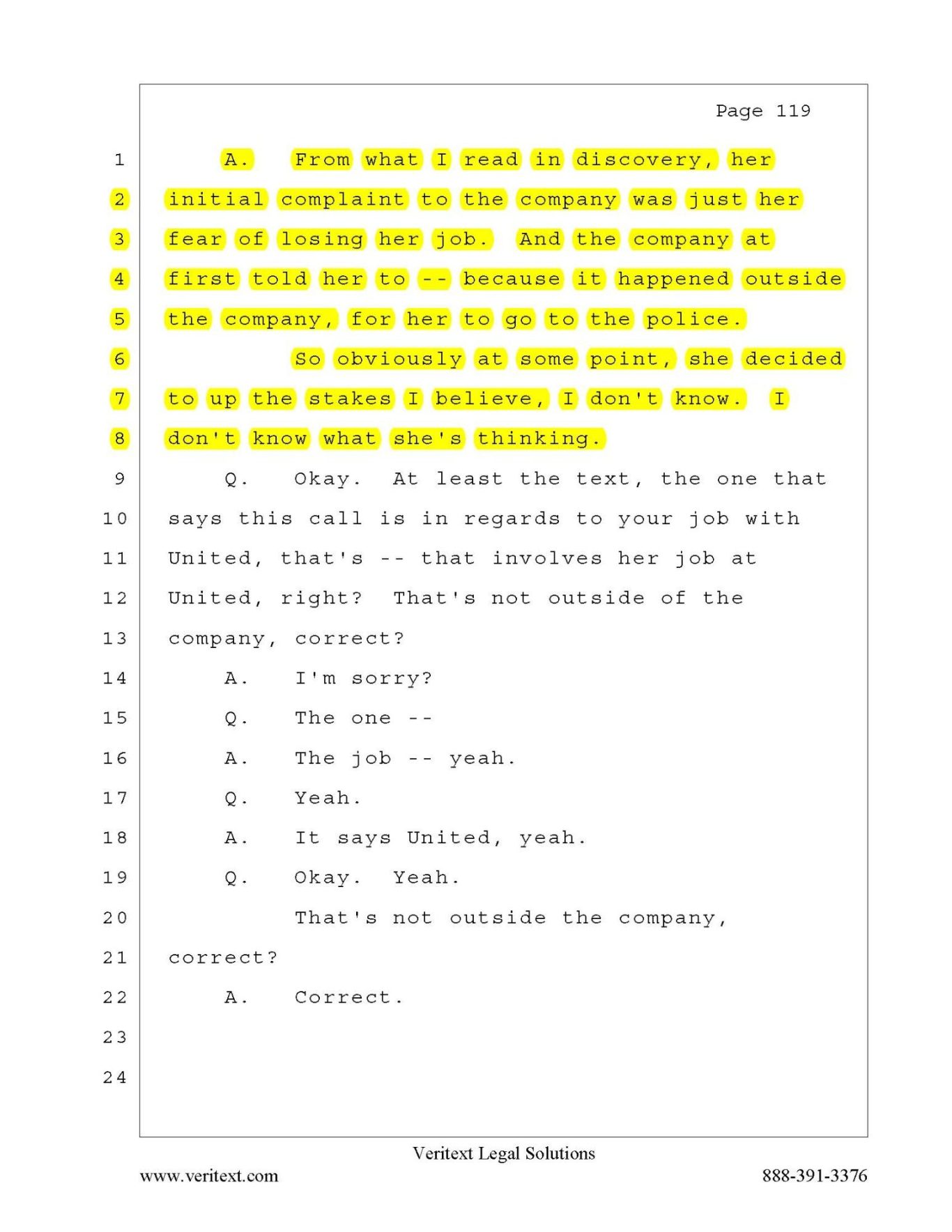
o United repeatedly asserted that FA Blockhus “admitted” to sending the alleged text
messages. However, at no point did United produce a single direct quote or authenticated
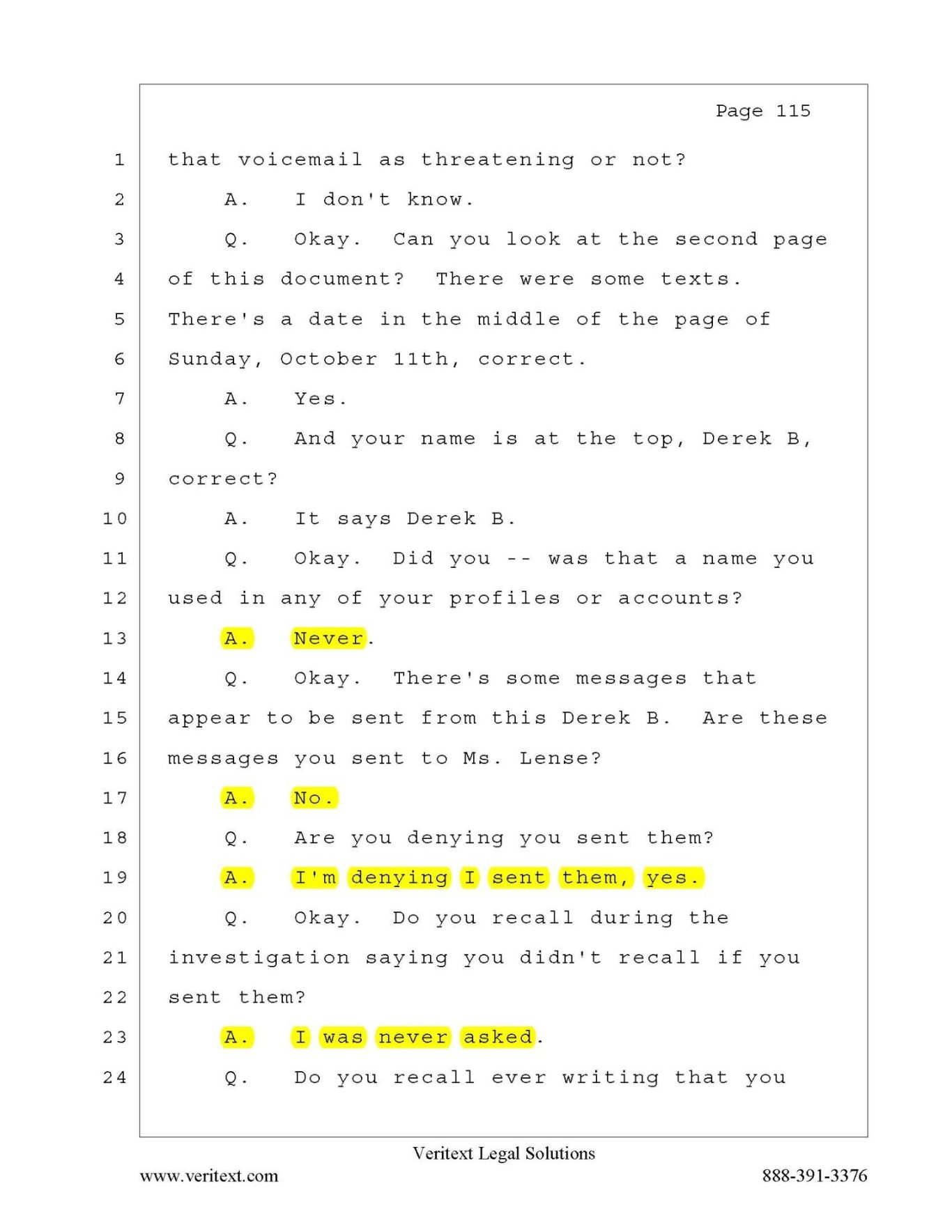
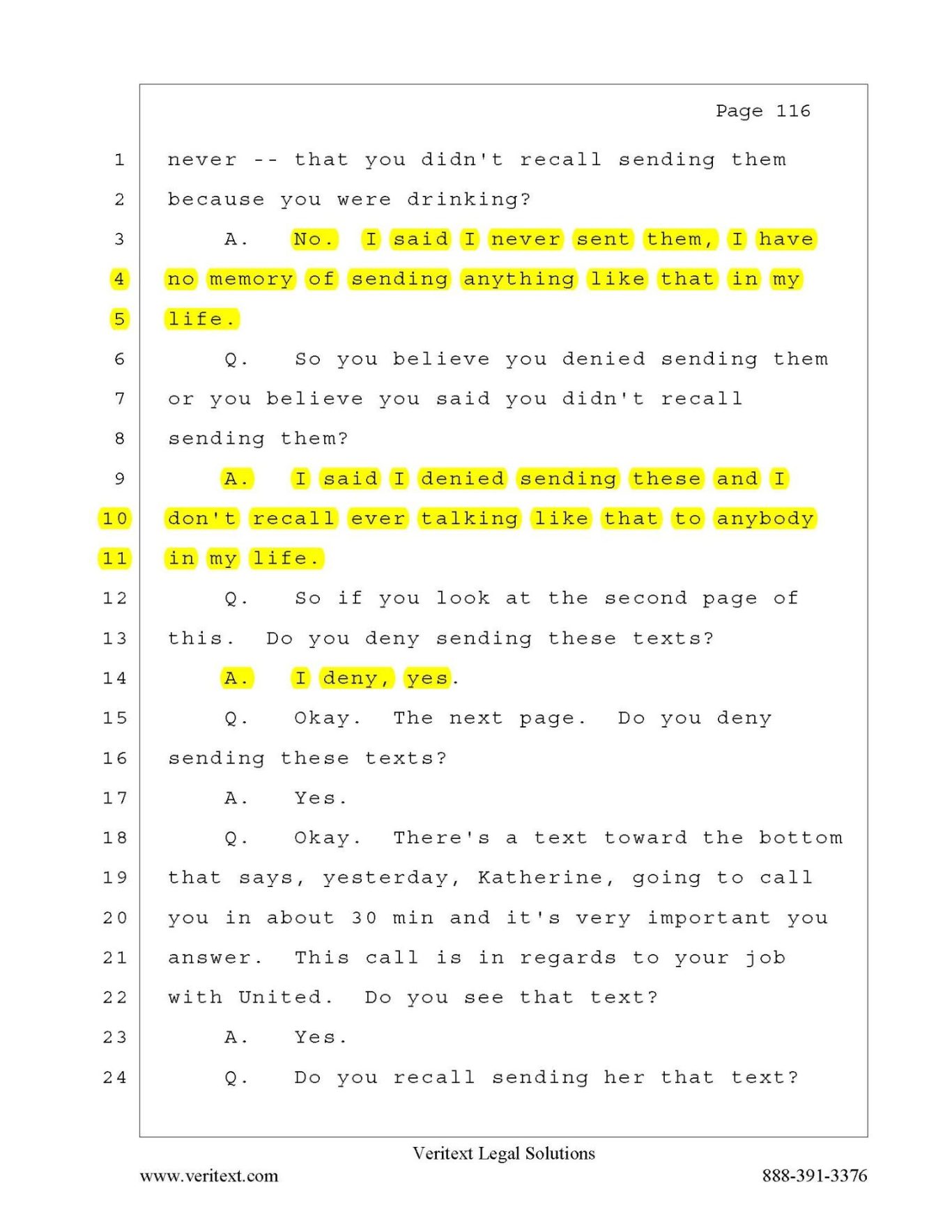
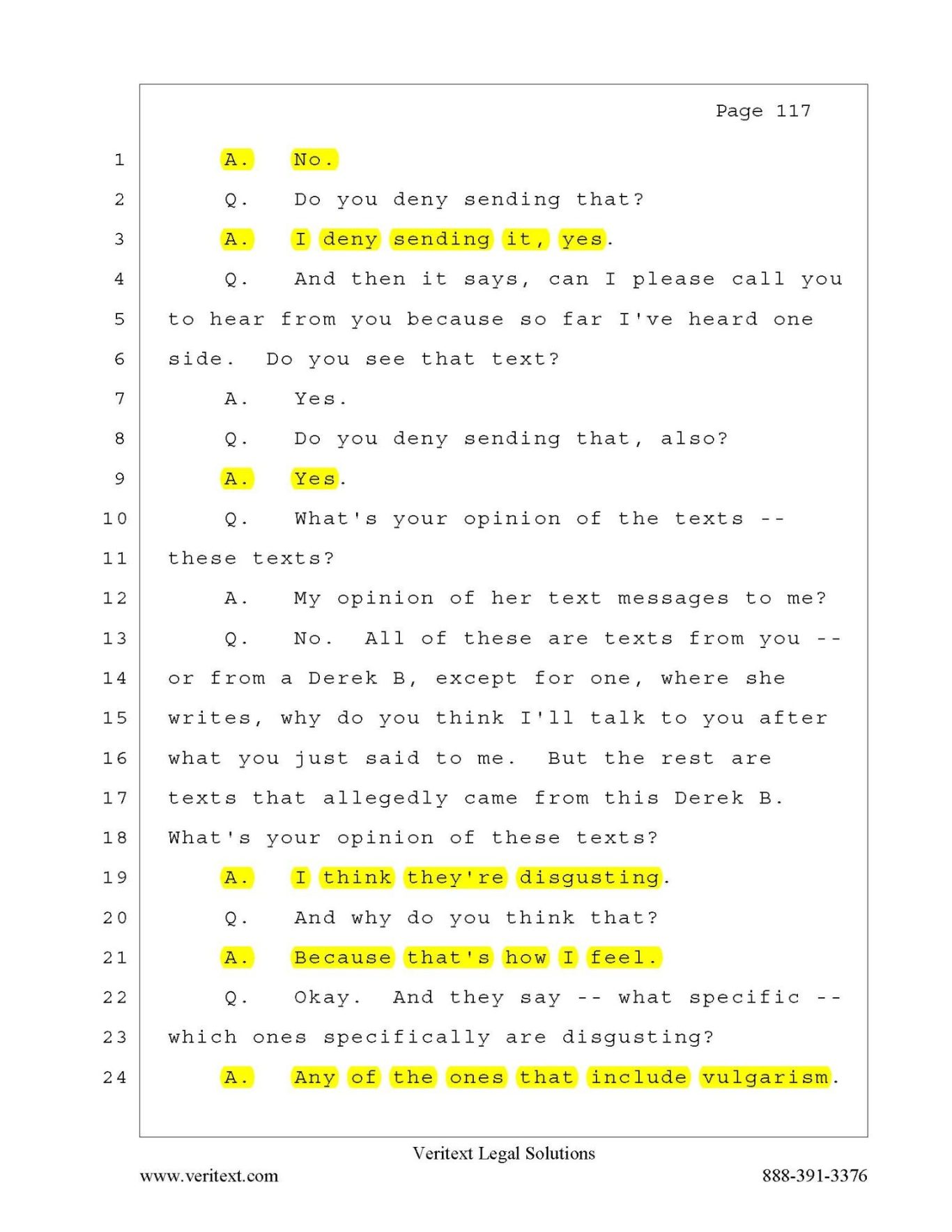
statement to substantiate this claim. On the contrary, FA Blockhus consistently denied the
allegations, explicitly calling them “ridiculous” and affirming that he would never engage in
such behavior.
2. Consistent and Unequivocal Denial of Allegations
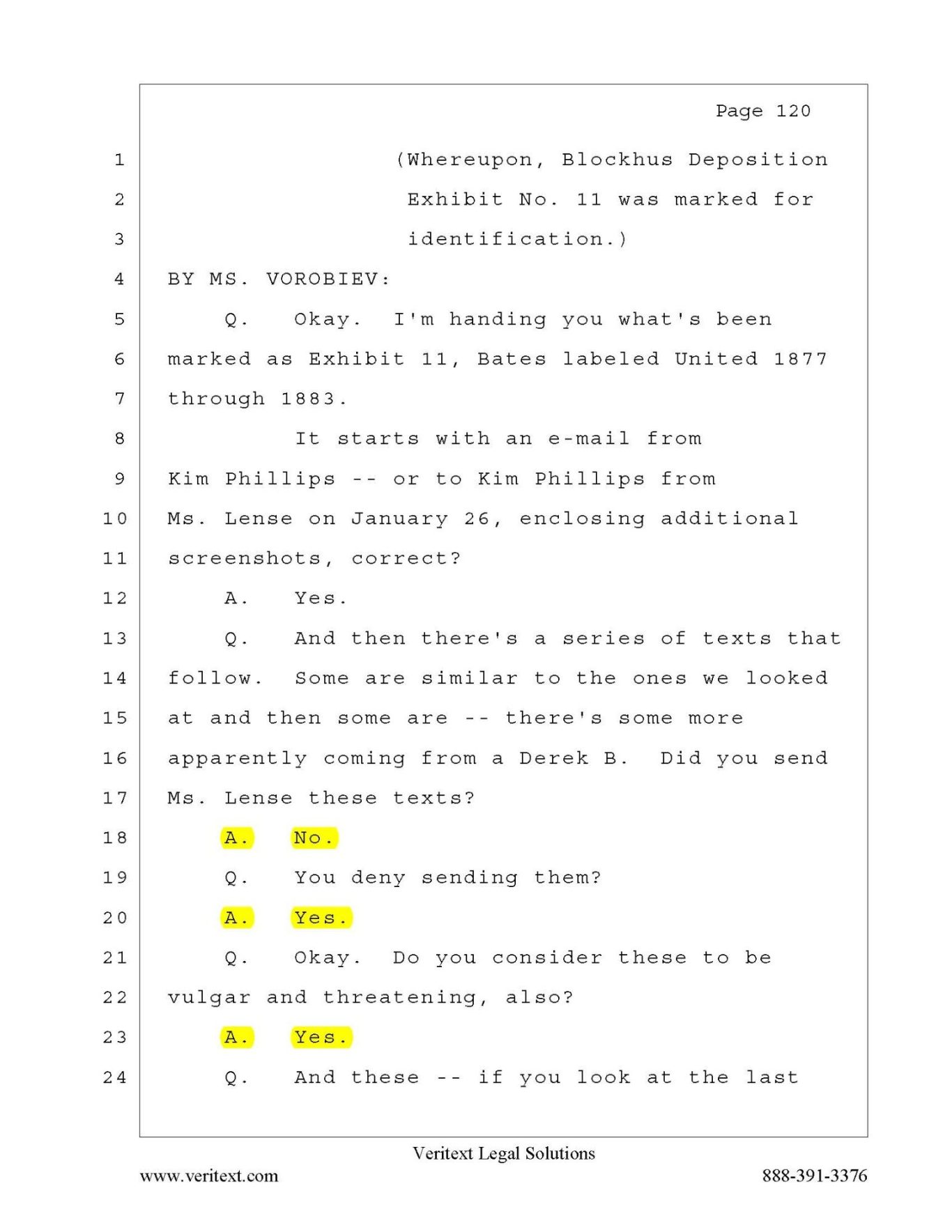
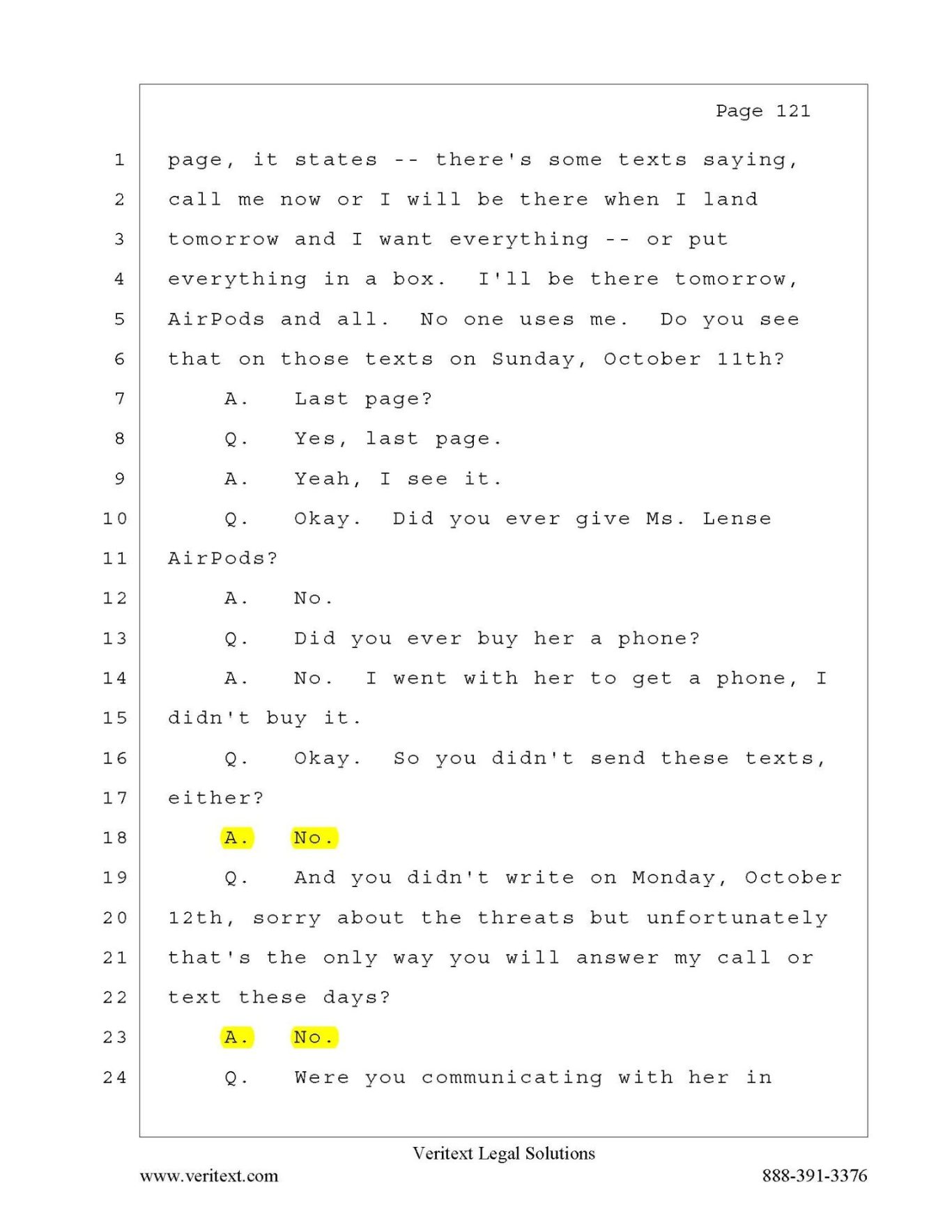
o Aditionally, throughout the entirety of his nine-hour deposition, FA. Blockhus adamantly and
consistently denied every allegation made by FA Lense. At no point did he admit to the
conduct alleged. To the contrary, he maintained under oath that the accusations were
entirely false, unequivocally disputing both the substance and the characterization of FA
Lense’s claims.
o United’s reliance on an unsubstantiated claim of admission—without any documentary
proof or verified statement—demonstrates both procedural unfairness and pretext. It reflects
a predetermined effort to justify termination rather than a good-faith investigation grounded
in facts or evidence.
3. United Abandoned Neutrality and Aligned Itself with the Accuser
- At no time did United maintain itself as a neutral third party in this matter. Instead, United
aligned itself with the accuser, FA Lense, adopting her narrative wholesale and treating her
allegations as presumptively true. United relied exclusively on her statements, deferred to
her judgment regarding what evidence was “relevant,” and failed to independently verify
facts, authenticate evidence, or seek FA Blockhus’s account.
- By abandoning neutrality and effectively forming an alliance with FA Lense, United compromised the integrity of the investigative process. Rather than serving as an impartial decision-maker, United acted as an advocate for the complainant, rendering the investigation biased, one-sided, and procedurally invalid under the Collective Bargaining Agreement’s due-process and just-cause requirements.
⚖ Key Legal Significance:
FA Blockhus’s unwavering denial under extended sworn examination further underscores the absence of
any legitimate basis for United’s termination decision. When contrasted with FA Lense’s shifting
testimony, memory lapses, and admissions of continued friendship, this record highlights the one-sided,
pretextual nature of United’s investigation and reinforces that the employer failed to conduct a fair or
balanced inquiry before terminating his employment. An employer’s failure to remain neutral in a
disciplinary investigation—particularly where it aligns with the accuser and excludes the accused—
constitutes strong evidence of bias, pretext, and bad faith. United’s conduct further undermines any
claim of a fair investigation or “honest belief” and supports findings of wrongful termination, breach of
contract, and retaliation.
⚖Why This Matters:
•Lack of Proof: No contemporaneous notes, emails, transcripts, or recordings show any
such admission.
• CBA & Due Process Violation: United cannot invent statements or mischaracterize
them as fact without evidence.
• Bias & Pretext: By framing his denials or confusion as an “admission,” United
demonstrated bad faith and an outcome-driven process.
• Legal Defect: Courts reject unsupported “admissions” absent verifiable evidence (see
Gacek v. American Airlines, 614 F.3d 298 (7th Cir. 2010) — employer’s reliance on
fabricated/unsupported accusations insufficient for termination).
⚖ Key Argument:
United’s repeated assertion that FA Blockhus “admitted” to sending the alleged text messages—without
identifying a single verifiable quote, statement, or admission—underscores the absence of evidence, the bias of the investigation, and the contractual violations at its core. At no point did United produce any direct language in which FA Blockhus acknowledged sending the texts. To the contrary, the record reflects that he consistently and explicitly denied the allegations, characterized them as “ridiculous,” and identified FA Lense’s complaint as retaliatory. An employer’s claim of an “admission” must be supported by clear, unequivocal evidence. United’s failure to cite any specific words attributed to FA Blockhus—while nonetheless relying on the assertion as a central justification for termination—demonstrates that the conclusion was assumed rather than proven. This mischaracterization of the record reflects a predetermined outcome, not a reasoned evaluation of facts. Moreover, United’s reliance on a supposed admission is particularly improper where the alleged statement was made under extreme emotional distress, before FA Blockhus had been informed of the full allegations, and after he was instructed by his supervisor that an apology for “involving the company” was his “only recourse” to keep his job.
United later conceded that the statement was submitted "outside the formal disciplinary process" and before full notice was given, yet still attempted to recast it as an admission of guilt. This conduct violates fundamental principles of due process, fairness, and just cause, as well as the explicit procedural safeguards of the Collective Bargaining Agreement.