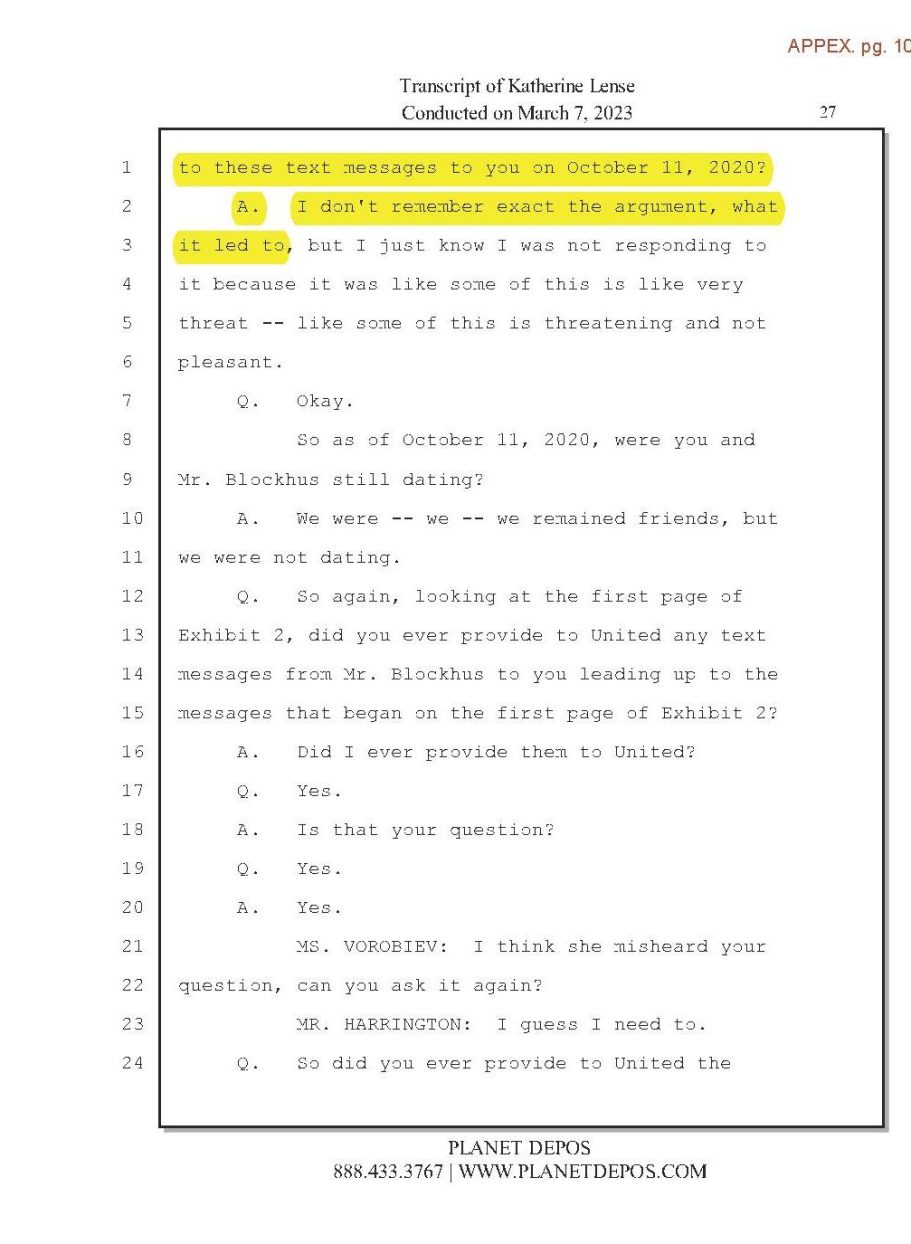
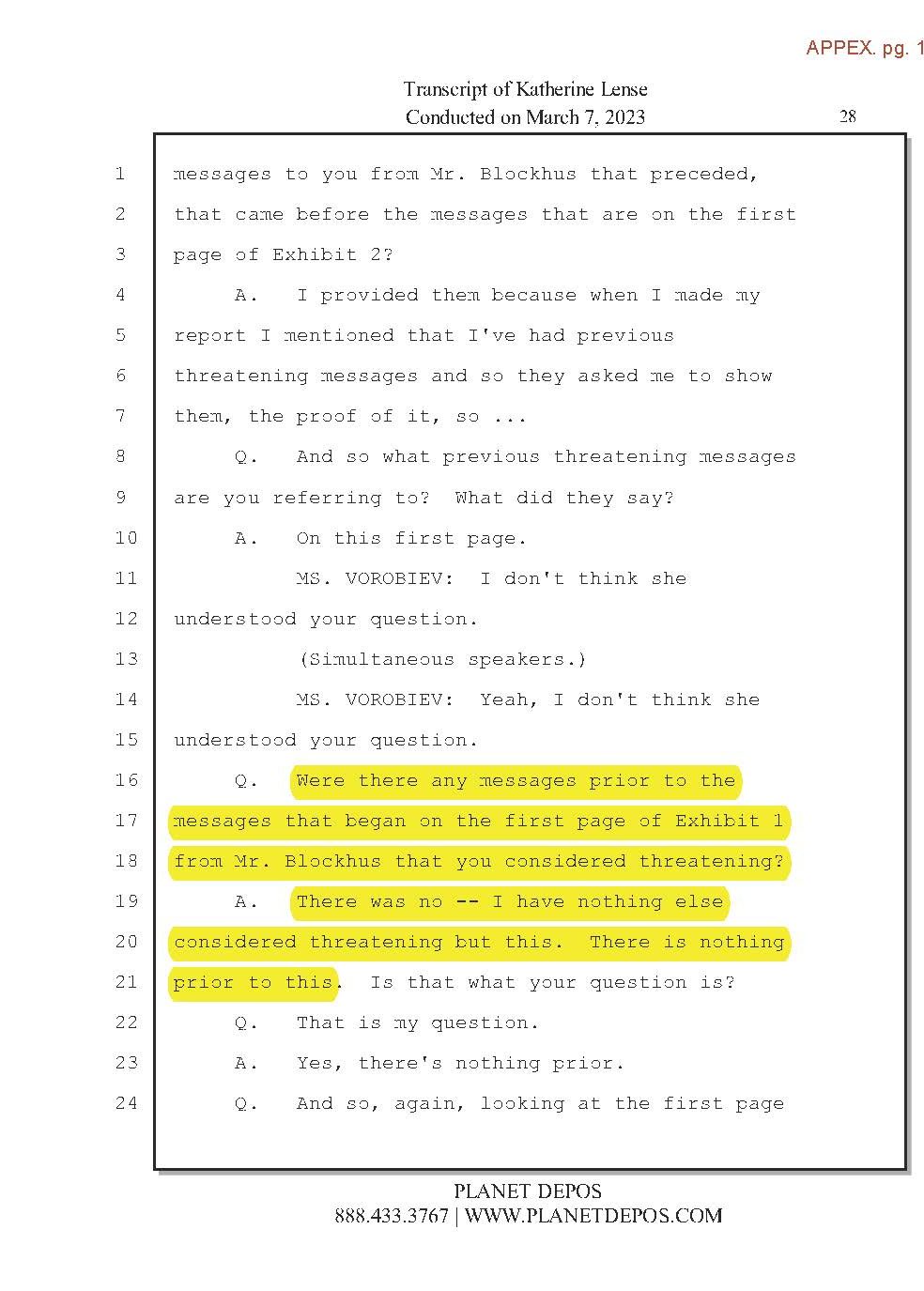
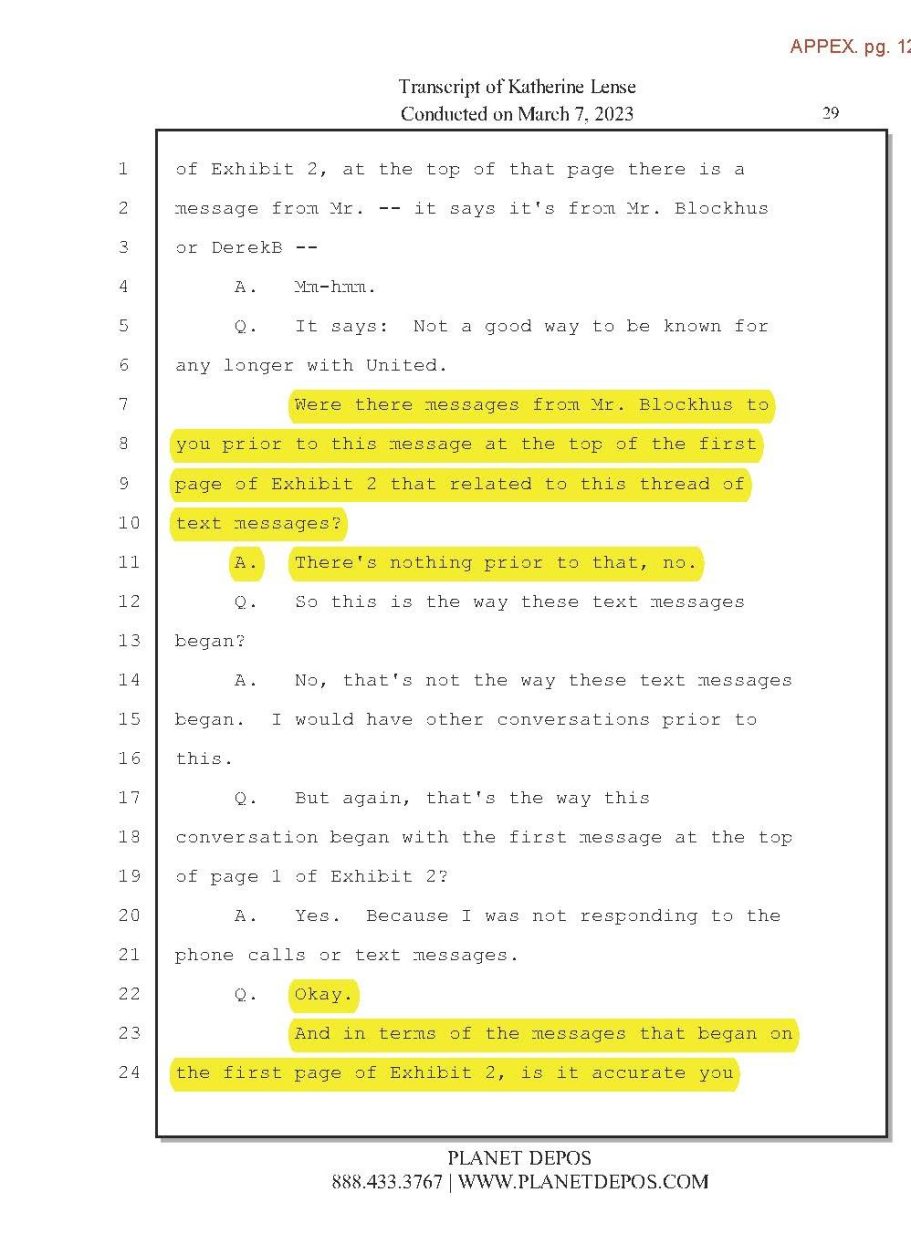
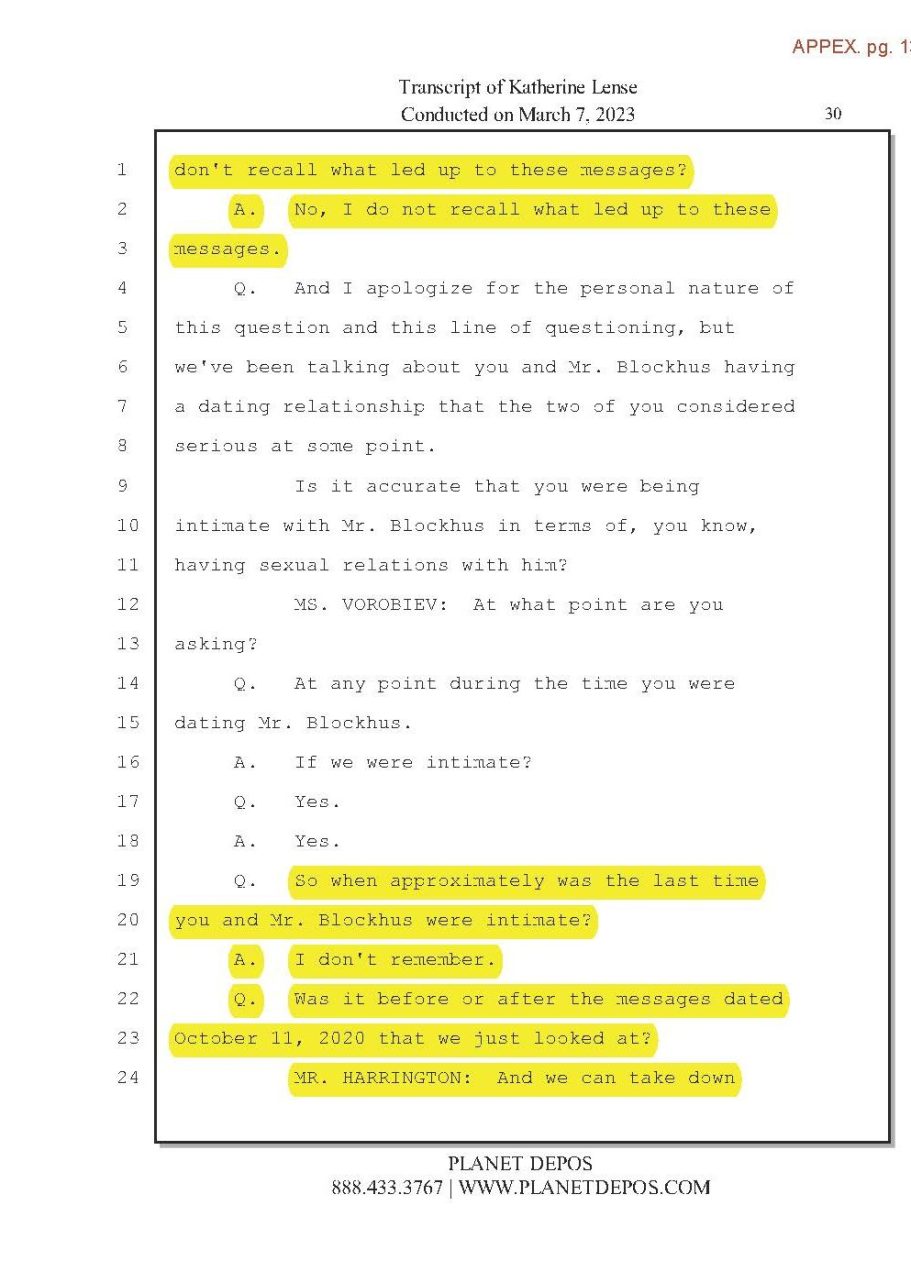
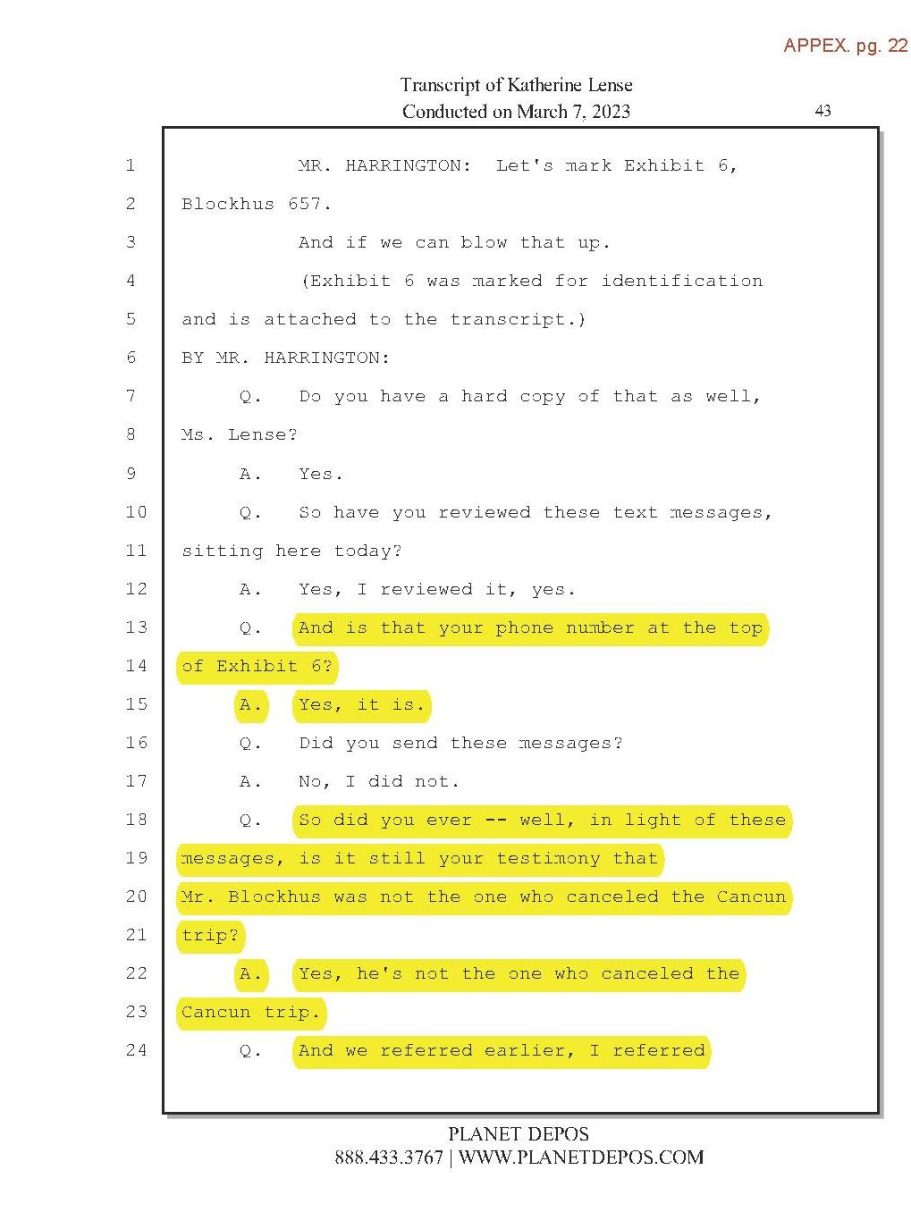
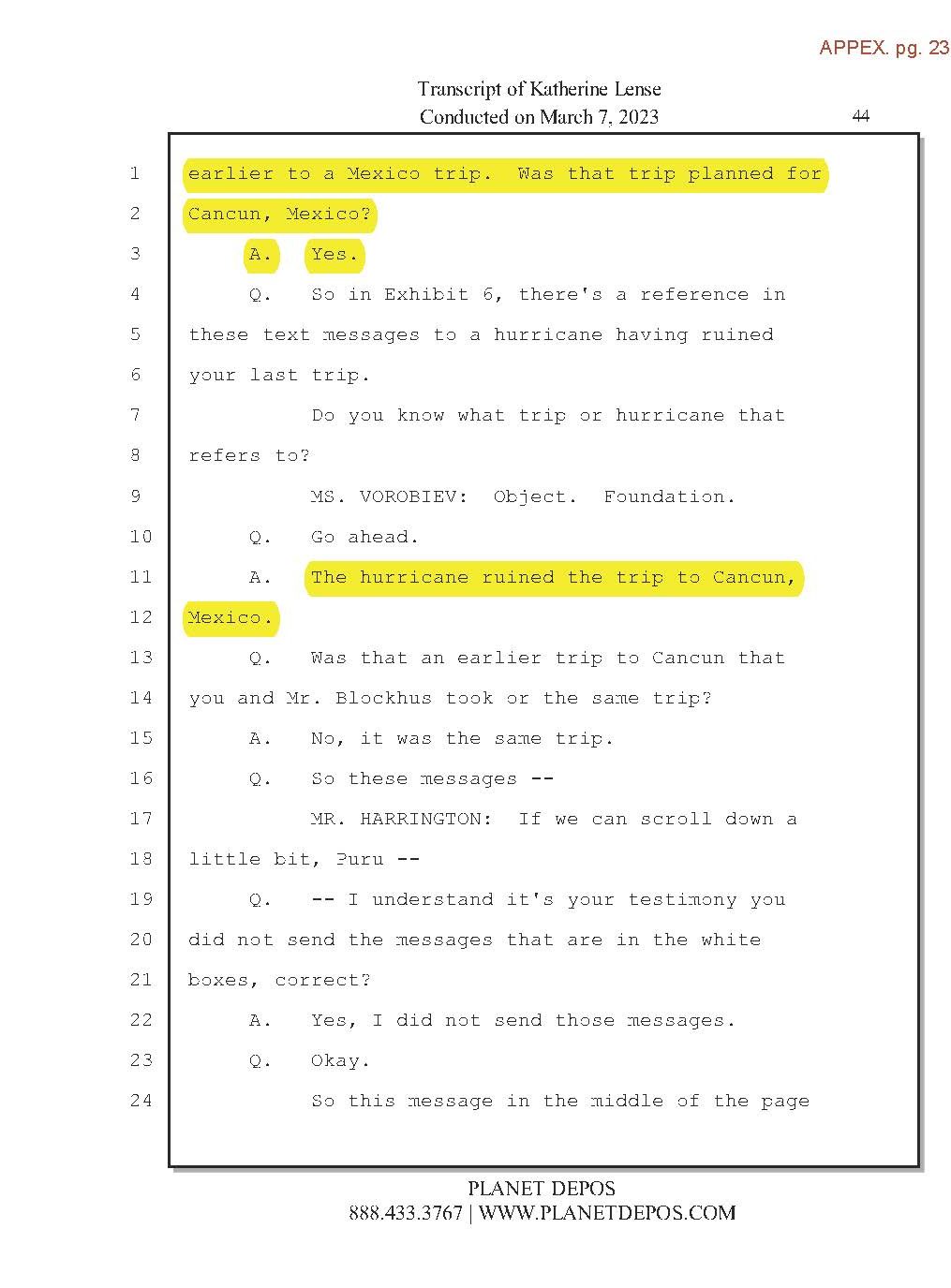
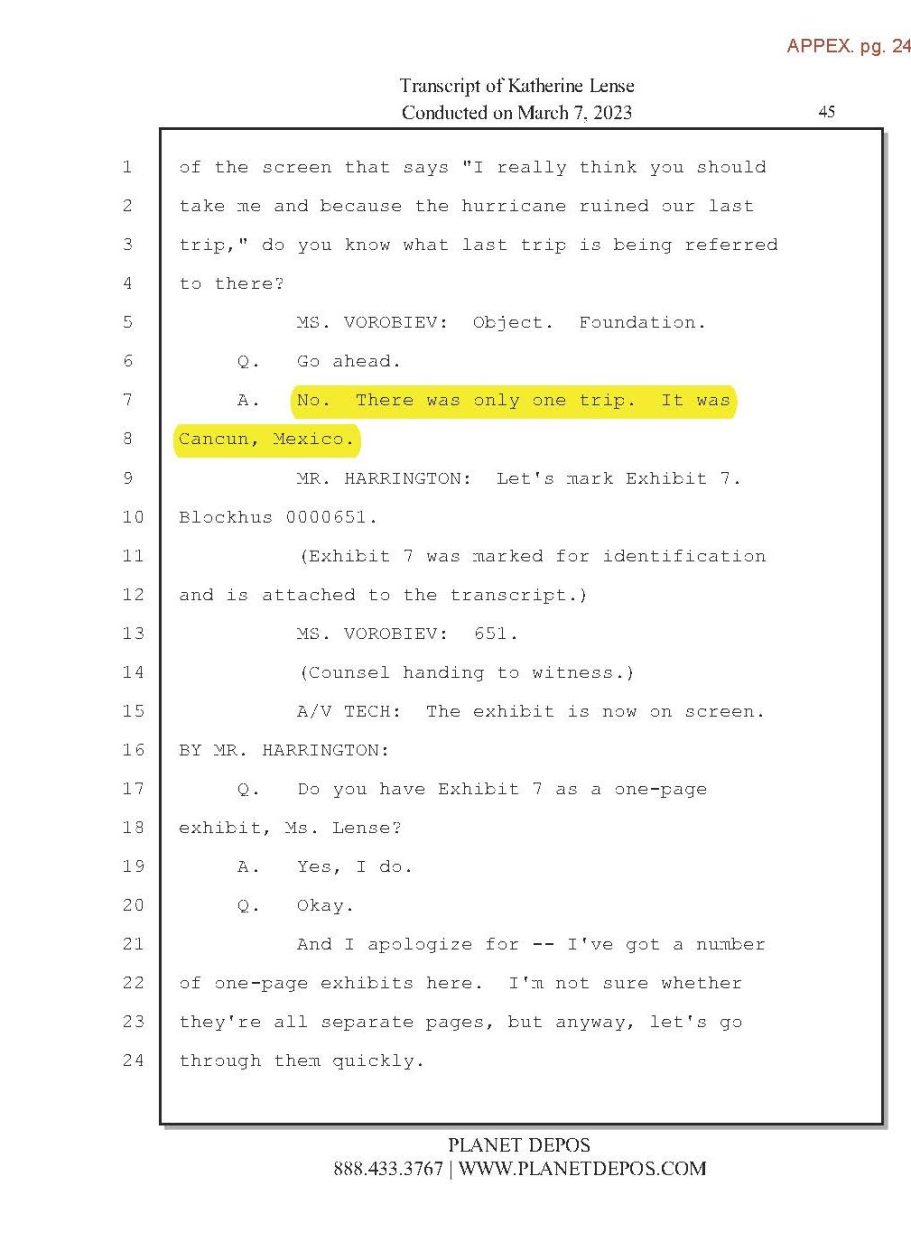
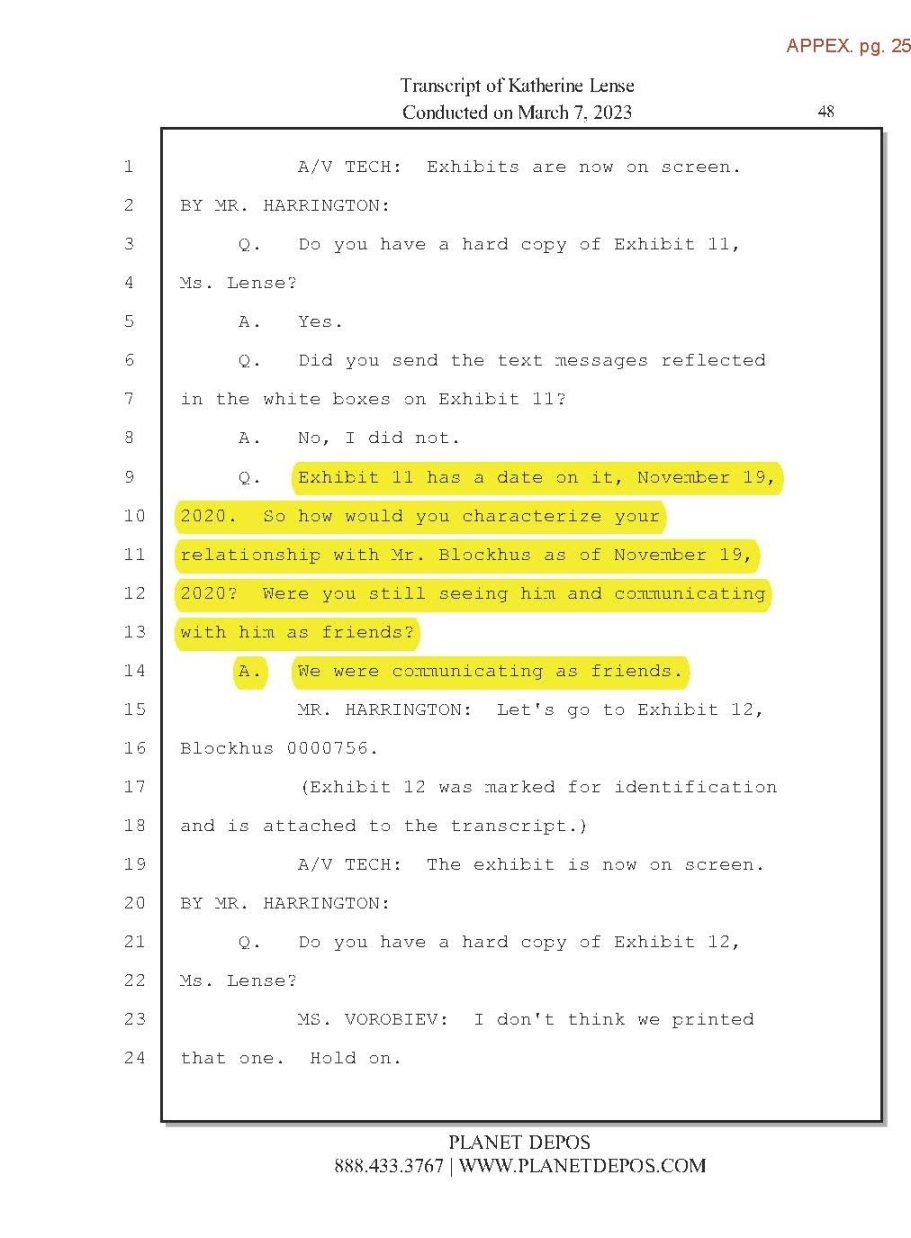
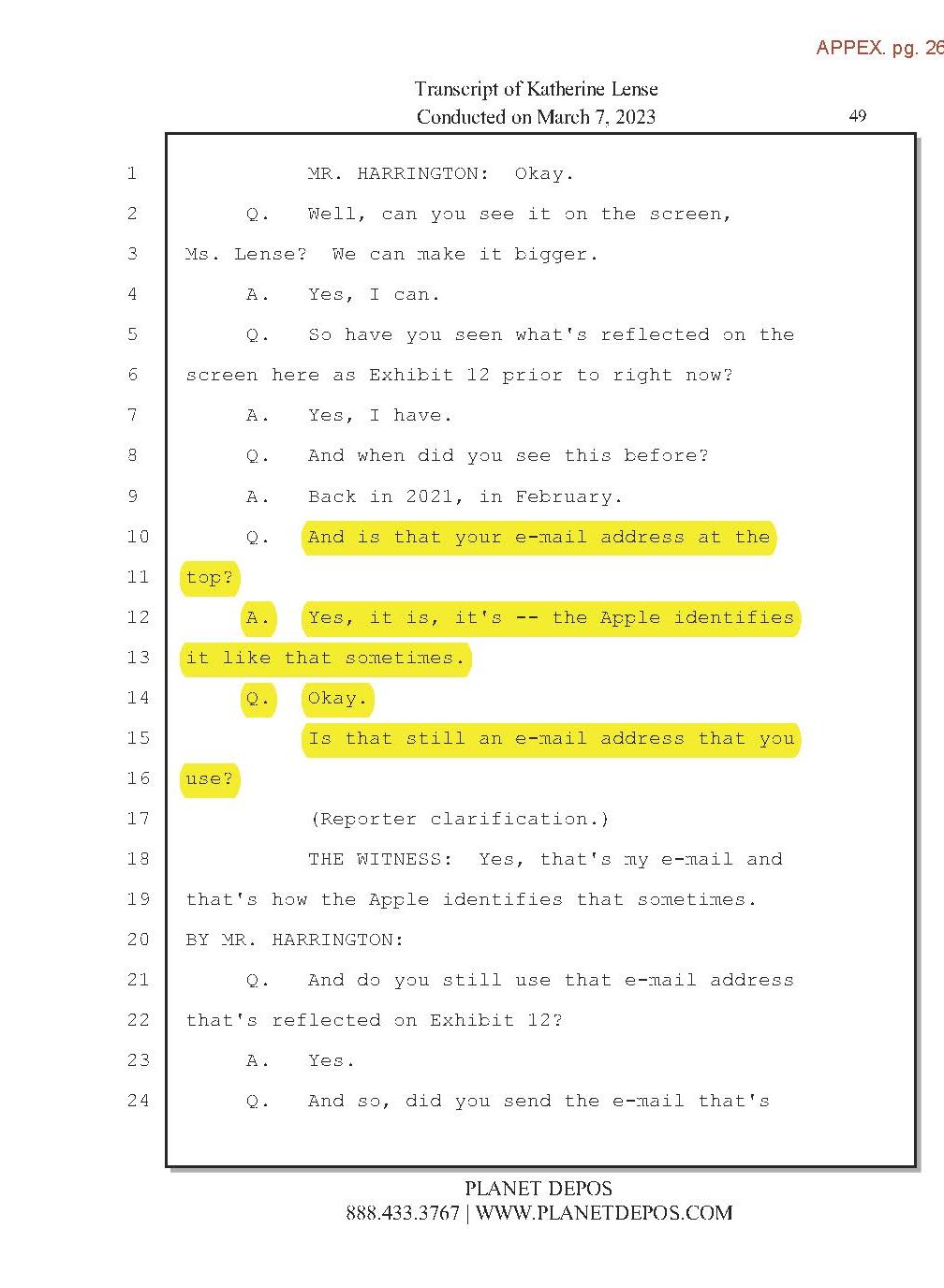
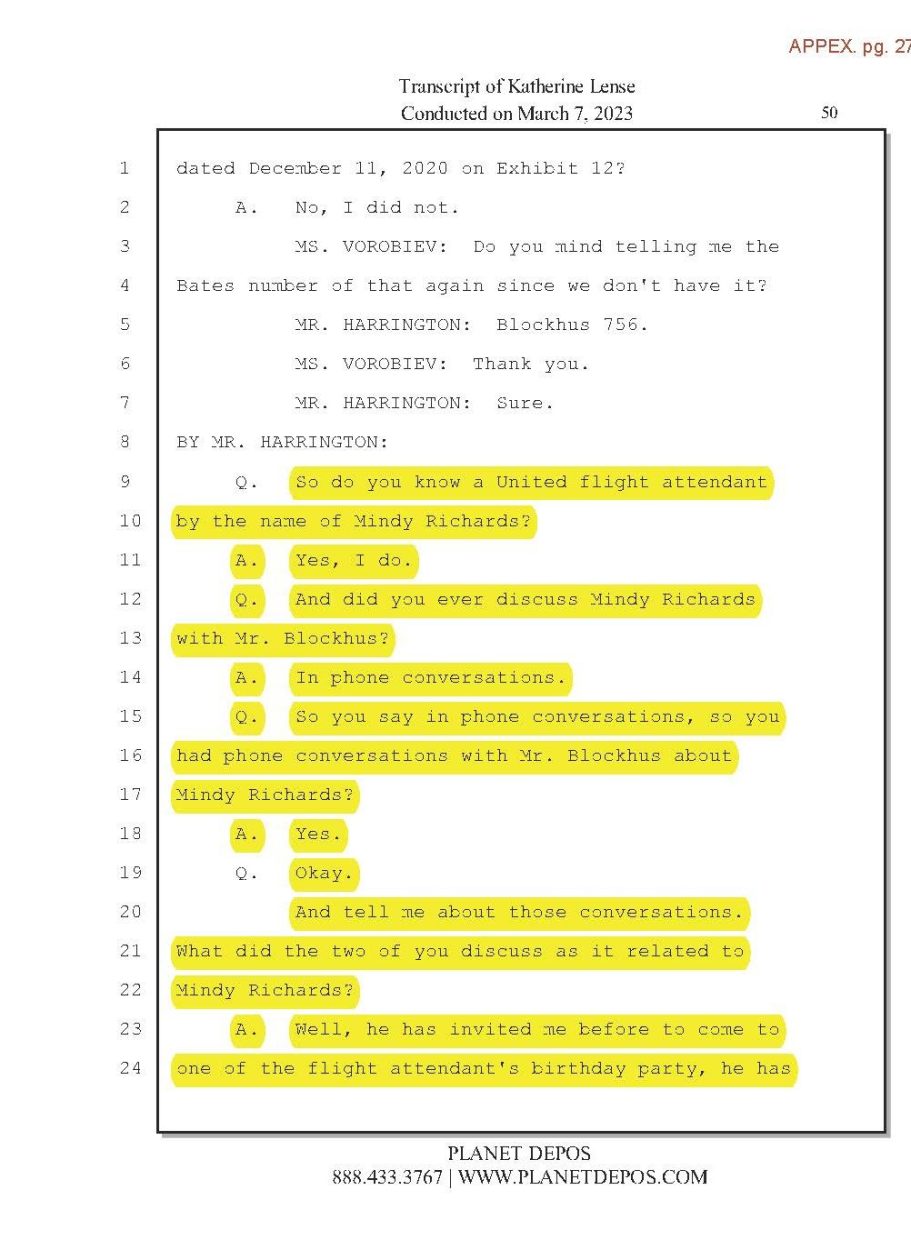
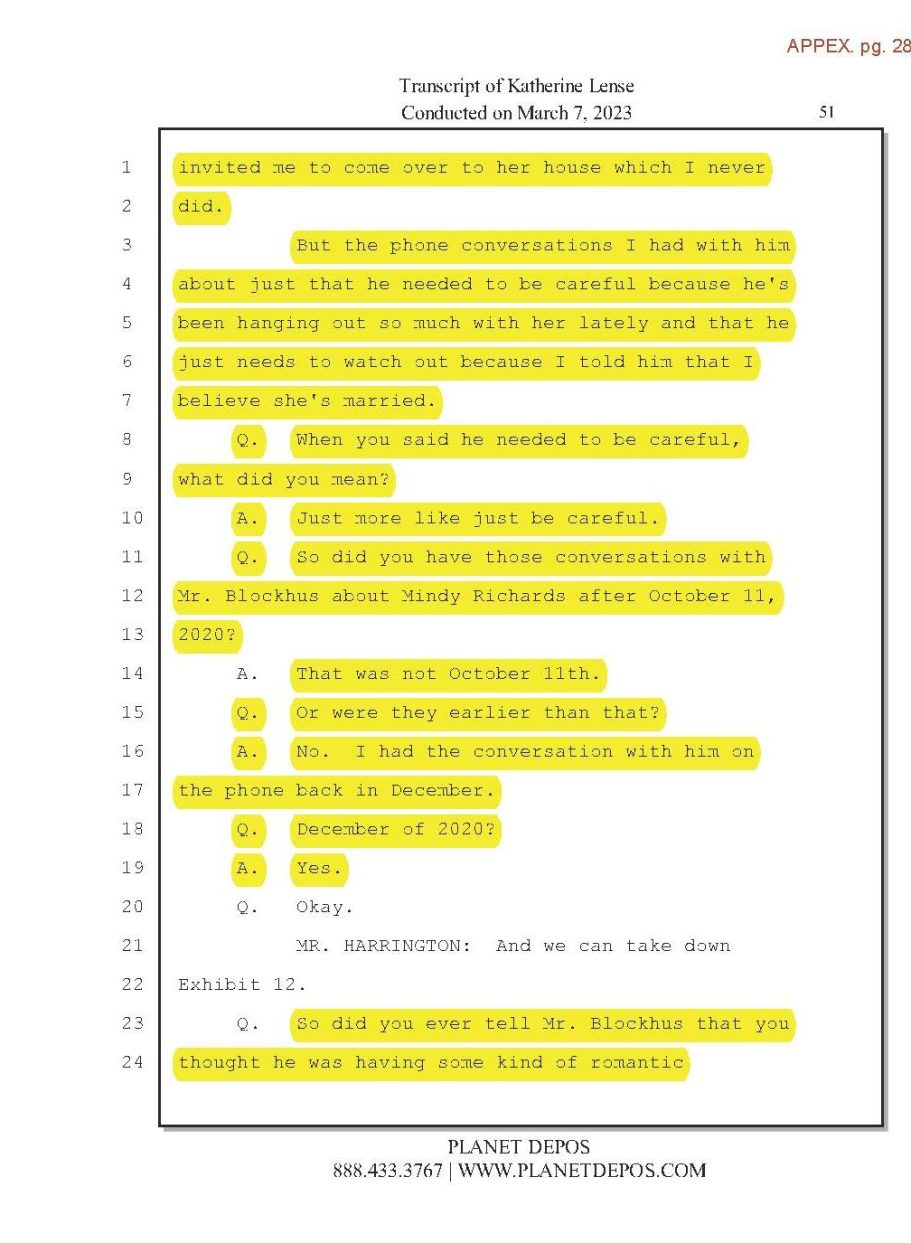
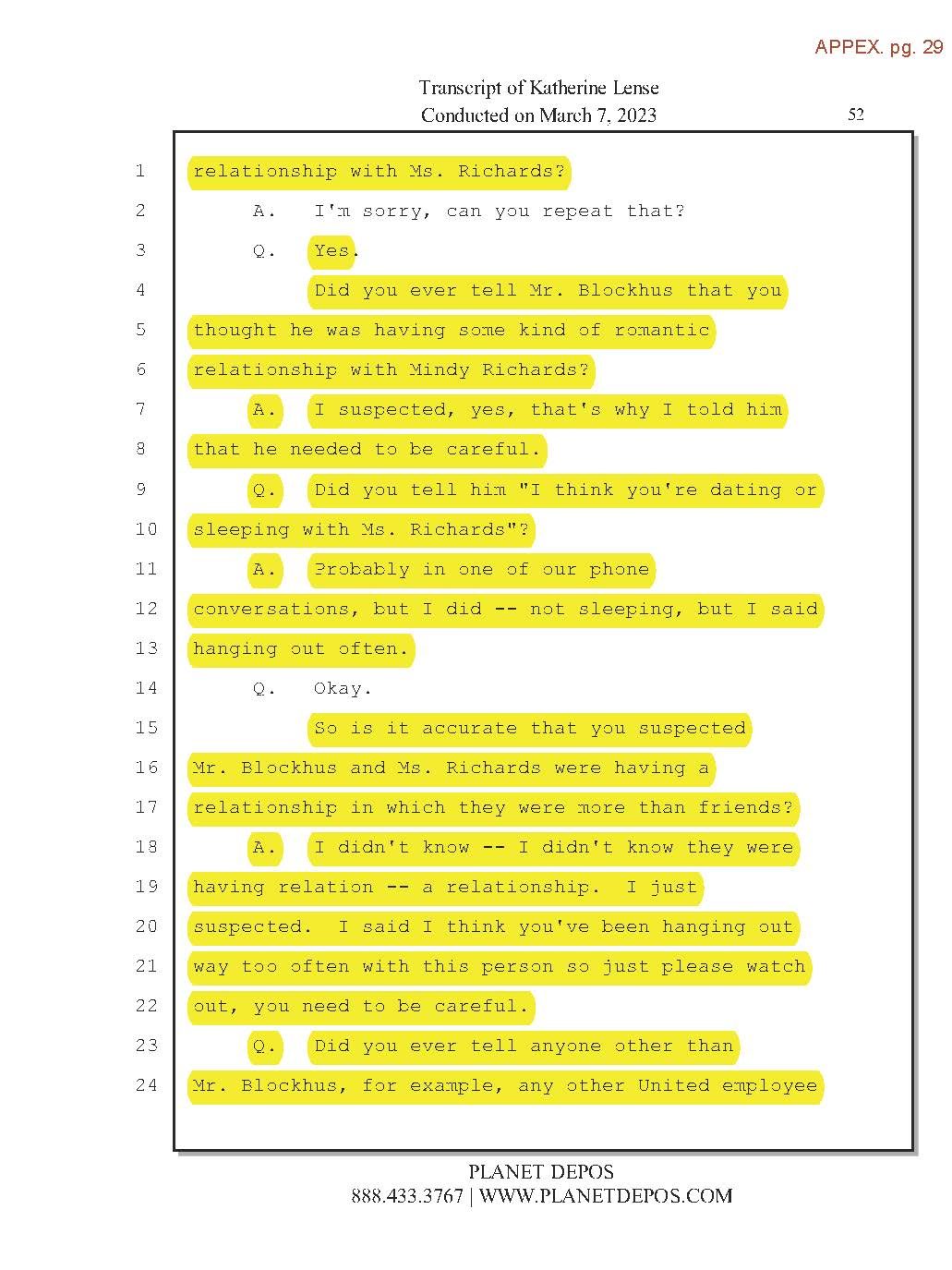
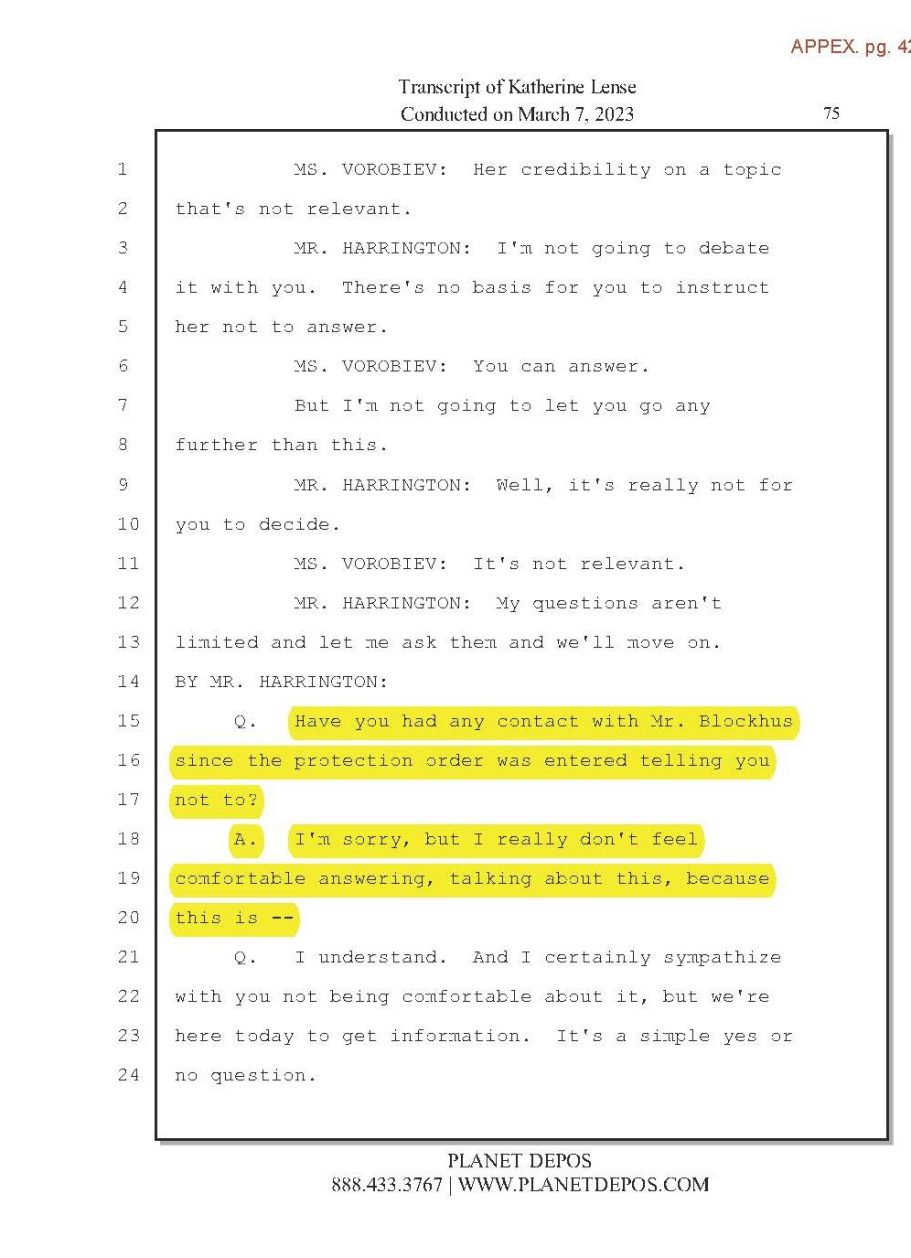
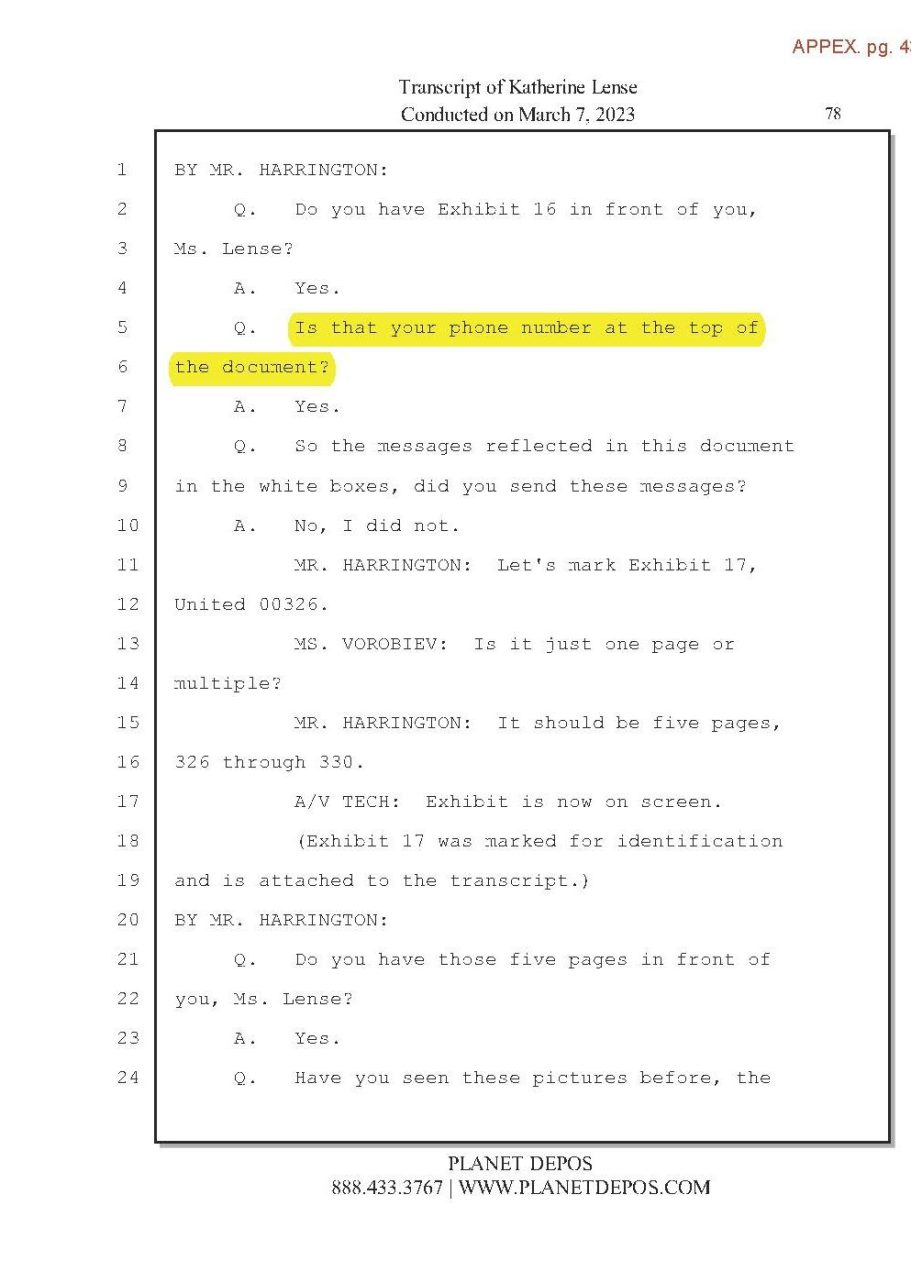
Contradictory Testimony of FA Lense Swarm Deposition
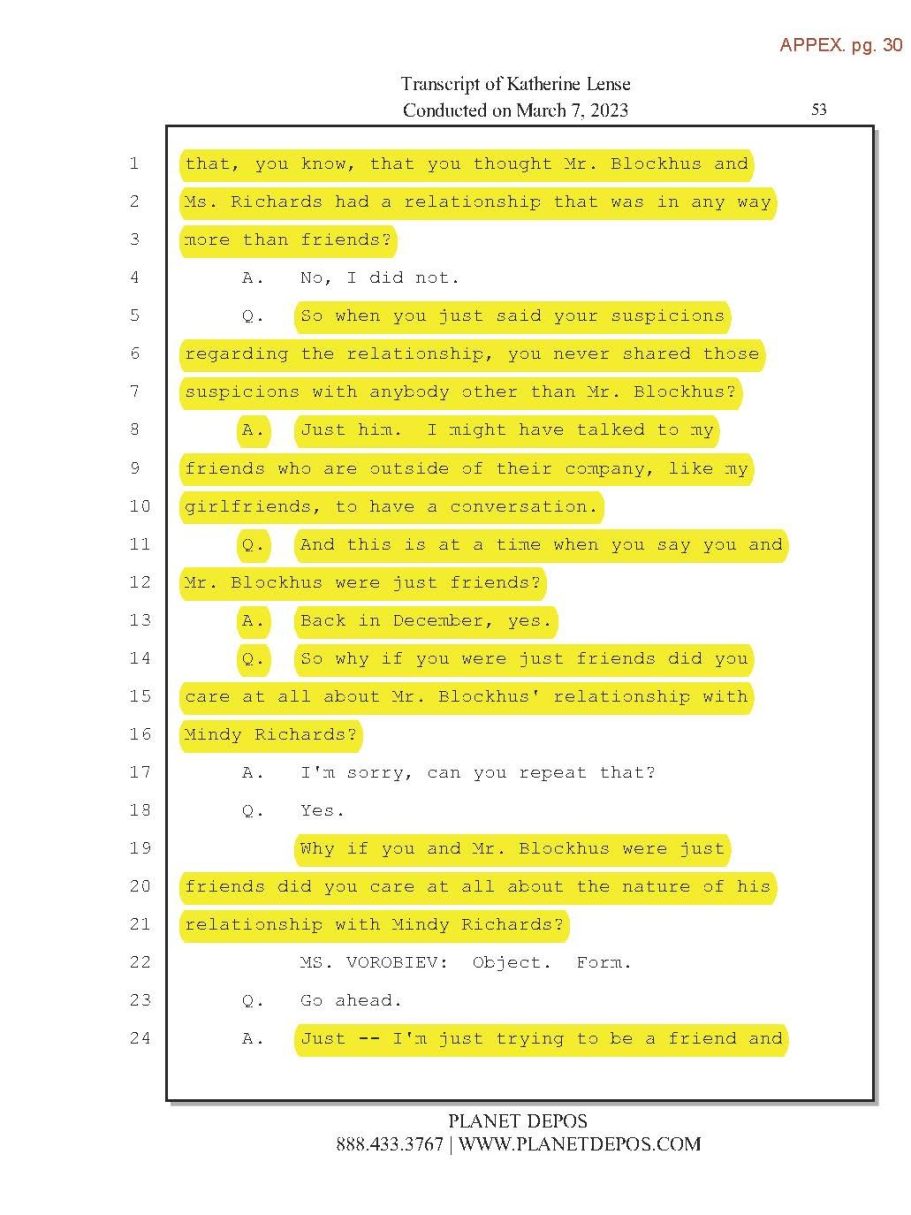
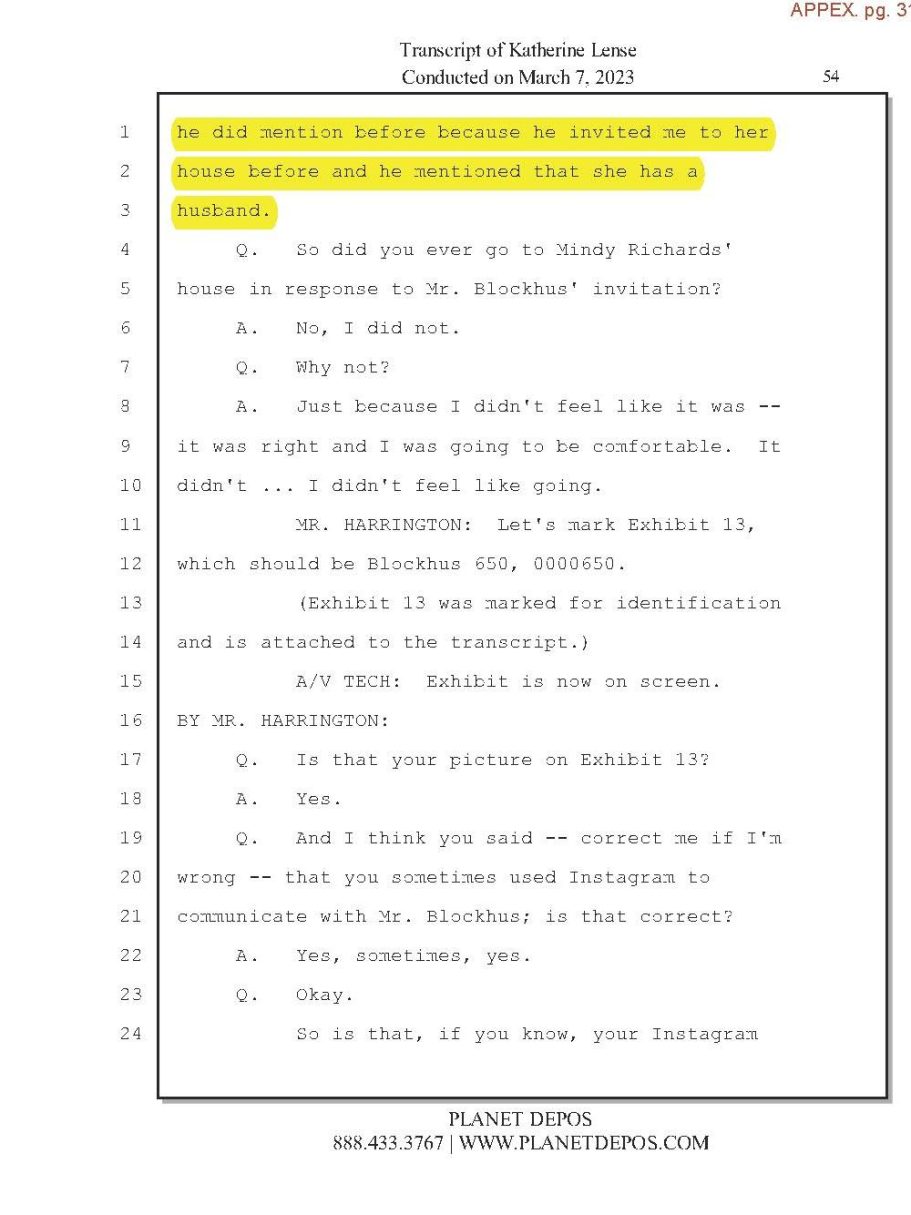
A careful review of FA Katherine Lense’s sworn testimony and interview statements reveals multiple internal inconsistencies and contradictions that materially undermine the reliability and credibility of her allegations
against FA Blockhus.
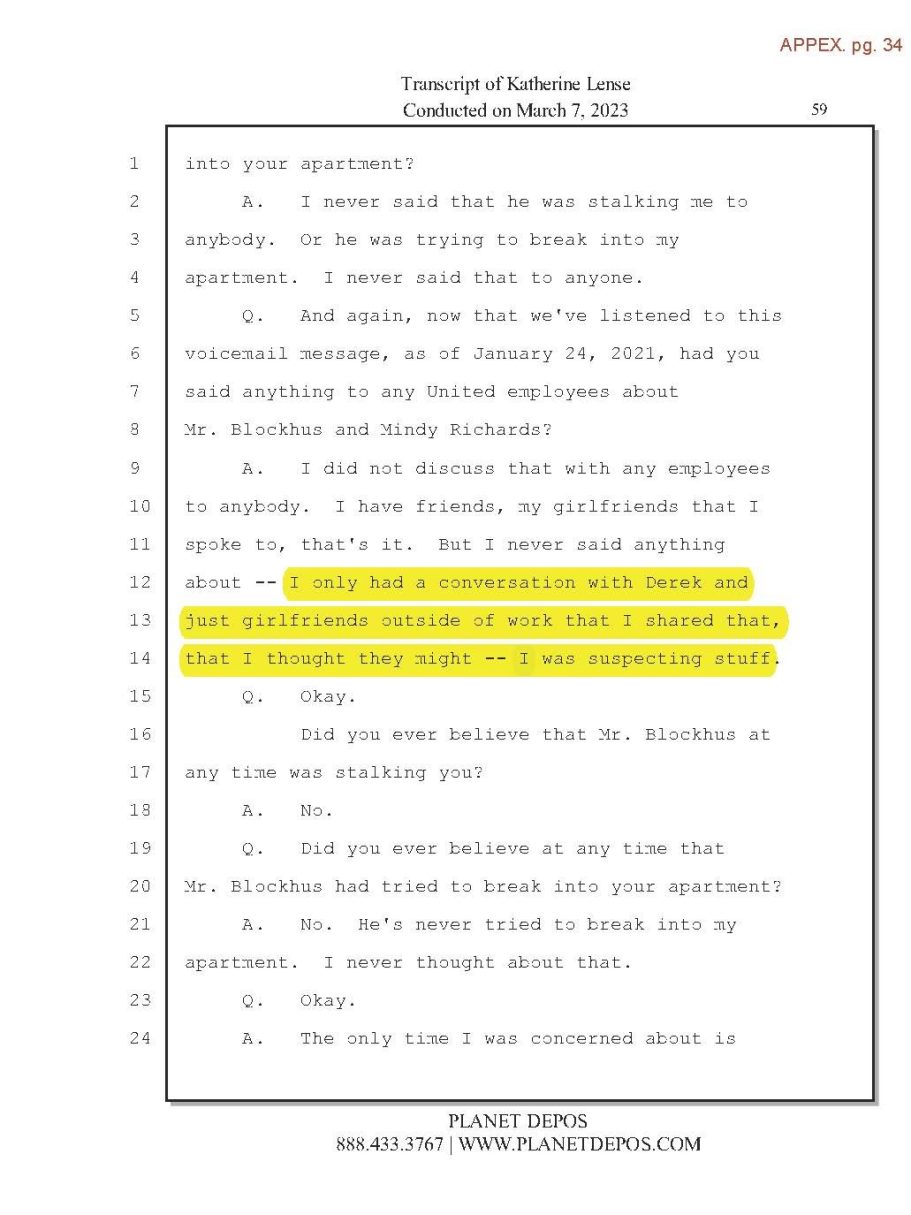
First, FA Lense’s statements regarding whether she felt threatened are inconsistent. While she alleged that FA Blockhus threatened her employment, she simultaneously acknowledged that she did not feel threatened and did not feel harassed. She expressly stated that her concern was limited to her employment. This distinction is significant, as it reflects that her complaint was not based on a genuine harassment, but rather on a perceived professional concern, which she herself could not clearly define.
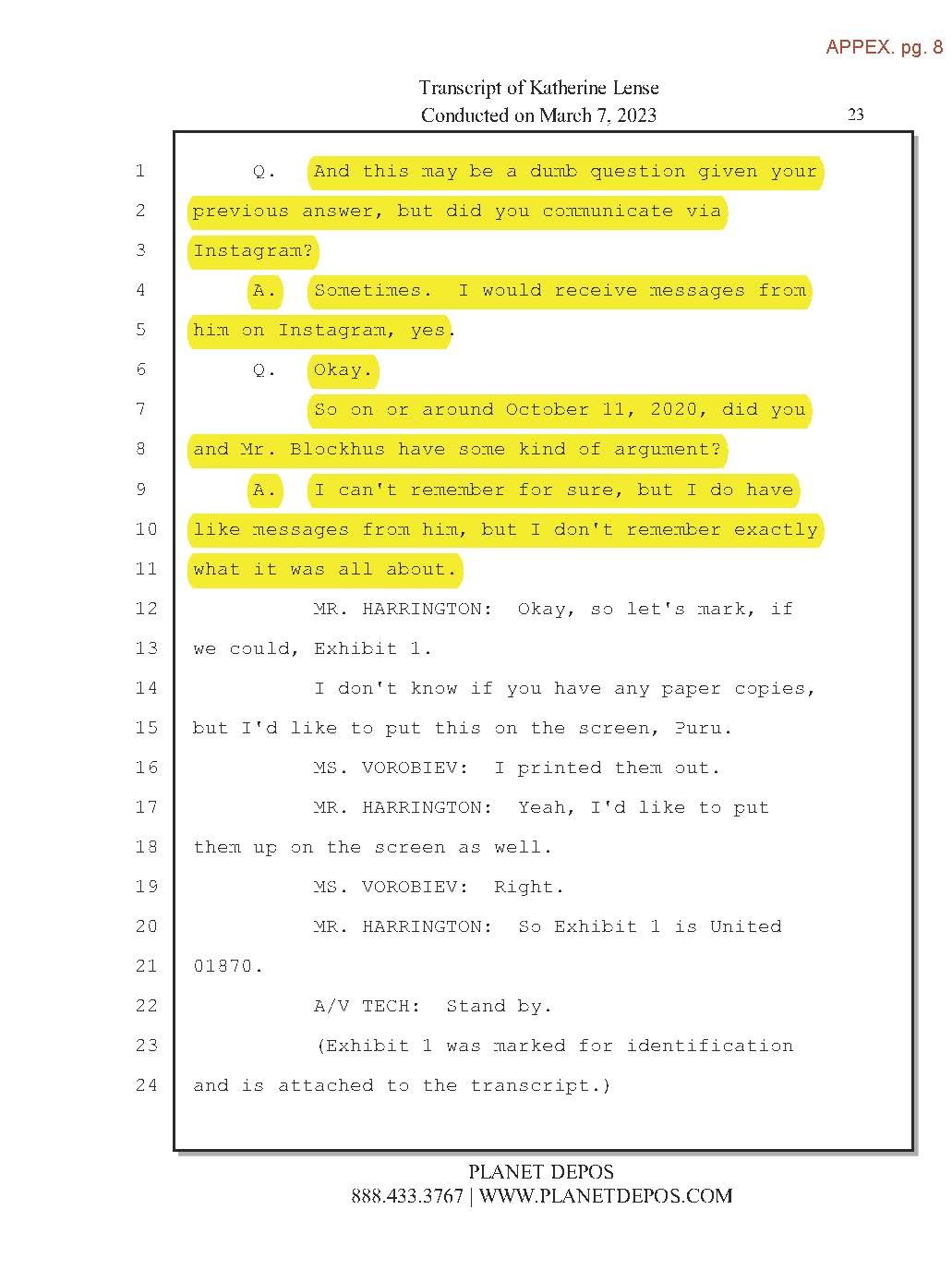
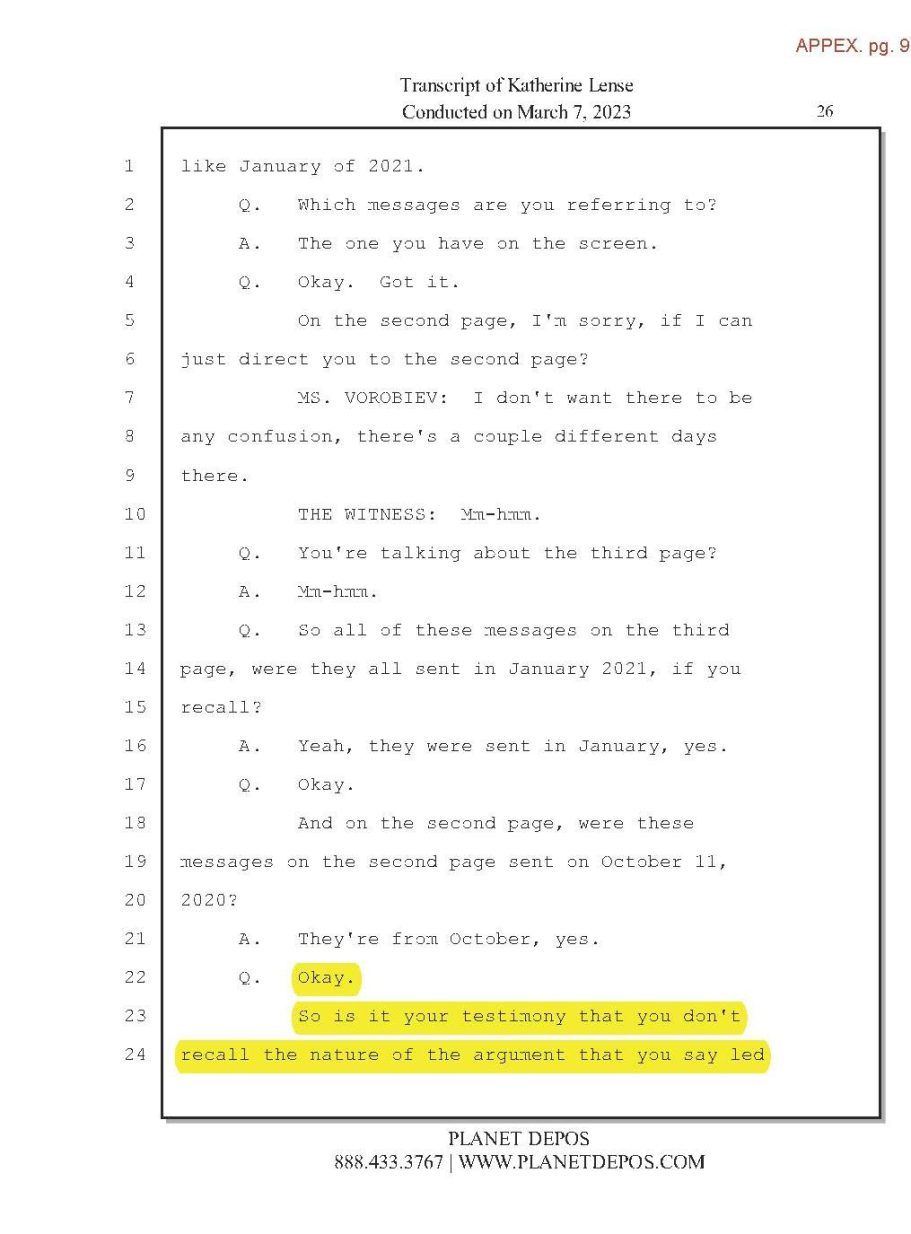
Second, FA Lense provided contradictory statements regarding the nature and existence of alleged threats. When questioned about specific statements attributed to FA Blockhus, she repeatedly indicated that she did not know what it was about and acknowledged that he had never acted on any alleged threats. This admission directly conflicts with the characterization of his conduct as threatening, as it demonstrates a lack of clarity, specificity, and substantiation.
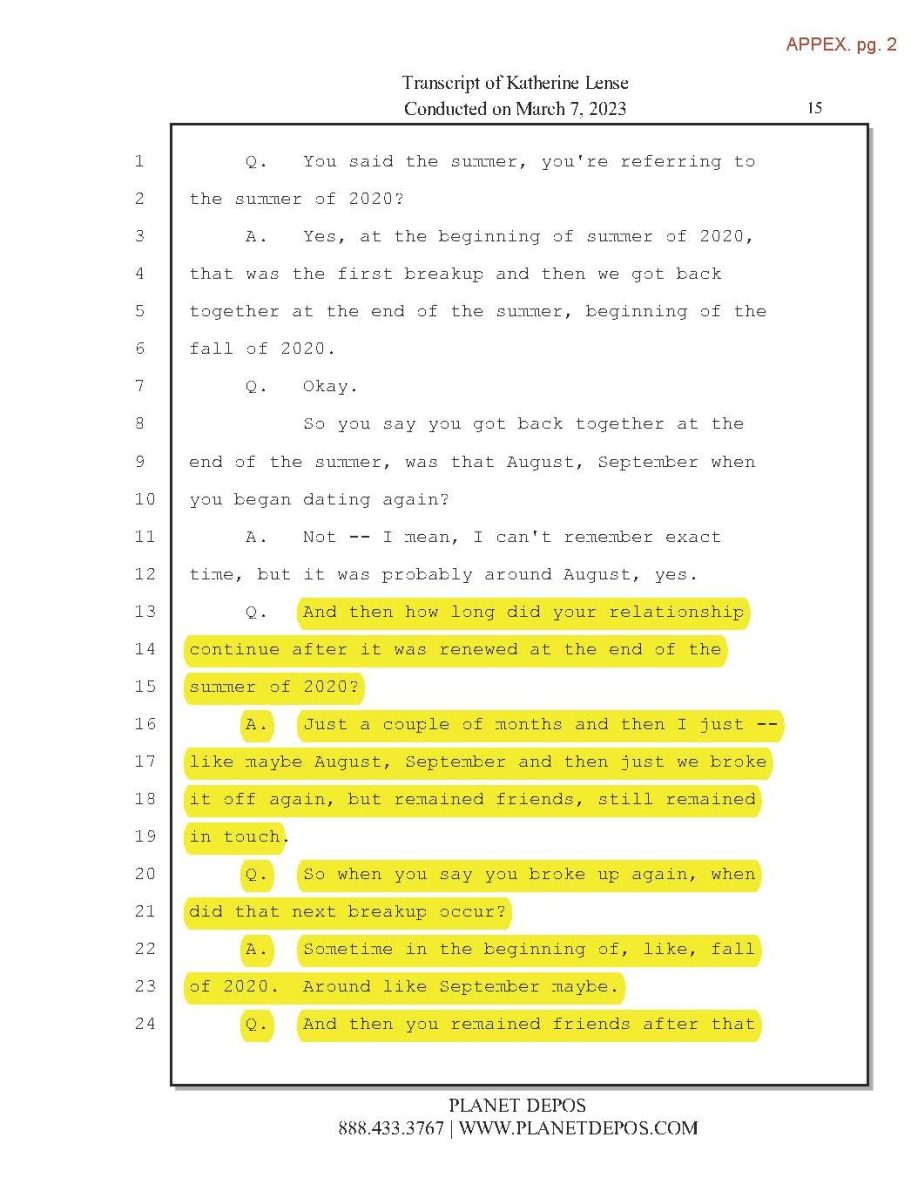
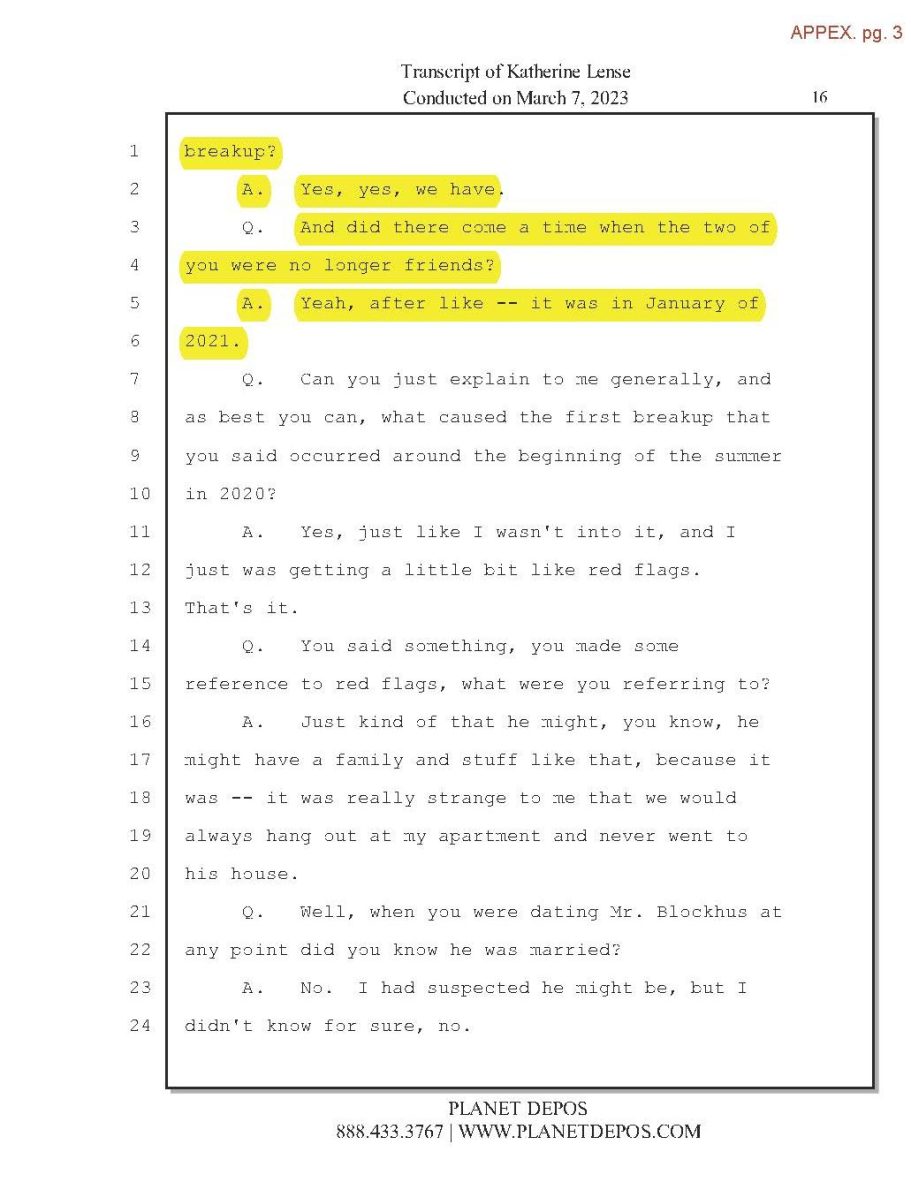
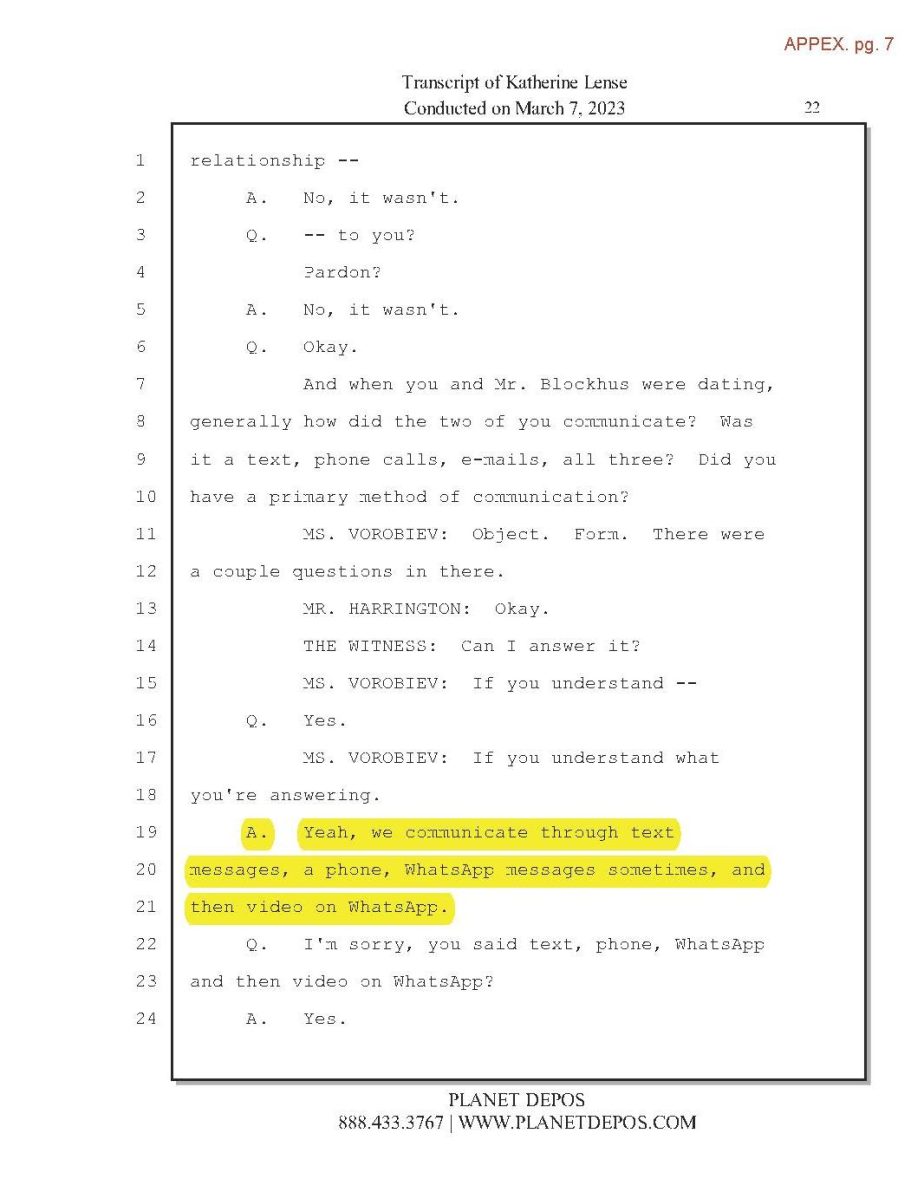
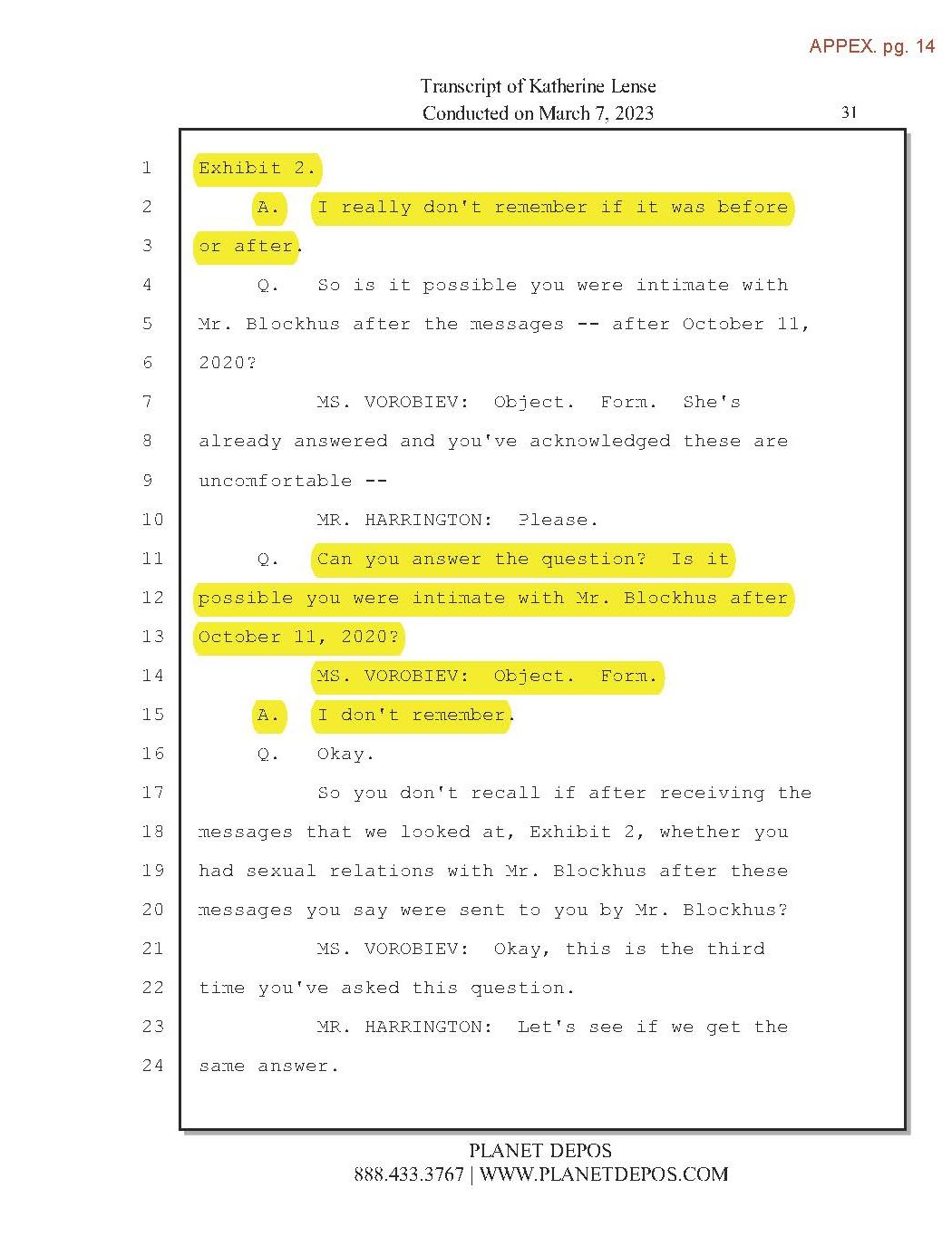
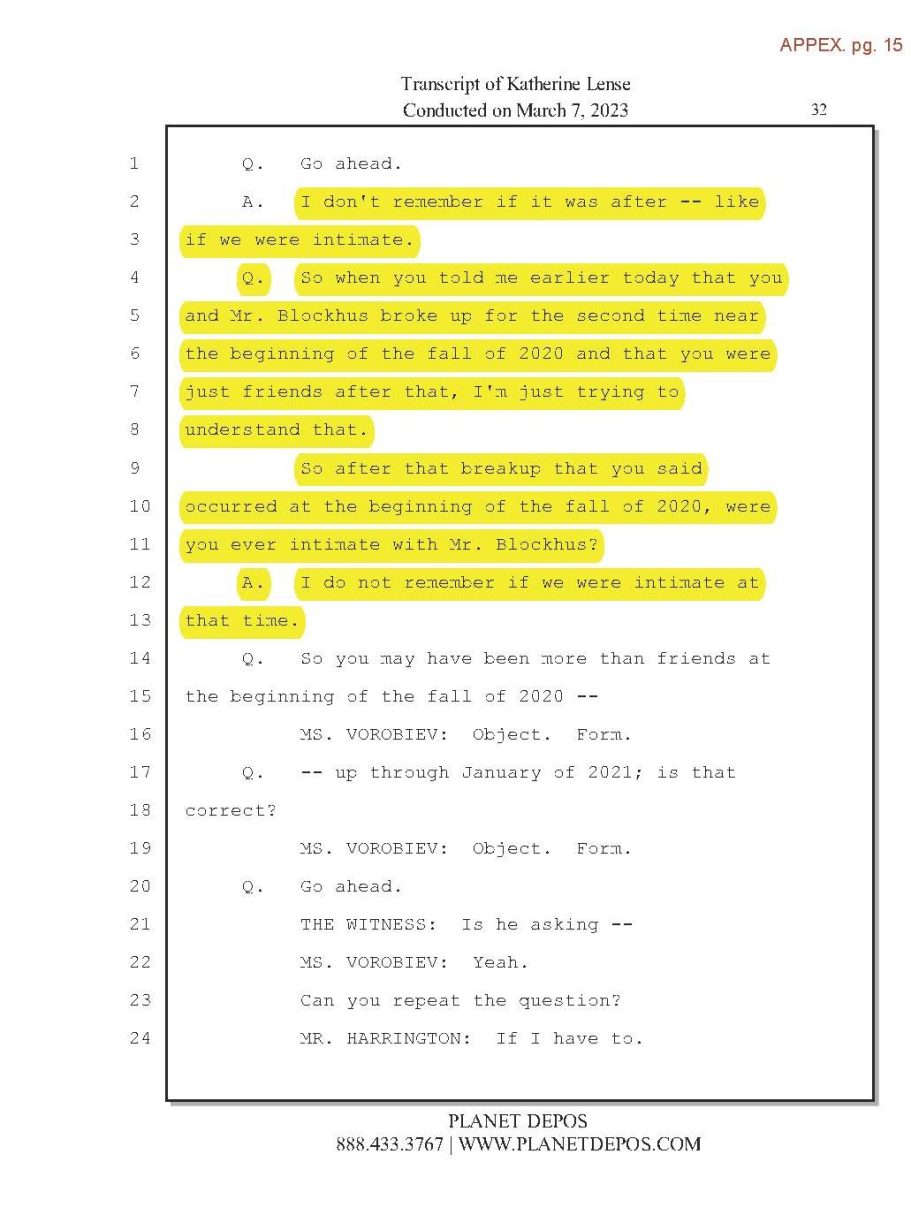
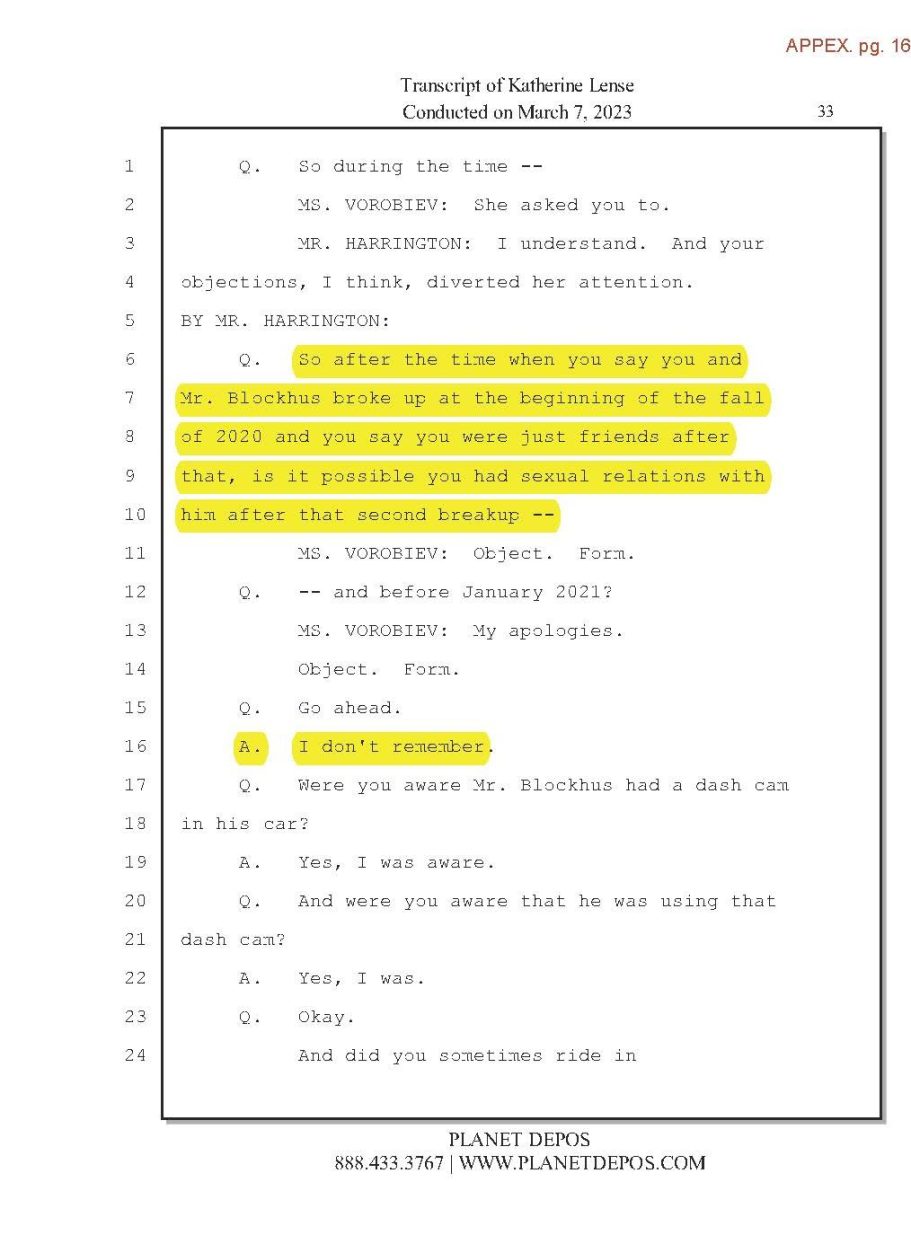
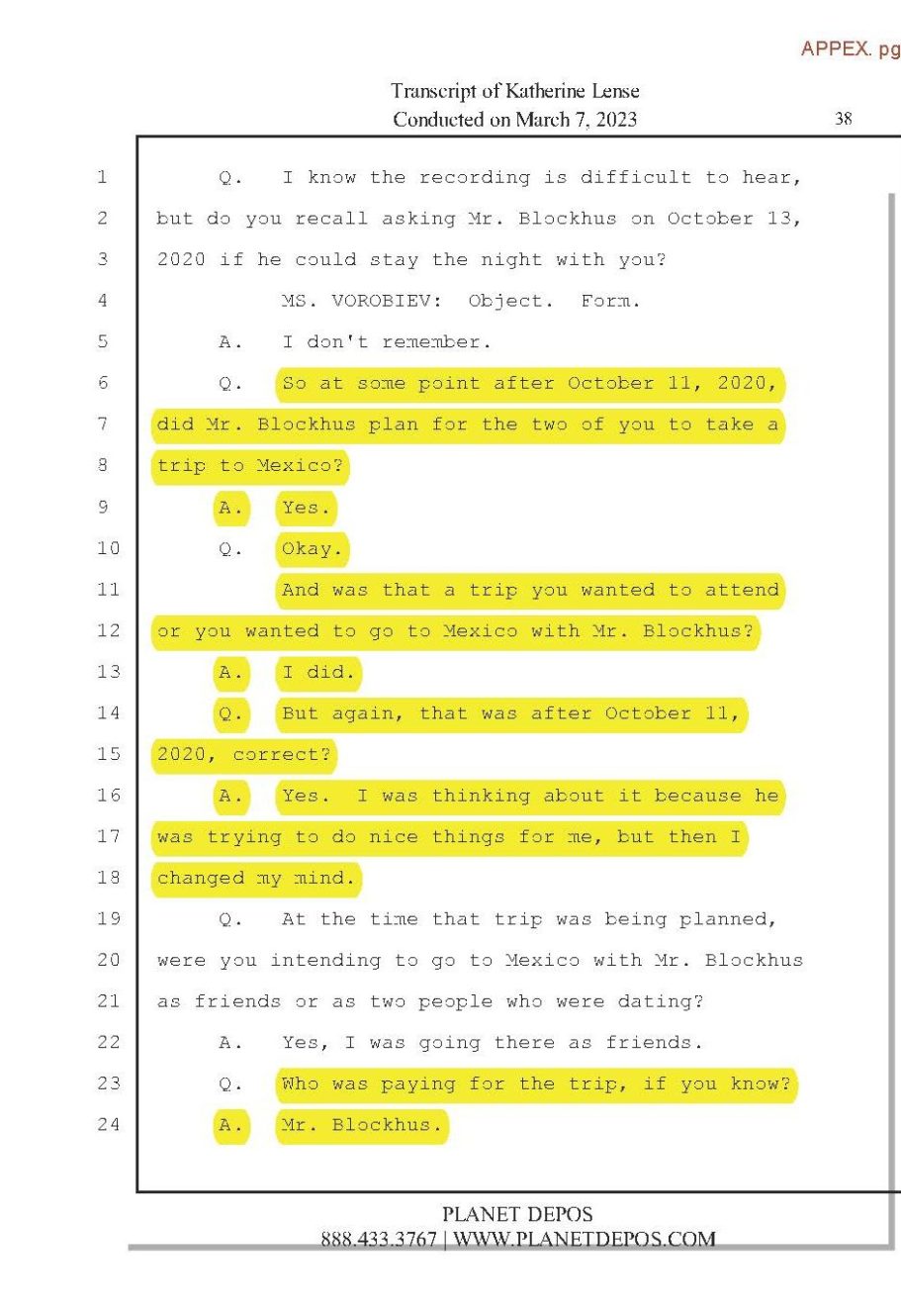
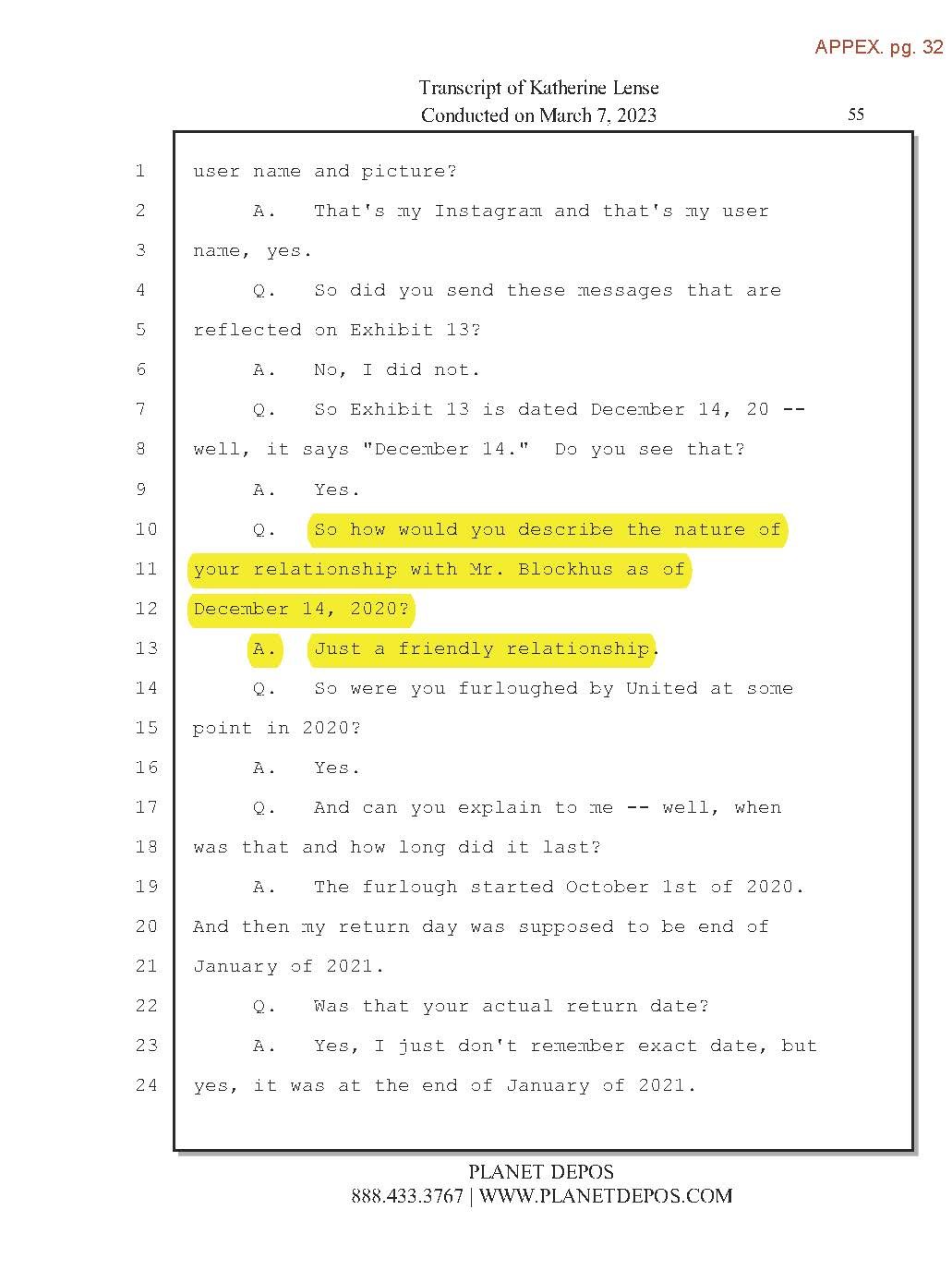
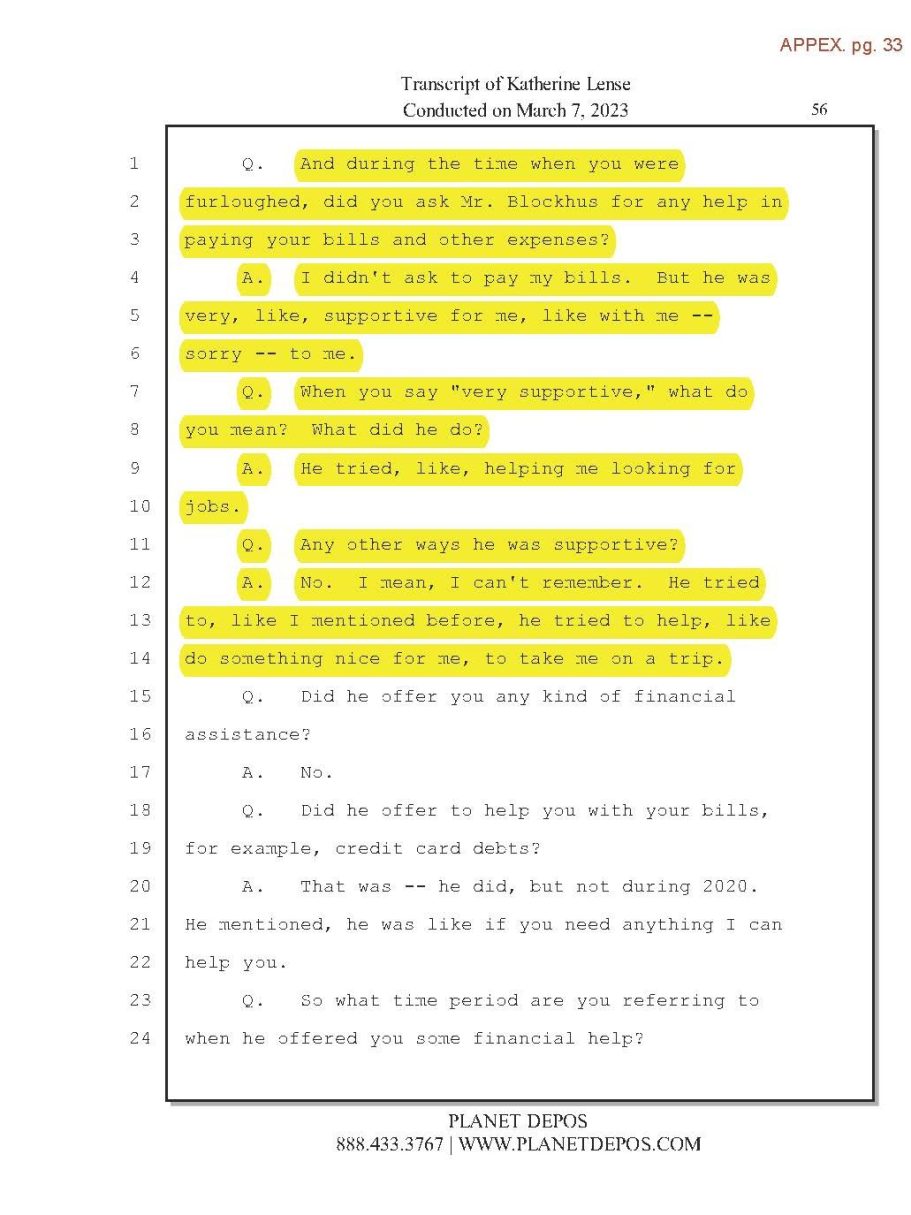
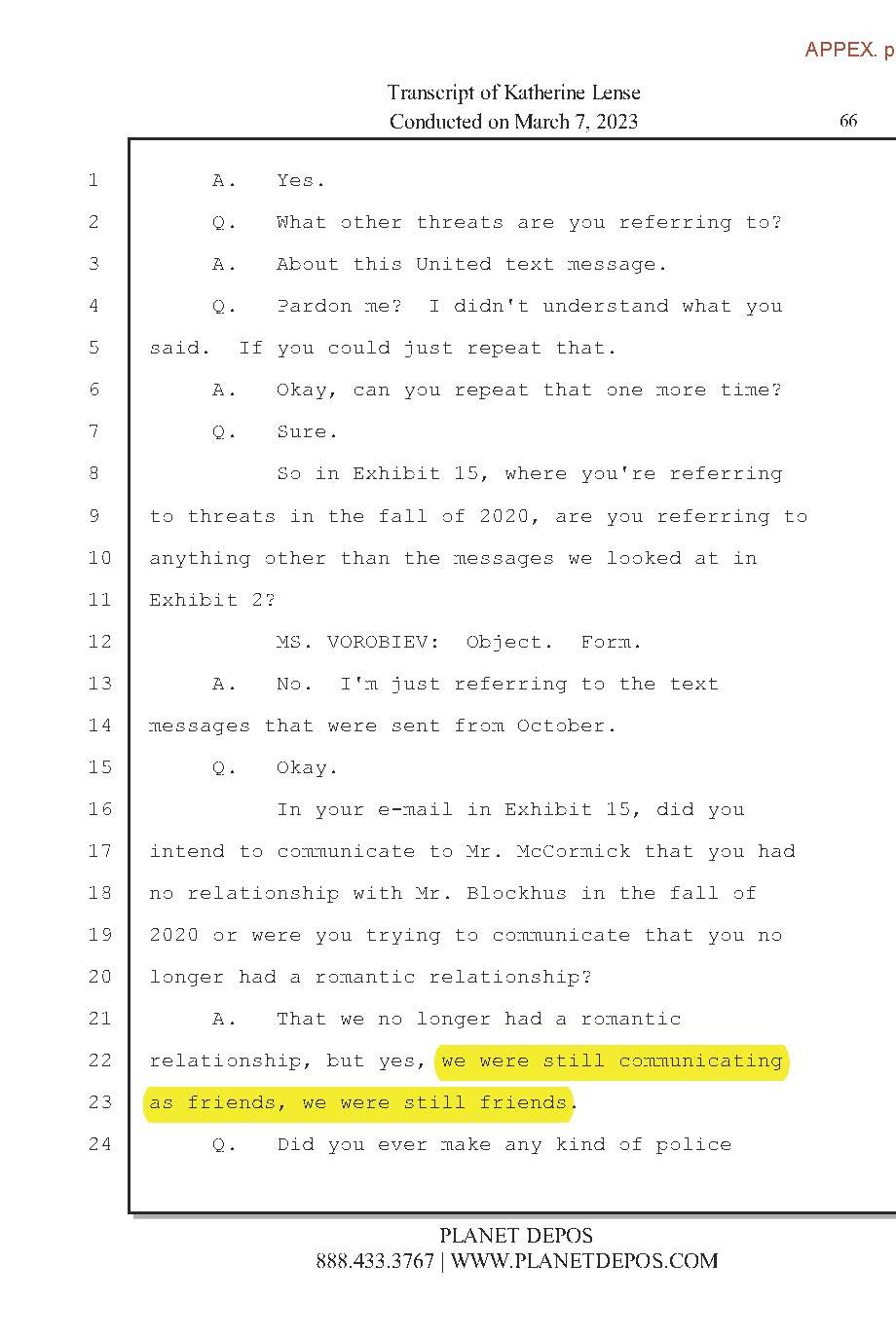
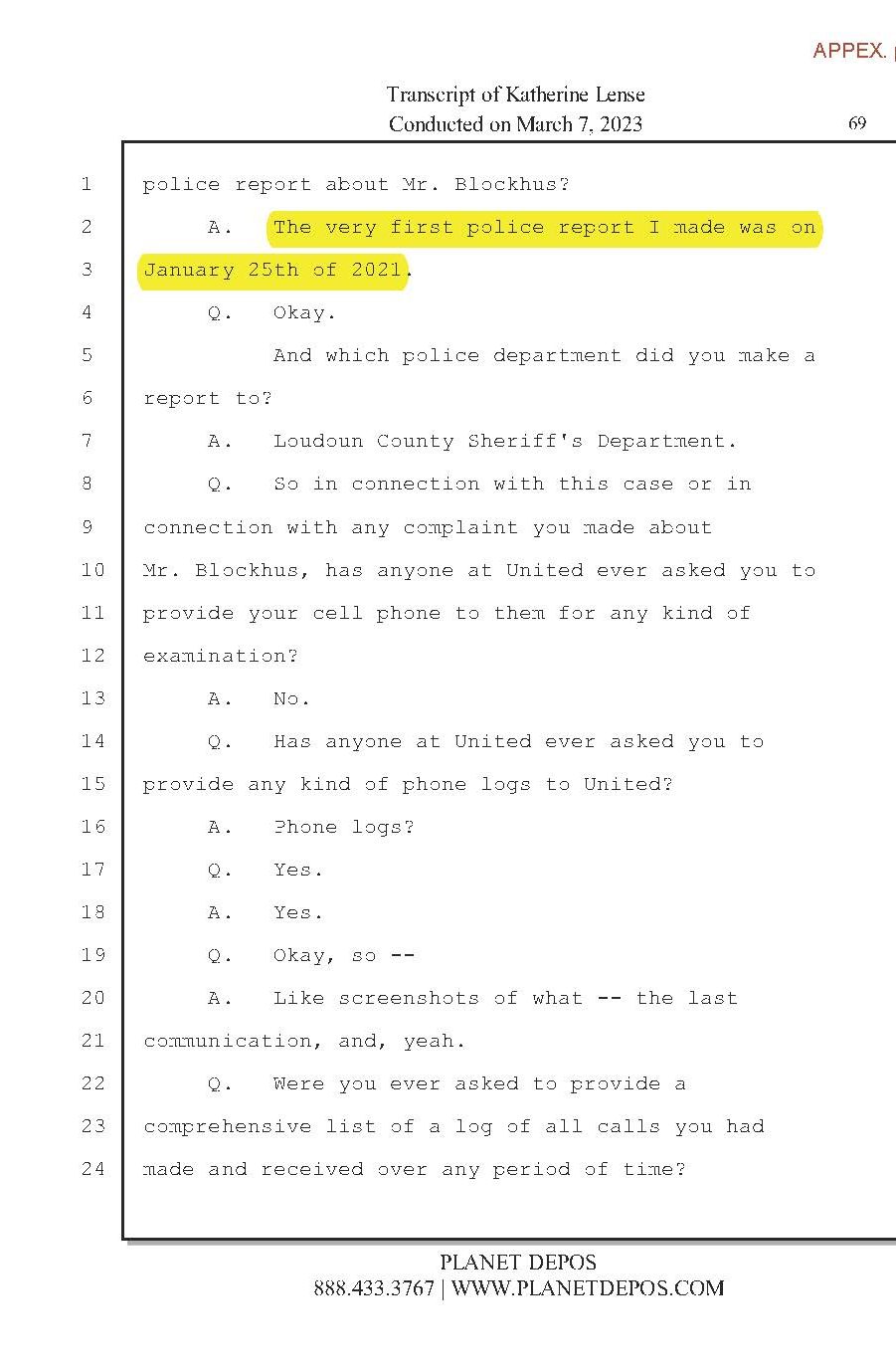
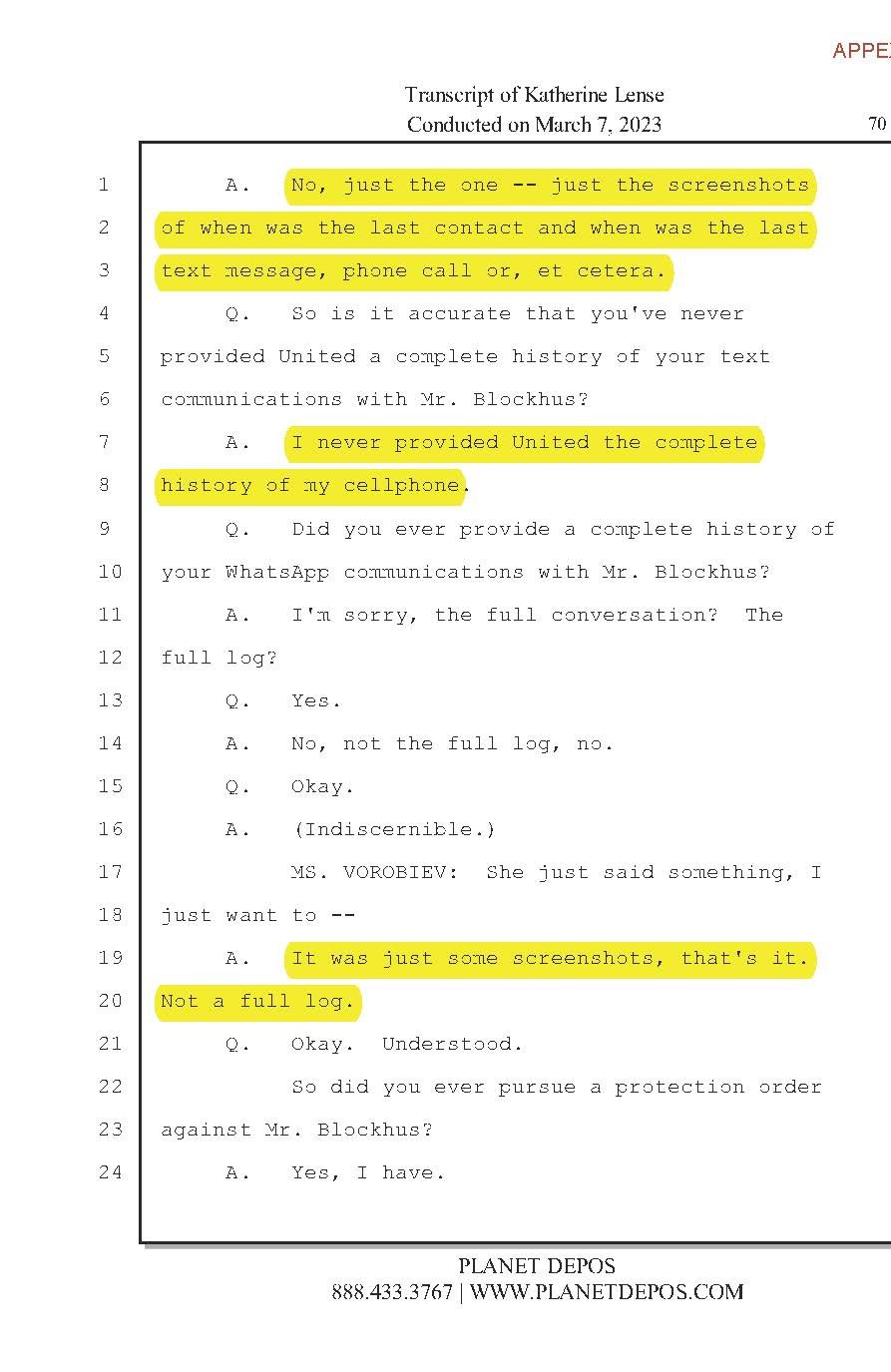
Third, FA Lense’s testimony regarding the timeline of events is inconsistent. She claimed that the relationship ended in the summer of 2020 and that there was limited or no interaction thereafter. However, she also acknowledged continued communication with FA Blockhus, including 500 phone contact until Feb 2021. These statements cannot be reconciled with a narrative suggesting ongoing harassment immediately following the end of the relationship.
Fourth, FA Lense denied that any inappropriate conduct occurred, confirming that the alleged behavior was not work-related. This directly contradicts the basis upon which the matter was escalated and investigated as a workplace issue, raising questions as to whether the complaint was properly characterized from the outset.
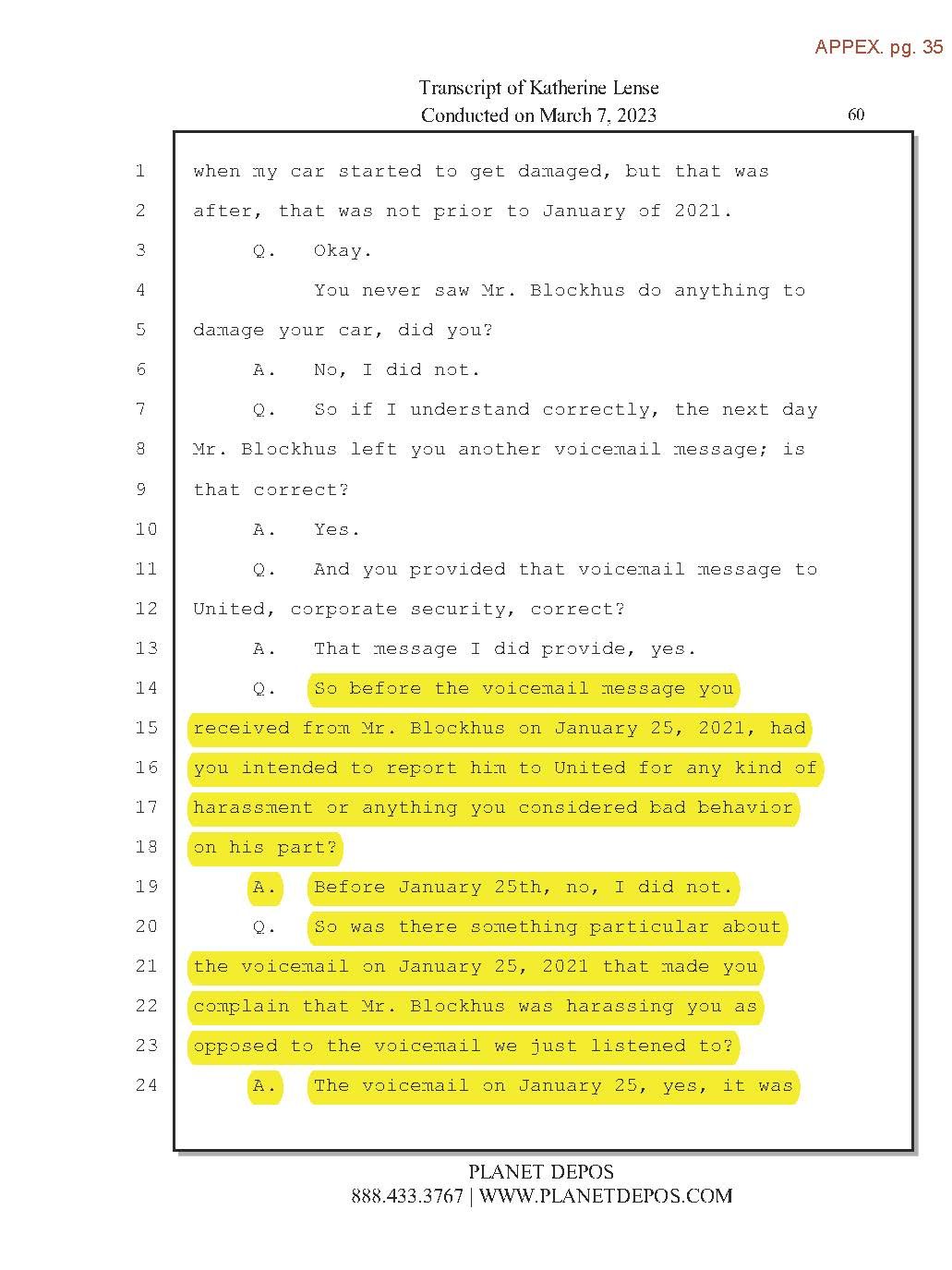
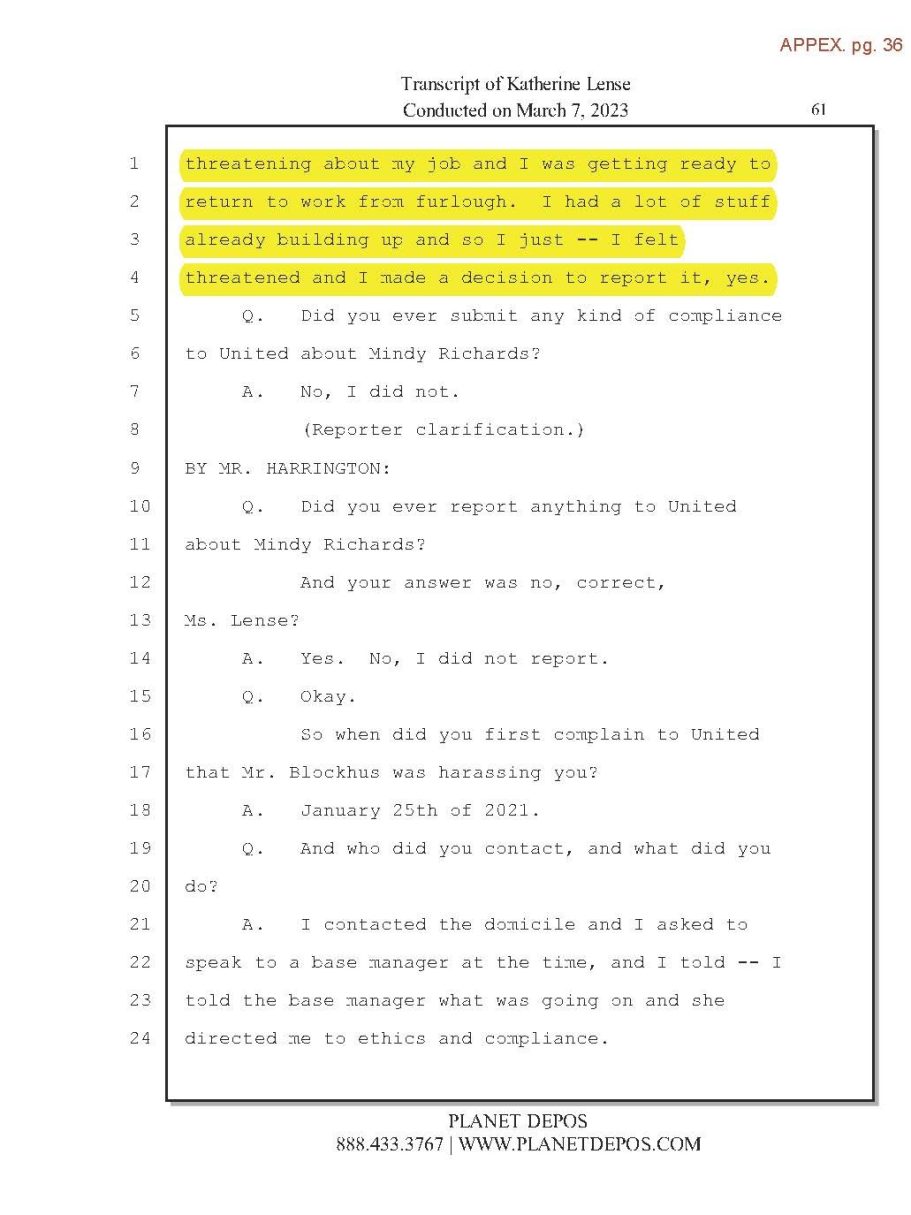
Fifth, FA Lense’s statements regarding her motivations for filing the complaint are inconsistent with the surrounding circumstances. She stated that she did not want FA Blockhus to lose his job and that she simply wanted the alleged "behavior" to stop. However, she also acknowledged that her primary concern was protecting her own employment and that she chose to report the matter after receiving a voicemail referencing potential involvement of Human Resources. The timing of her complaint—immediately following the possibility that her own conduct might be reported—suggests a reactive motive that is inconsistent with her stated intent.
Additionally, FA Lense denied knowledge of certain key facts, including whether FA Blockhus possessed any inappropriate material or the meaning behind statements she later characterized as threatening. These repeated claims of uncertainty further weaken the reliability of her testimony, as they demonstrate an inability to provide a clear or consistent account of the allegations.
Taken together, these contradictions demonstrate that FA Lense’s testimony is not internally consistent and lacks the clarity and reliability necessary to support the conclusions drawn by United. A credible account of events should be coherent, consistent, and supported by objective evidence. Here, the record reflects the opposite.
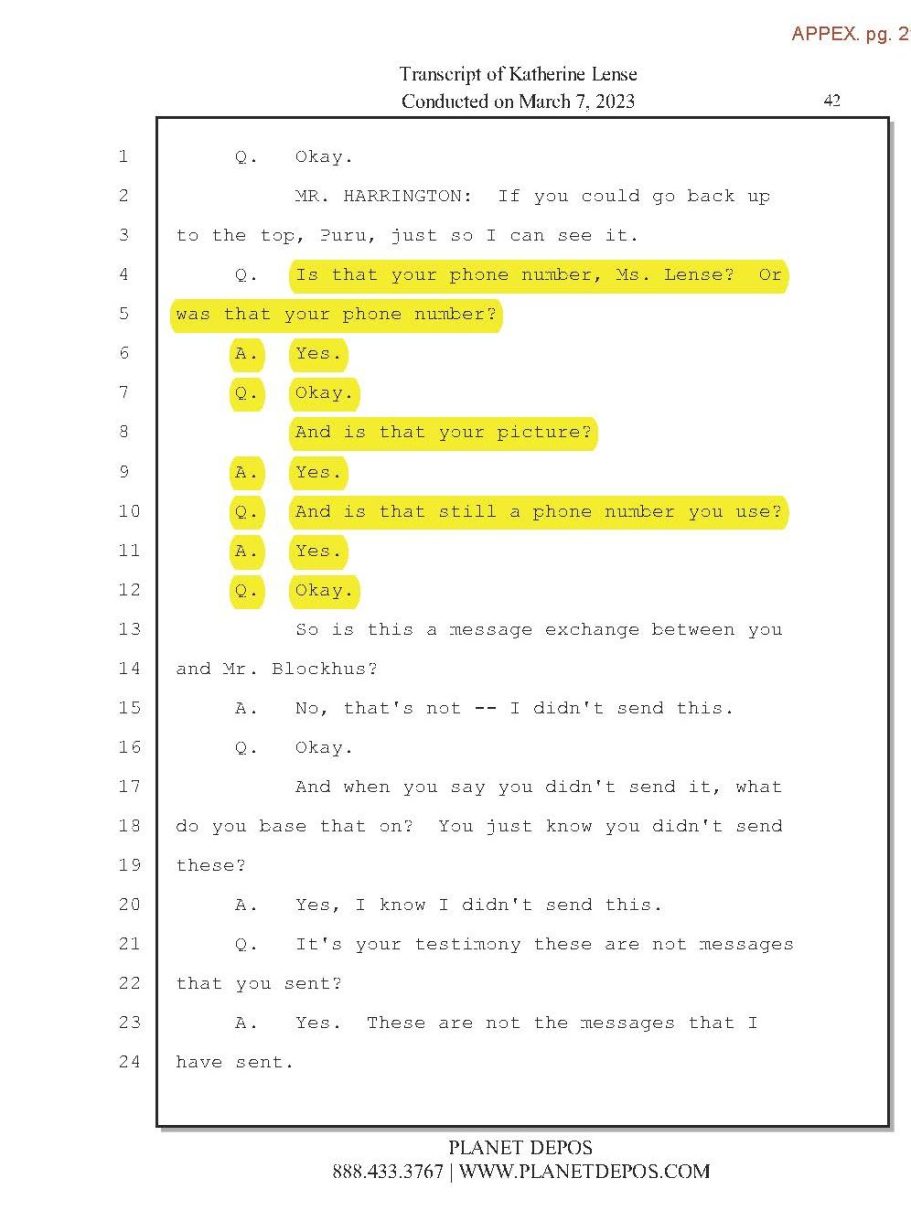
Despite these inconsistencies, United relied heavily on FA Lense’s statements while failing to reconcile or investigate these contradictions. This selective reliance on incomplete and inconsistent testimony further underscores the flawed nature of the investigative process.
Accordingly, FA Lense’s contradictory testimony significantly undermines the factual basis of the allegations against FA Blockhus and raises serious concerns regarding the validity of the conclusions reached in this matter.
FA Lense Conflicted Sworn Testimony;
“I felt like I wanted to protect myself, went to the company, and told them I
was being accused of a hostile work environment”~Katherine Lense
This admission by FA Lense confirms that her decision to contact United was motivated by a desire to
protect herself from potential accusations, not by fear of harassment or personal safety concerns. FA
Lense’s complaint was defensive and preemptive, arising from concern about her own exposure rather than from any contemporaneous experience of harassment. Such an admission undermines the credibility of her allegations and supports the conclusion that her report was retaliatory in nature. United’s reliance on a selfprotective complaint—without scrutinizing motive, timing, or credibility—further evidences a biased and procedurally defective investigation, inconsistent with the just-cause and due-process requirements of the Collective Bargaining Agreement.
“I didn't want anybody to get in trouble”~Katherine Lense
This admission is inconsistent with a claim of harassment or fear. A complainant who genuinely believes she has been harassed typically seeks protection or corrective action, not to avoid consequences for the alleged wrongdoer.
This testimony further undermines the credibility of FA Lense’s allegations and supports the conclusion that her complaint was not motivated by genuine harassment concerns, but rather by personal considerations and job protection. United’s reliance on such testimony—without reconciling this inconsistency—reinforces that the investigation was biased, pretextual, and inconsistent with just-cause and due-process requirements under the Collective Bargaining Agreement.
“ I was simply trying to protect my job."~Katherine Lense
This admission confirms that her complaint was motivated by job preservation, not by fear, harassment, or concern for personal safety.
A complainant’s acknowledgment that she acted to protect her employment—rather than to report unwelcome or threatening conduct—undermines the credibility of harassment allegations and supports a finding that the complaint was defensive and retaliatory. United’s reliance on a complaint driven by job protection, without examining motive or credibility, further demonstrates pretext and a failure to conduct a neutral investigation, in violation of the just-cause and due-process protections of the Collective Bargaining Agreement.
“My biggest issue was the threat to my job”~Katherine Lense
This admission confirms that her concern centered on employment consequences, not fear of harassment, intimidation, or personal safety.
FA Lense acknowledgment that her “biggest issue” was job security directly undermines any claim of
harassment or threat. It demonstrates that the complaint was motivated by self-protection, not by
unwelcome or abusive conduct. United’s reliance on allegations driven by job preservation—without
evaluating motive or credibility—further evidences a pretextual and biased investigation, inconsistent with the just-cause and due-process protections of the Collective Bargaining Agreement.
“I didn’t think anything of it until he brought the company into it, I don’t want him to lose his job”~Katherine Lense
This admission confirms that she did not perceive FA Blockhus’s conduct as problematic or threatening until he indicated that the matter would be reported to management.
This testimony directly undermines any claim of harassment. A complainant who “didn’t think anything of it” until the accused invoked company involvement demonstrates that the alleged conduct was not viewed as unwelcome, hostile, or threatening at the time it occurred. Her stated concern about FA Blockhus losing his job further supports that the issue was not harassment, but rather a reaction to potential workplace consequences. United’s reliance on allegations contradicted by this admission reinforces the conclusion that the complaint was retaliatory and pretextual, not a good-faith report of misconduct.
“I didn’t want anyone in trouble, I was simply trying to protect my job”
~Katherine Lense
This admission confirms that her actions were motivated by self-preservation, not by fear, harassment, or concern for personal safety.
FA Lense expressly states that her motive was to protect her employment—and that she did not want anyone disciplined—cannot credibly claim harassment or threat. This testimony demonstrates that the complaint was defensive and retaliatory, rather than a good-faith report of misconduct. United’s decision to rely on a complaint driven by job protection, without examining motive or credibility, further establishes pretext, bias, and a failure to meet just-cause and due-process obligations under the Collective Bargaining Agreement.
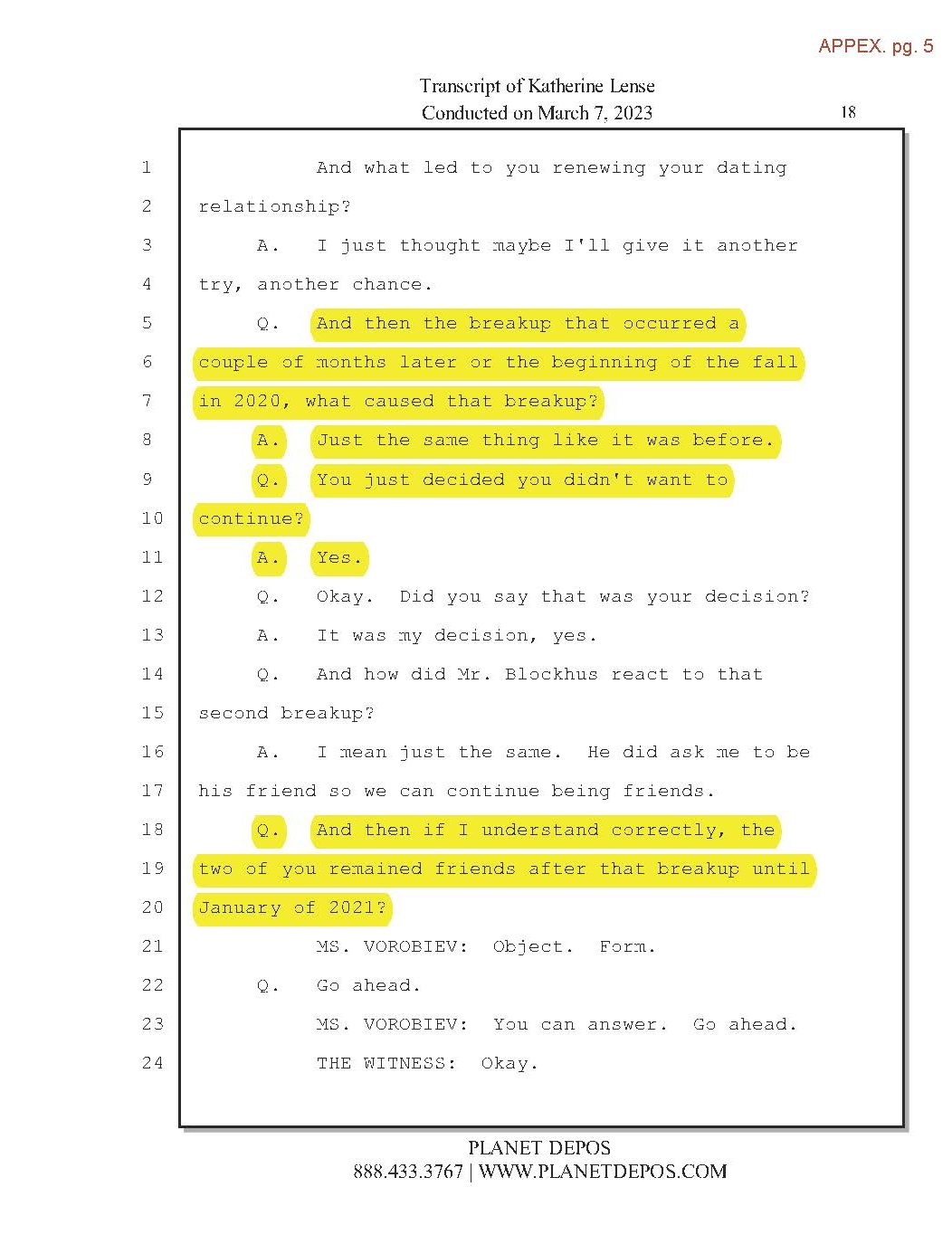
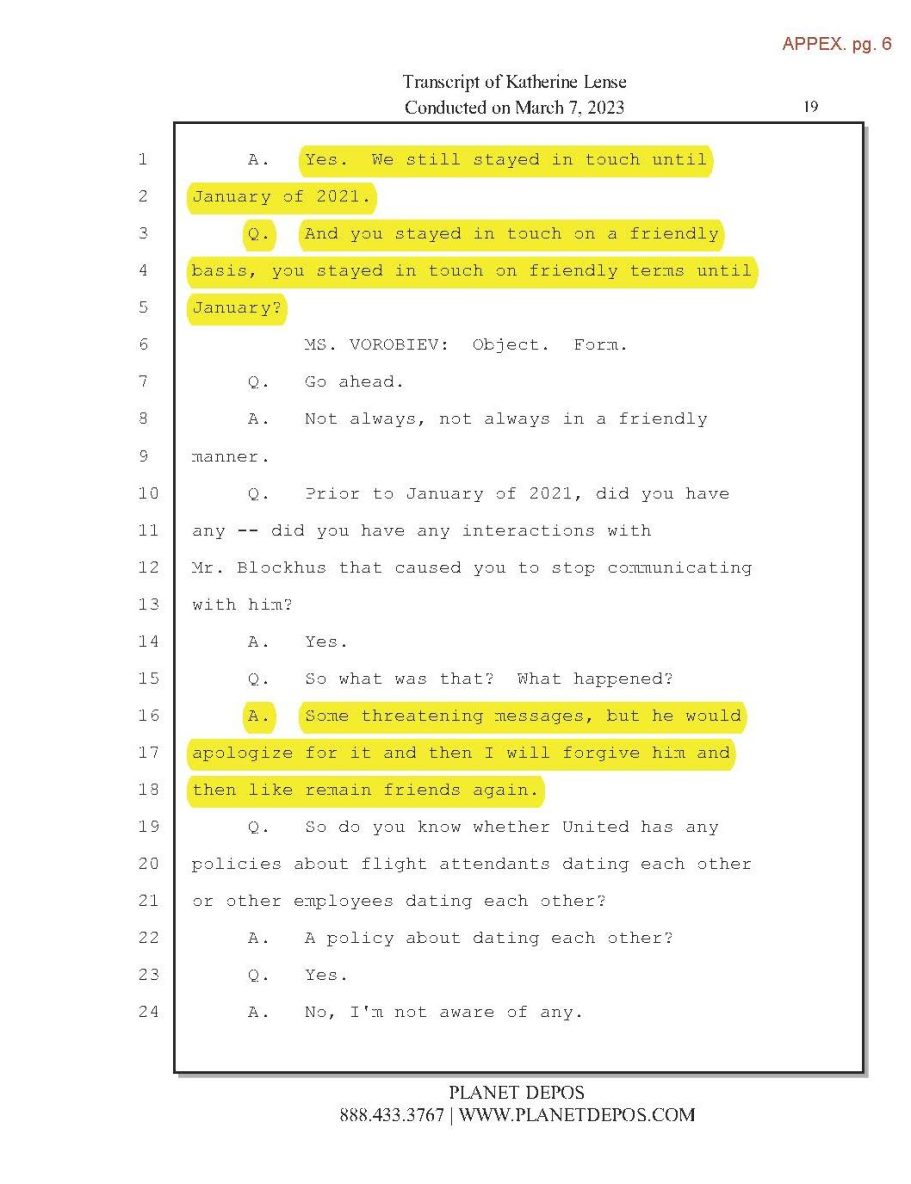
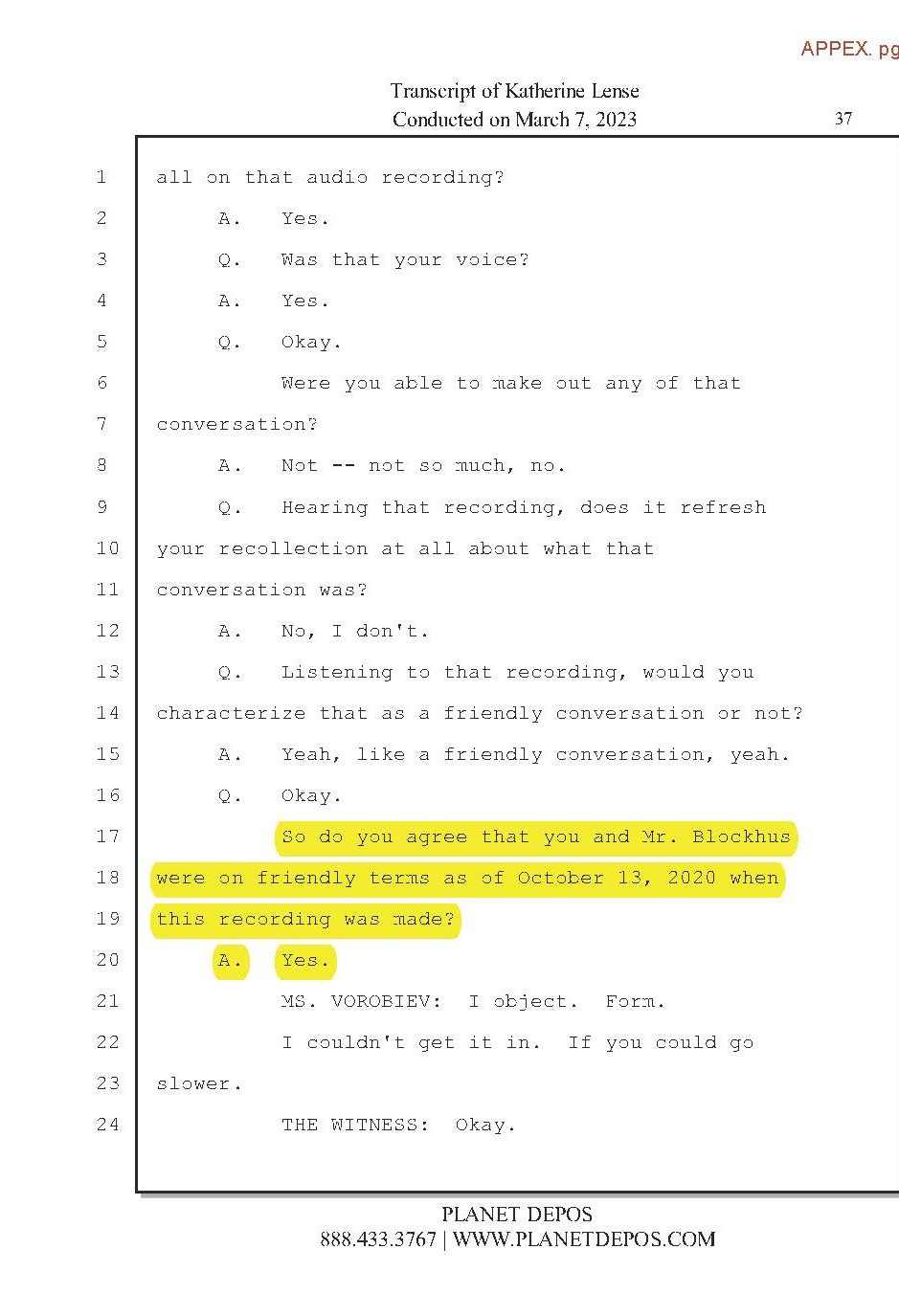
“Yes. We still stayed friends and in touch until
January of 2021”~Katherine Lense
This admission directly contradicts her claim of being harassed by FA Blockhus. A genuine victim of harassment does not voluntarily maintain regular contact with the alleged harasser for months after the supposed misconduct. Her continued communication suggests either that the relationship was consensual/friendly or that her claims of harassment were fabricated or exaggerated for ulterior motives (e.g., job protection, retaliation)
⚖Why This Undermines Her Harassment Claim:
- Direct Contradiction: If she truly felt harassed or threatened, she would have cut off all
contact. Instead, she admits she voluntarily stayed in touch with Blockhus until January of
2021. - Friendly Relationship: Her continued communication aligns with her other testimony
that they remained friends and were communicating normally in Oct–Nov 2020— the months
she claims harassment took place. - Timing Conflict: This was after the period she now claims harassment occurred — yet
she acknowledges ongoing, voluntary contact and friendship. - Supports Retaliation Argument: If the relationship only soured once she feared for
her job, it suggests her complaint was retaliatory, not based on genuine harassment.
⚖ Key Argument:
FA Lense’s Own Testimony Demonstrates Retaliatory Motive and Lack of Good Faith
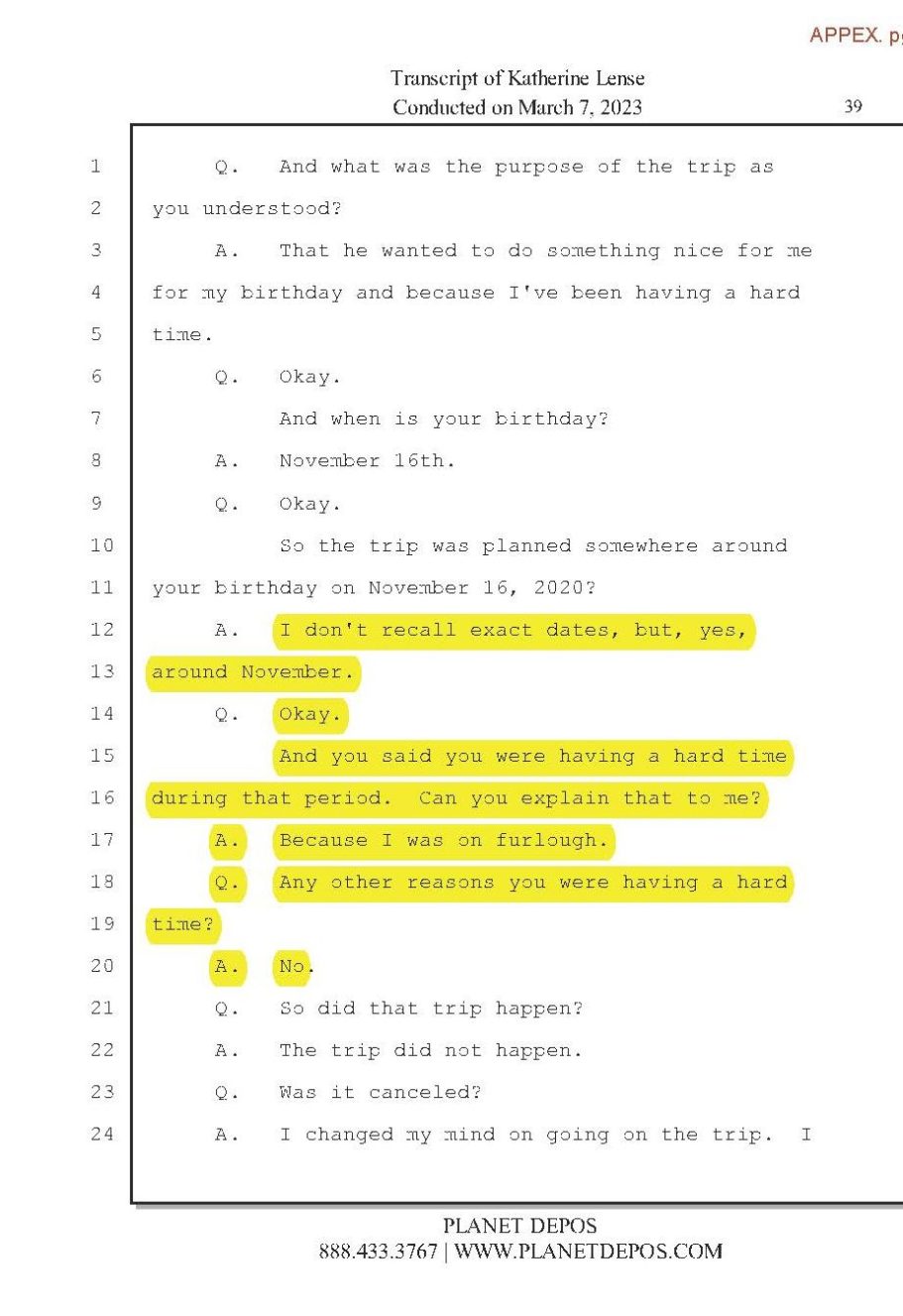
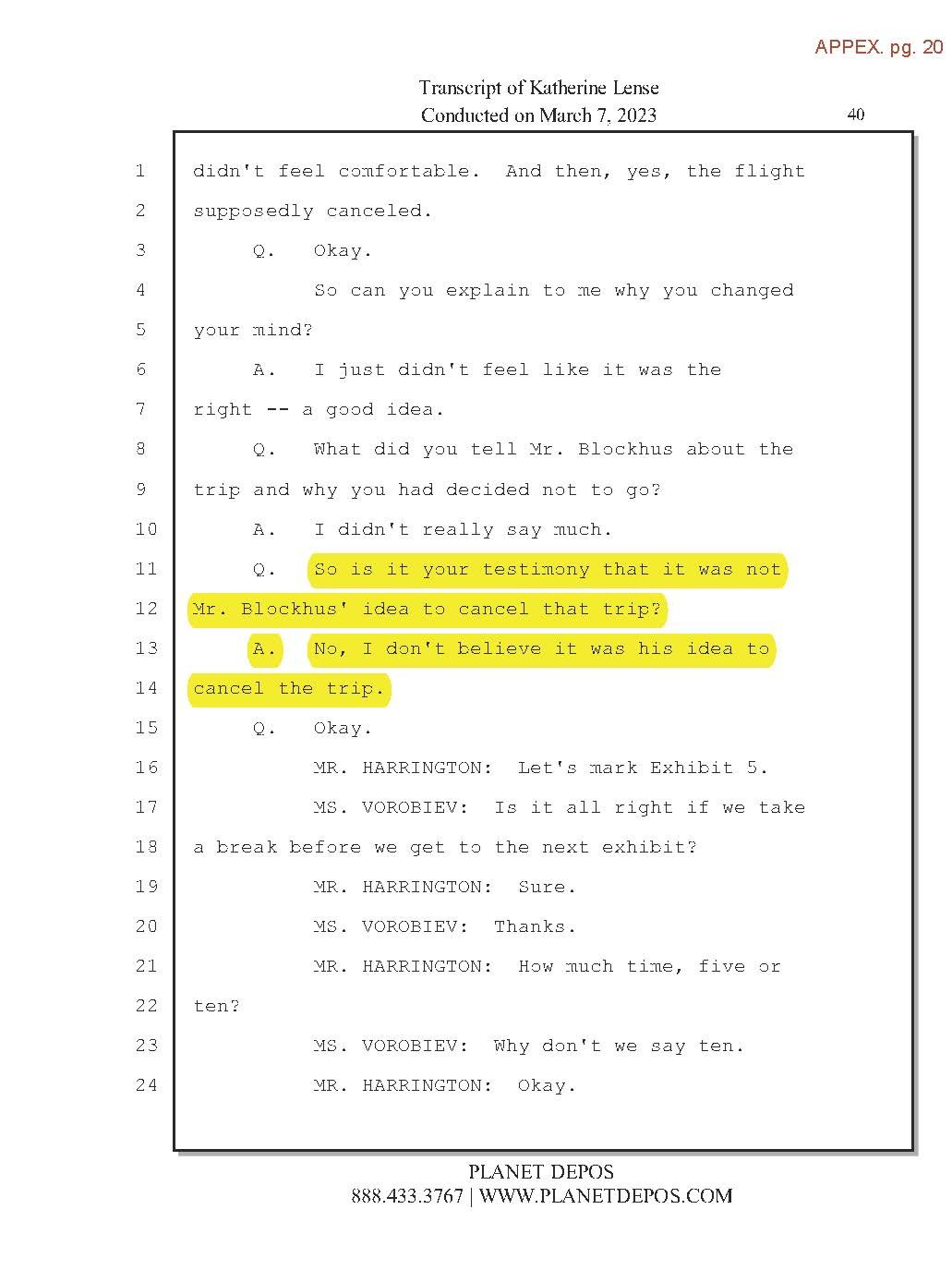
FA Lense’s own sworn testimony repeatedly undermines her credibility and strongly suggests that her allegations were retaliatory in nature and not made in good faith. Her admissions of continued friendship, ongoing communication, uncertainty regarding intimacy, vacation planning, forgiveness of alleged conduct, and inability to even recall critical details are fundamentally inconsistent with claims of harassment or threat. These contradictions demonstrate that the allegations were not contemporaneously perceived as unwelcome or hostile, but were instead raised only after FA Blockhus indicated he intended to report her conduct to the company. United’s acceptance of these shifting and internally inconsistent claims—without authentication, verification, or meaningful investigation—further supports the conclusion that the allegations were weaponized for self-protection and retaliation, rather than rooted in genuine misconduct.
Courts and arbitrators routinely treat inconsistent testimony and delayed reporting following protected activity as strong evidence of retaliatory motive and pretext. FA Lense’s own admissions, combined with United’s failure to scrutinize them, materially undermine any finding of just cause and support claims of wrongful termination, breach of contract, and retaliation.
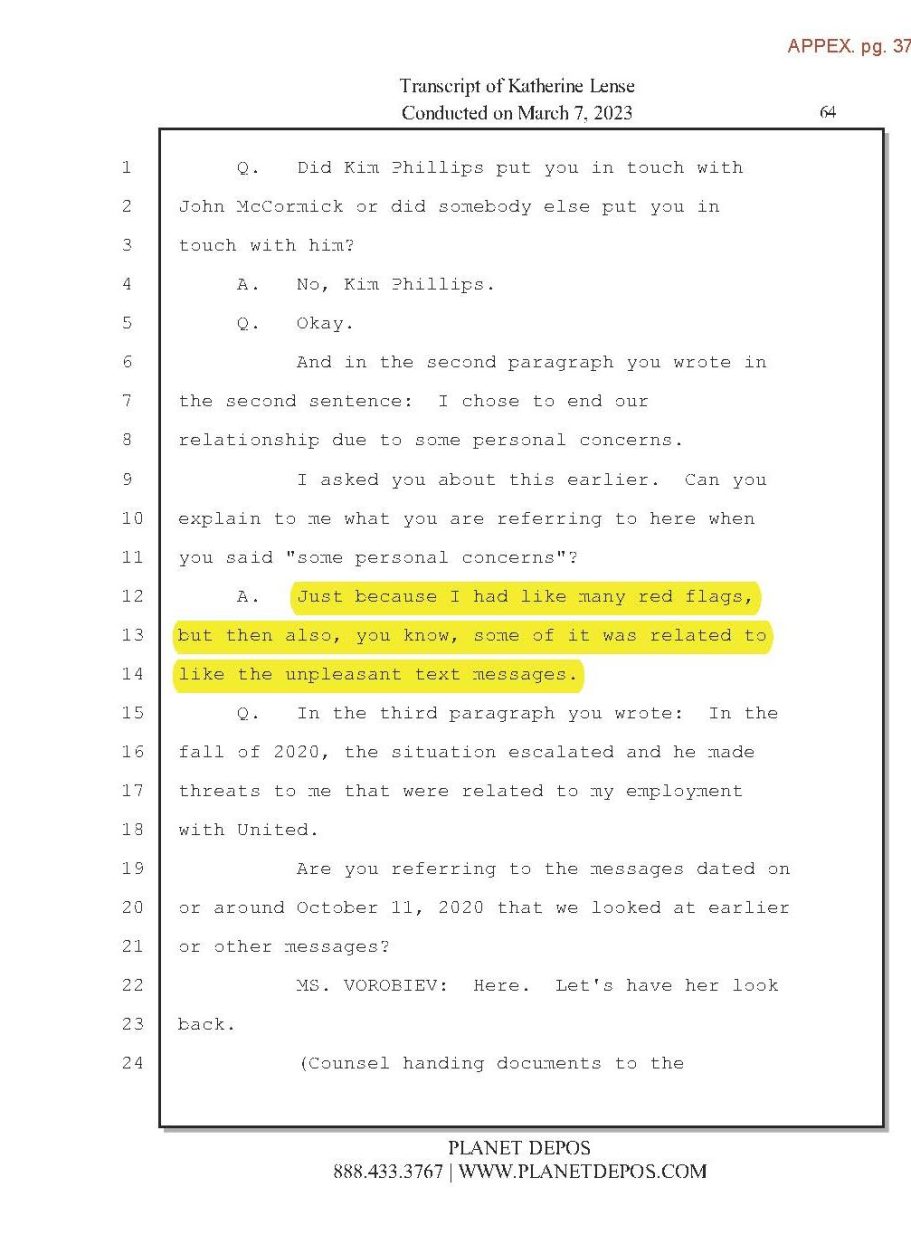
“Some threatening messages, but he would apologize for it and then I will forgive him and then like remain friends again.”~Katherine Lense
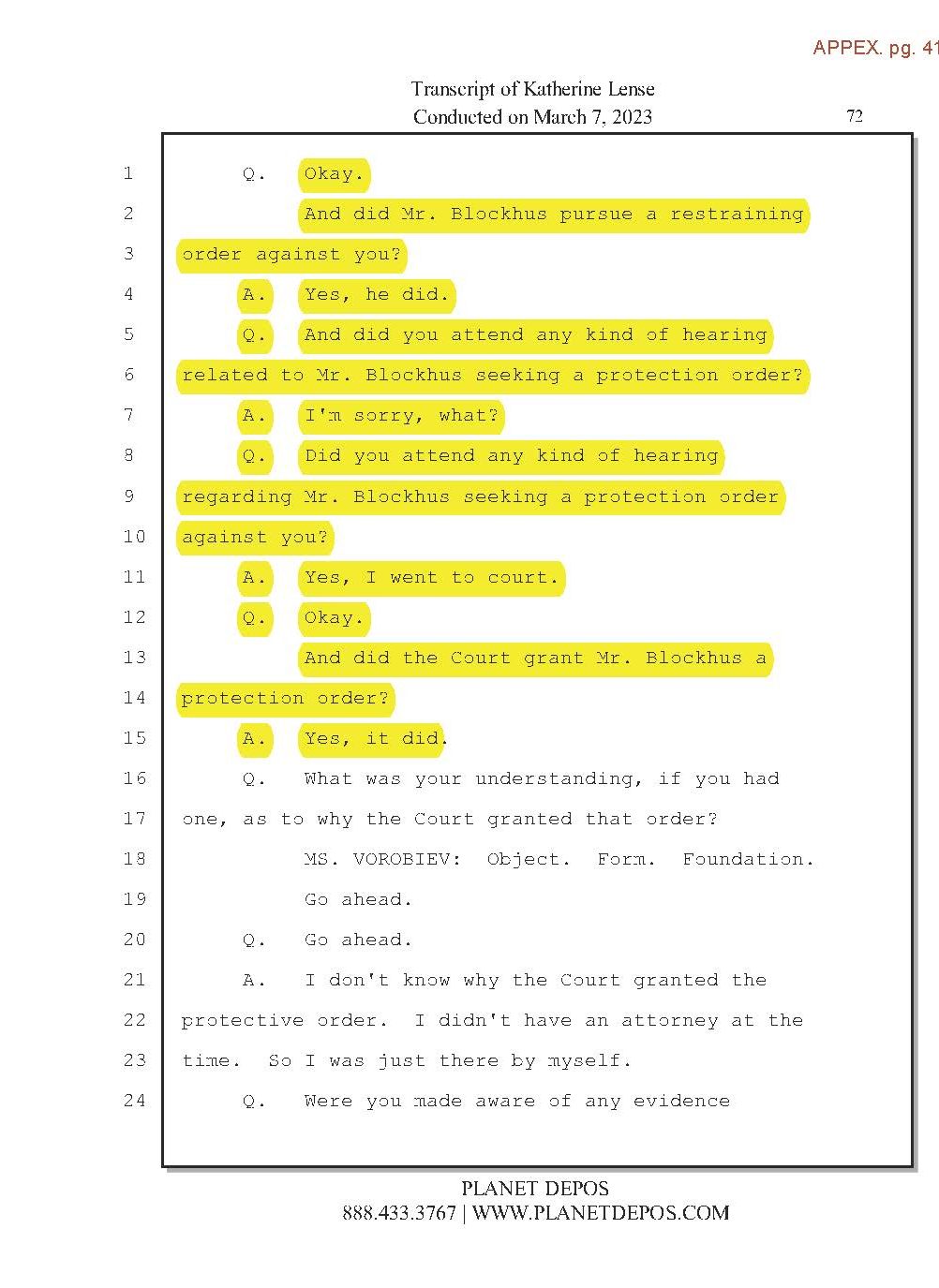
This statement is untrue, however, if someone testified that they forgave a person for sending them threatening text messages, but months later their employer initiates criminal charges on their behalf, the legitimacy of the charges could be challenged on several legal grounds. The key issues involve credibility, waiver, employer involvement, and potential retaliatory motives. This materially undermines the legitimacy of any later criminal or disciplinary escalation. A complainant who admits under oath that she forgave the alleged conduct and voluntarily resumed a friendship demonstrates that the messages were not perceived at the time as serious threats, nor as conduct warranting immediate reporting or intervention.
⚖Credibility & Legal Issues With Forgiveness Followed by Charges:
1. Credibility of the Accuser:
If a witness testifies that they “forgave” the alleged conduct and remained friends afterward, it
undermines the seriousness and credibility of their claim.
Courts and juries will ask: If the conduct was truly threatening, why was it forgiven at the
time and the friendship continued?
2. Waiver / Inconsistency:
By forgiving the conduct, the accuser demonstrates it was not perceived as serious or threatening
enough to warrant immediate action.
Later re-characterizing the same, alleged conduct months later as grounds for criminal charges
creates an inconsistency that can be used to impeach their credibility.
3. Employer Overreach:
If United — not the alleged victim — pushes criminal charges, it suggests retaliation, pretext, or
ulterior motives (e.g., protecting the company, silencing an employee).
This raises due process concerns and could undermine the legitimacy of the prosecution.
4. Retaliatory Motive:
If the timing of the charges aligns with protected activity (such as reporting harassment, exercising
FMLA rights, or filing grievances), it strongly supports a retaliation claim.
Courts recognize suspicious timing and shifting justifications as evidence of pretext (see
Burlington N. & Santa Fe Ry. v. White, 548 U.S. 53 (2006)).
Why This Undermines Her Claim:
- Contradiction to Harassment: A genuine victim of harassment does not “remain friends”
with the alleged harasser. - Voluntary Continuation: FA Lense admits that even after what she describes as
“threatening messages,” she then claims to “forgave him” and chose to continue the romantic
relationship. - Undermines Fear Element: Harassment requires conduct that is unwelcome and creates
fear or hostility. Lense’s admission shows acceptance, forgiveness, and voluntary continuation of
contact. - Supports Defense Argument: This portrays the relationship as complicated and
consensual, not one-sided harassment. - Legal Weakness: Courts often dismiss harassment claims where the accuser continues
voluntary friendly/intimate contact (see e.g., credibility findings in harassment cases where
continued social interaction negates “unwelcome” element).